
8 Country Store Snack Board Ideas for Small Gatherings
Explore eight country store snack board ideas for small gatherings, with practical pairings, a comparison table, and a checklist for smarter shopping.
This practical guide follows our source, correction, and uncertainty standards.
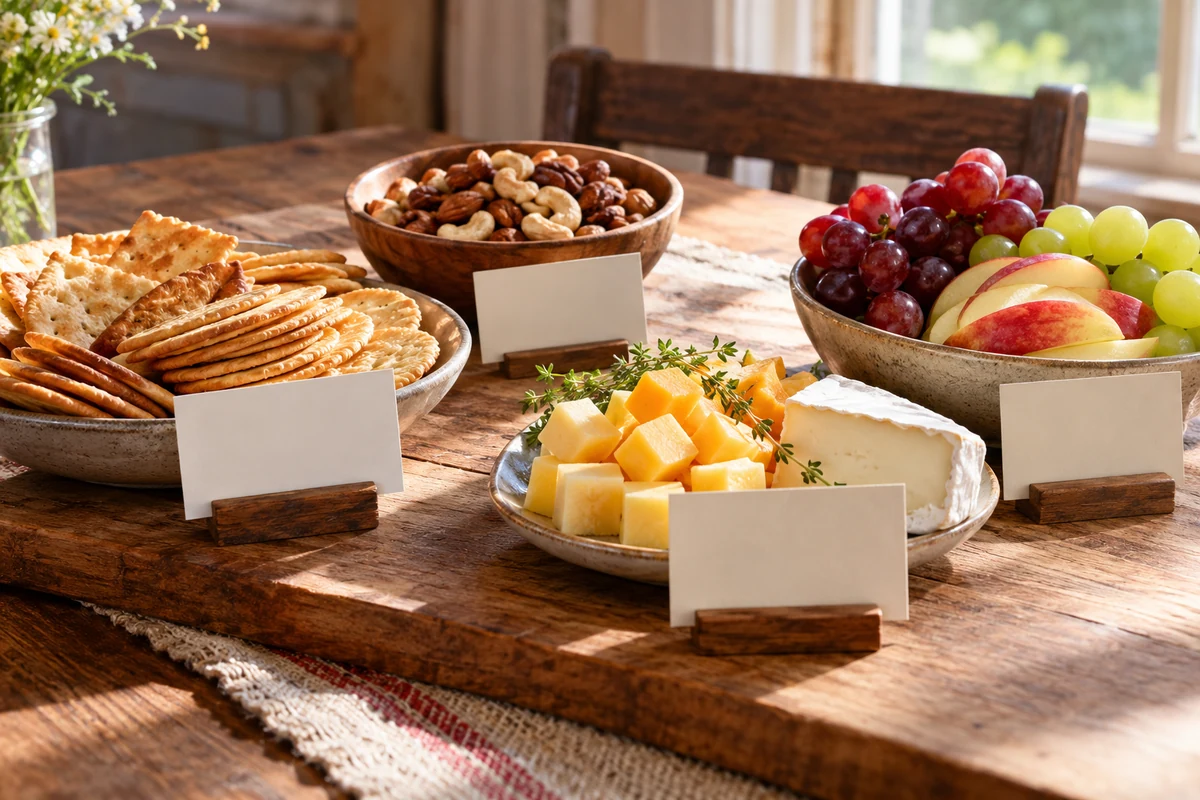
AI-generated editorial illustration; not a photo of a listed business.
Set out one good pairing and a small gathering already has a starting point: crackers with preserves, apples with cheese, or a few bakery treats beside tea. These country store snack board ideas build on that kind of manageable choice. The eight suggestions include small portions, different serving styles and ways to keep ingredients easy to identify. Pick an approach your guests will enjoy, then shop for the pieces your cupboard is missing.
Eight country store snack board ideas to shop with a plan
Country stores may carry bulk foods, bakery goods, packaged groceries, or products from nearby producers, but the mix varies. An Amish-owned shop does not necessarily sell only Amish-made goods, and a country-style label does not establish who made a product. If origin matters to your purchase, ask about the individual item rather than assuming the whole shelf shares one source.
1. A Crackers-and-Preserves Board
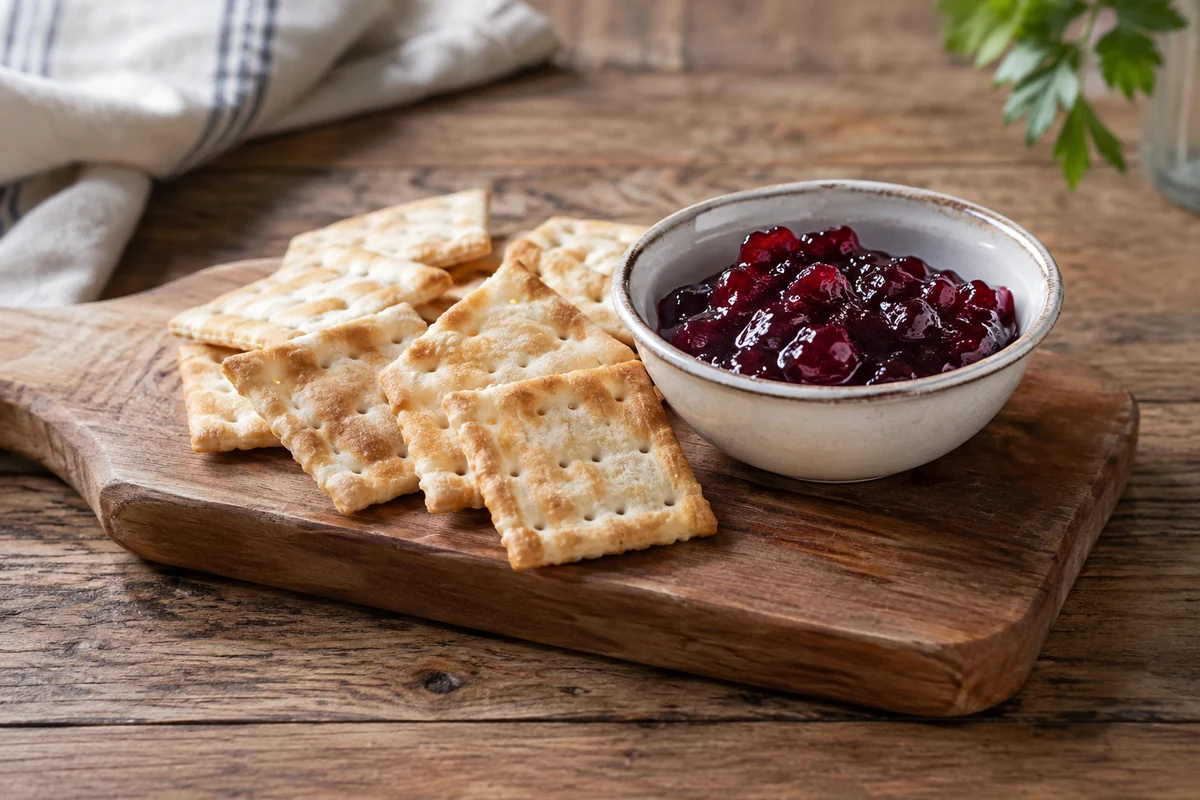
Start with a cracker that can support a spoonful of spread without competing with it. A plain wheat cracker and one fruit preserve make a clear pairing; adding three more jars usually creates more open containers than a small gathering needs. If you want contrast, choose a second cracker with a different texture rather than another sweet topping.
Compare package sizes and unit prices, but consider whether you will finish the jar afterward. A larger jar is not automatically the better purchase for an occasional snack board. Look for a flavor you would also use at breakfast.
Ask: “Is this spread made here, or brought in from another producer?” That separates shopping for a particular maker from shopping simply for a flavor you like.
Choose this board when: you want a simple centerpiece with few parts. Set the spread in a small dish with its own spoon, and keep the original label available.
2. An Apple-and-Cheese Pairing
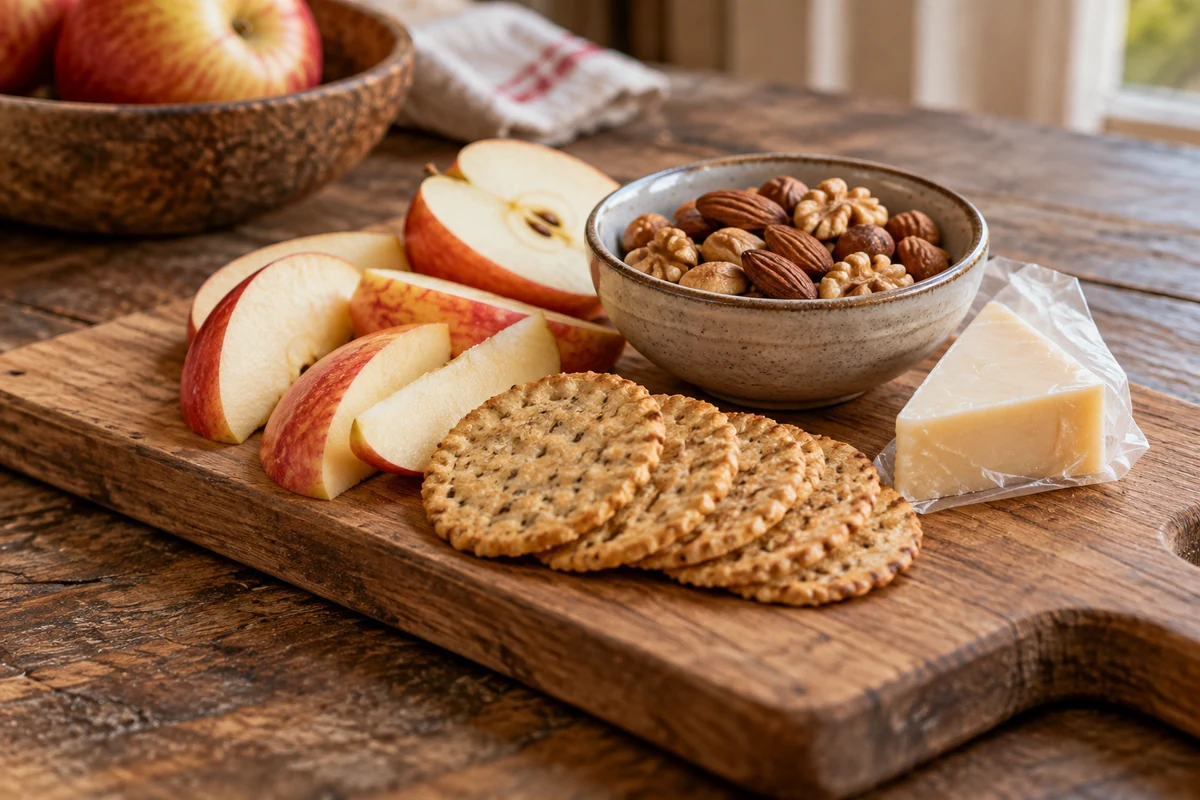
Let one apple variety and one cheese do most of the work. A crisp, tart apple can offer contrast to a mild cheese; a sweeter apple can sit comfortably beside something sharper. Those are starting points, not rules—buy flavors your guests already enjoy rather than an unfamiliar wedge solely because it looks impressive.
Check the cheese’s package size and handling directions before committing. A separately wrapped wedge is useful for transport and keeps the product information attached until serving. Ask what cheese sizes are available rather than assuming the store will cut a smaller portion.
For a longer shopping trip, use the cooler-packing guide to plan transport around products that need refrigeration. Follow the actual cheese label and producer’s instructions.
Make the decision: choose the wedge you can use beyond this visit, add apples, and treat crackers as optional. You do not need nuts, preserves, and bakery goods to complete this pairing.
3. A Pantry Popcorn Snack Bowl
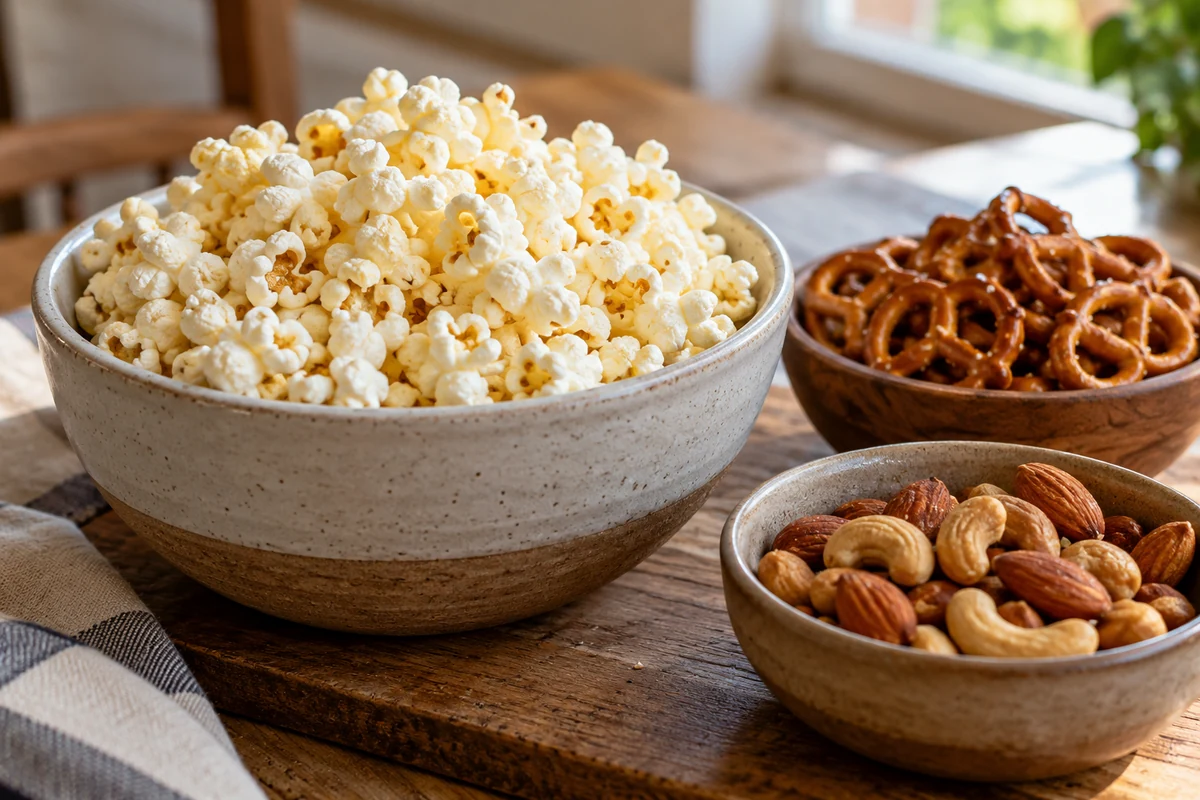
A bowl can do the job of a board when the gathering is casual. Ready-to-eat popcorn gives guests something easy to pick up, while a separate dish of pretzels or dried fruit supplies a second texture. Keeping the parts separate also lets people choose their own balance instead of searching through a mixed bowl.
Read the product description carefully: popcorn kernels are a pantry purchase, not a ready-to-serve snack. If you want minimal preparation, choose a finished product and check its flavorings and package directions. A strongly seasoned popcorn may need no salty companion at all.
Bulk packaging can make portion size difficult to judge. The small-household bulk-food shopping guide can help you weigh a larger bag against what you will actually use.
Buy with a limit: select one popcorn and one optional companion. Skip a third crunchy snack unless it serves a distinct preference among your guests.
4. A Small Sweet-and-Salty Plate
Give this plate two clear sides: one sweet purchase and one salty purchase. A few cookies beside pretzels feels intentional without requiring a whole confectionery assortment. Chocolate and plain crackers can work too, provided the chocolate’s transport needs suit your trip.
The tradeoff is between variety and surplus. Individually wrapped sweets may be easier to divide or take home, but can bring more packaging. A larger bag may offer a lower unit price while leaving you with more than you wanted. Compare the amount you need, not just the price printed largest on the shelf.
Ask whether a mixed package lists the ingredients for every component. If that information is incomplete, individually labeled products are easier to evaluate.
A useful boundary: buy one item from each side, then stop. Put out a modest amount and keep the remaining products in their labeled packages rather than filling every inch of the plate.
5. A Tea-Time Bakery Board
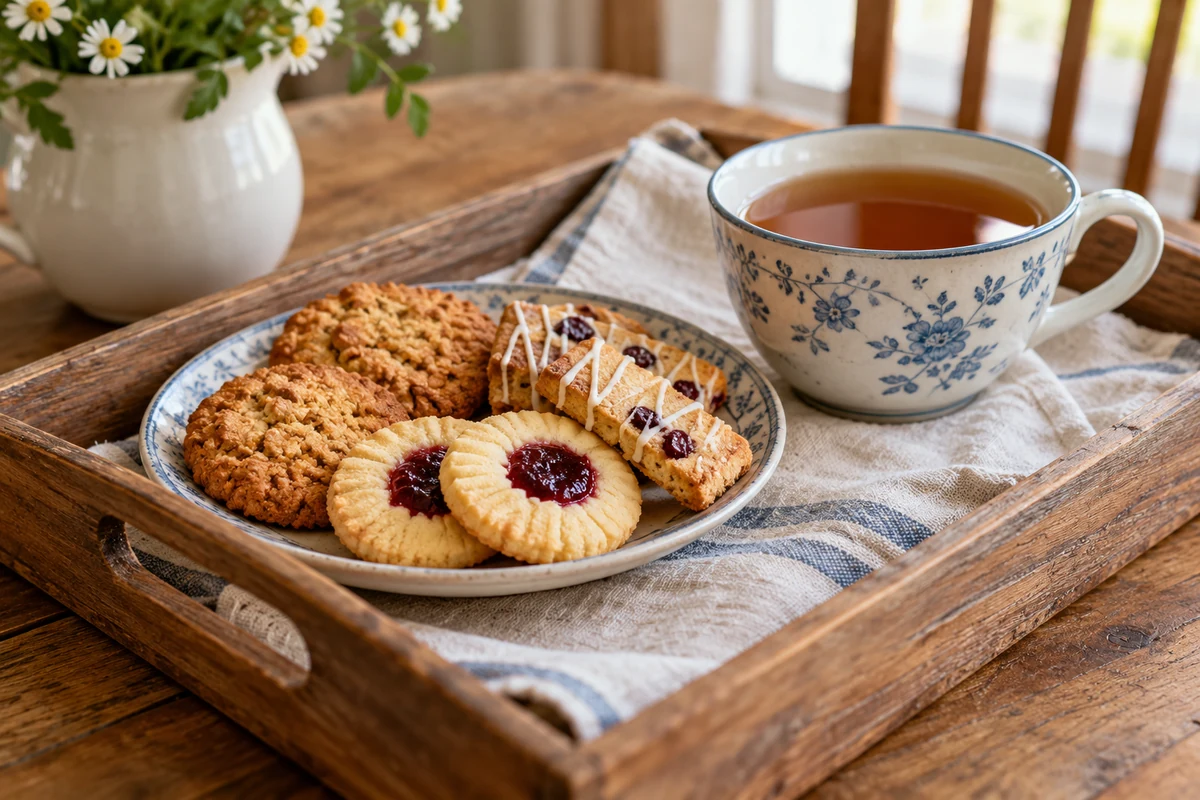
Shop for bakery goods that are easy to share, not merely the largest or most decorative option. Small cookies, plain biscuits, or a loaf-style baked good can each anchor a tea-time plate if available. One soft item and one crisp item usually provide enough contrast without buying several overlapping sweets.
Consider the practical differences before choosing. A frosted purchase may need more careful packing; a crumbly one may need plates; a loaf brings a slicing task. Ask about ingredients, handling, and whether the item is baked by the shop or supplied by another bakery. Neither arrangement tells you its quality by itself, but it helps you understand what you are buying.
The Amish bakery shopping guide offers a useful starting point for narrowing the bakery counter choices.
Choose for the occasion: if guests will be holding cups and chatting, favor manageable portions. Let the tea accompany the food rather than buying an extra spread simply to fill space.
6. A Two-Person Snack Board
For two people, start with what is already at home. If you have crackers, shop for cheese and fruit. If you have apples, a small package of nuts and a familiar sweet may be enough. This prevents the common problem of buying full packages for a board that only needs a little of each.
Think in roles: one main bite, one contrasting texture, and perhaps one small treat. A cheese wedge, crackers, and an apple meet those roles without requiring a decorative garnish. Nuts are optional, not a necessary sign of a finished board.
Ask, “What is the smallest labeled package available?” A modest package can be the better total purchase even when its unit price is higher.
Set the boundary before shopping: decide which two or three components you want. Use a small plate at home; a large board can make an adequate snack look unfinished and encourage unnecessary buying.
7. Keep Ingredients Easy to Identify
A clearly arranged board is easier to navigate than a pile of mixed snacks. Put nuts in their own bowl, give each spread its own utensil, and avoid scattering crumbs or toppings over unrelated foods. This helps guests recognize choices, but separation on a serving plate does not establish allergen safety.
Before buying for someone with a food allergy, ask what products and information they need. Read ingredient and allergen labels; the FDA’s food-allergy guidance explains why labels matter. Plain packaging, handwritten signs, and a small-shop setting are not evidence that a product is suitable.
A short question works well: “Do you have the original ingredient label and information about possible cross-contact?” If the answer is unavailable, choose something the guest can evaluate instead.
Practical decision: keep packages with the board, or retain readable label photos. For some guests, leaving their chosen snack unopened and separate may be the most useful arrangement.
8. Pack the Board for a Short Visit
Transport the components, not a fully decorated board. Crackers travel better in their package or a rigid container; preserves belong in a closed jar; cheese can stay separately wrapped until serving. A tray, small dishes, and utensils can travel together without food sliding between them.
Ask the host one useful question: “Would a small snack plate be helpful, and is there anything I should leave out?” That prevents bringing a duplicate dessert or ingredients that do not fit the household’s needs. Confirm whether you will assemble it there or simply leave the groceries as a gift.
Products needing refrigeration still require suitable handling on a short trip. Follow their labels and plan for the whole journey, including other stops.
Pack for an easy handoff: include the relevant labels and serving pieces, and agree on whether the tray should come home with you. Avoid making the host find bowls, utensils, and a place for oversized packages.
Buying a board for repeated use? Check table fit, finish and storage with the wood serving board buying guide.
Quick comparison: which approach fits your gathering?
Choose by the constraint that matters most: package size, serving effort, or transport. These are shopping formats, not promises that every store carries the same products.
| Approach | Starting purchase | Main advantage | Main tradeoff |
|---|---|---|---|
| Crackers and preserves | One cracker, one spread | Few serving pieces | An opened jar to use afterward |
| Apple and cheese | Apples, one wrapped wedge | A focused pairing | Cheese-specific transport needs |
| Popcorn bowl | Ready-to-eat popcorn | Easy casual serving | Large bags may exceed your needs |
| Sweet and salty | One item of each | Clear flavor contrast | Assortments can multiply purchases |
| Tea-time bakery | One or two baked goods | Suits a seated visit | Delicate items need careful packing |
| Two-person board | Two or three components | Keeps the purchase modest | Smaller packs may cost more per unit |
| Clearly identified choices | Labeled, separate products | Easier guest decisions | Some products may lack needed details |
| Visit-ready kit | Packaged components and tray | Simpler transport | Requires assembly and serving pieces |
Find a suitable store before expanding the list
Use the directory to find stores near you, then check whether a promising listing fits your plan. A bakery-focused stop and a bulk-food shop may serve very different shopping needs. One well-matched store can be more useful than several stops made just to add variety.
Check current hours and direct contact details before leaving. If the board depends on a particular product, ask whether the store carries that category and what package sizes it generally offers; current stock still needs confirmation. Keep an acceptable substitution on your list so one missing item does not derail the purchase.
For shopping logistics beyond the food itself, review what to bring to an Amish country store. Set a total spending limit before browsing, and include any serving supplies you genuinely need rather than treating them as invisible extras.
Copyable shopping and decision checklist
- Gathering size and host preferences: ______
- Main pairing or snack-board approach: ______
- Products already at home: ______
- Two or three planned purchases: ______
- Acceptable substitution: ______
- Total spending limit: ______
- Package sizes checked against likely use.
- Ingredients and guest requirements checked.
- Maker or origin confirmed if important.
- Product handling and transport arranged.
- Tray, small bowls, utensils, and labels packed.
- Store details checked before departure.
Frequently asked questions
How many different foods does a small snack board need?
Two or three well-chosen components can be enough. Start with a main pairing and add another item only for a clear reason, such as a different guest preference. Variety is useful when it solves a need, not when it merely fills space.
Are foods sold in an Amish country store Amish-made?
Not necessarily. Ownership, maker identity, and product origin are separate questions. A shop may stock its own products alongside goods from other producers. Ask about the specific item if buying Amish-made food is important to you.
Is buying snacks in bulk always cheaper?
A larger package may have a lower unit price, but that does not guarantee a lower useful cost for your gathering. Compare the total purchase with how much you expect to use. Avoid buying extra solely to reach a more attractive unit price.
Can I put everything on the board before traveling?
Keeping components packaged is usually more practical: it protects crackers, contains spreads, and preserves labels. Assemble at the destination if the host agrees. For any product with special handling needs, follow its label and ask the producer about anything unclear.
Images are AI-generated editorial illustrations, not photographs of particular stores or makers.
Choose one approach from the table, check your pantry, and write down the missing components before opening a store listing.