
8 Cheese Shopping Tips for an Amish Country Store Visit
Make Amish country cheese shopping easier with eight practical tips for choosing portions, checking makers and labels, packing a cooler, and planning a plate.
This practical guide follows our source, correction, and uncertainty standards.
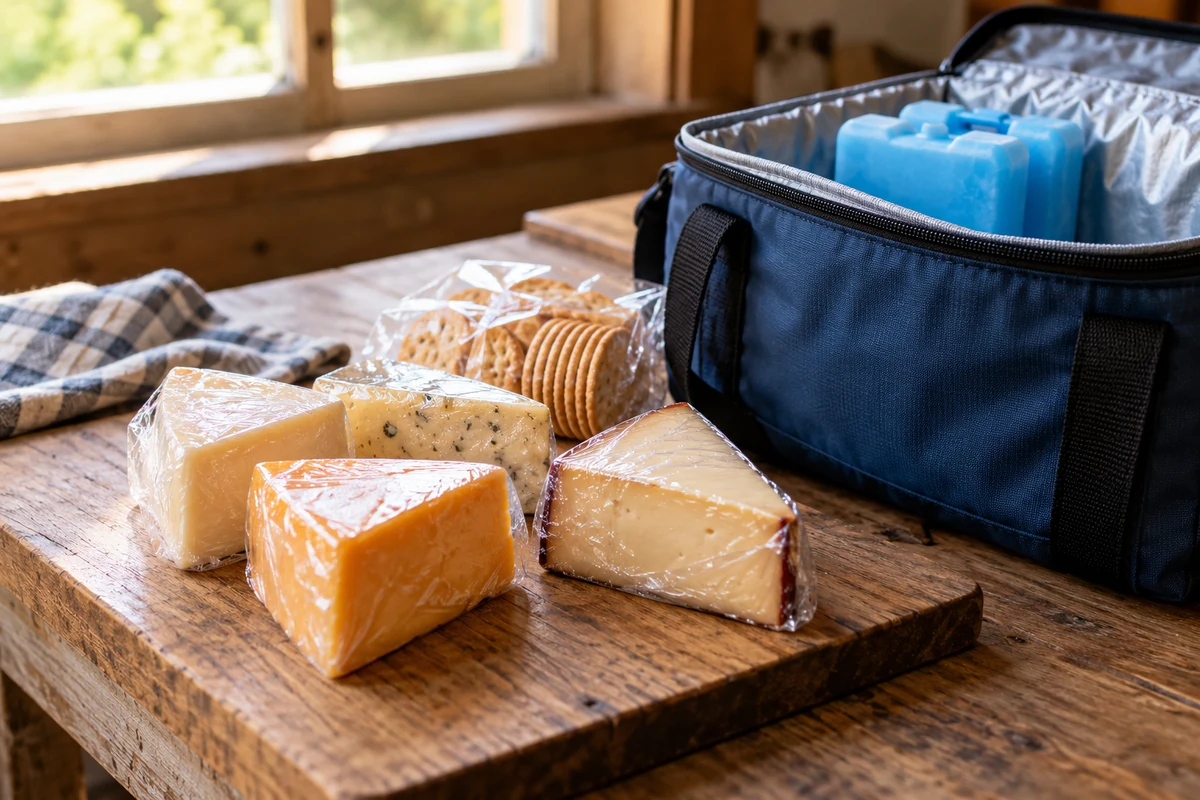
AI-generated editorial illustration; not a photo of a listed business.
Think about the first meal you will make with your cheese purchase: sandwiches, a small snack plate or an everyday lunch. That gives you a sensible starting point for choosing a portion and asking about the product. These Amish country cheese shopping tips cover eight useful decisions, including the producer, ingredients, format and cold transport. Bring a cooler suited to your route and let the actual product information guide the rest.
Amish country cheese shopping: eight decisions worth making
1. Choose Cheese for One Meal
Give the cheese a job before choosing its size. Sandwiches, a simple lunch plate, and a gathering with crackers call for different quantities and textures. A cheese that slices neatly may suit lunch better than a crumbly wedge, while a strongly flavored option might be enjoyable in a smaller portion alongside milder food.
Think about what is already at home. If you have bread and apples, you may need only cheese—not another basket of accompaniments. For a shared meal, consider who actually enjoys the flavor rather than buying enough of every variety for everyone.
Ask: “Which of these is easy to slice, and is there a smaller package?” Staff may be able to explain the options, but cutting services and samples are not guaranteed.
Your decision: choose one main use and a realistic portion. Treat any unfamiliar cheese as a small trial purchase, not an automatic large-block commitment.
2. Ask About the Cheese Producer
An Amish-owned store can sell cheese from outside producers, and a country-style label does not establish who made the contents. Store ownership, cheese production, and the location where a piece was cut or wrapped are separate details. None should be inferred from a rustic counter or plain packaging.
If maker identity matters to your purchase, ask a focused question: “Who makes this cheese, and is this the producer’s label or the store’s packing label?” Follow with “Where is it produced?” if regional origin is important to you. A distributor’s address alone may not answer that question.
Use the store search to identify shopping possibilities, then verify any ownership or product-origin detail important to your choice directly with the store.
Your decision: buy on confirmed information. If the maker cannot be established, you can still choose the cheese for its ingredients, flavor description, and size—just do not describe it as Amish-made without verification.
3. Compare a Wedge With a Block
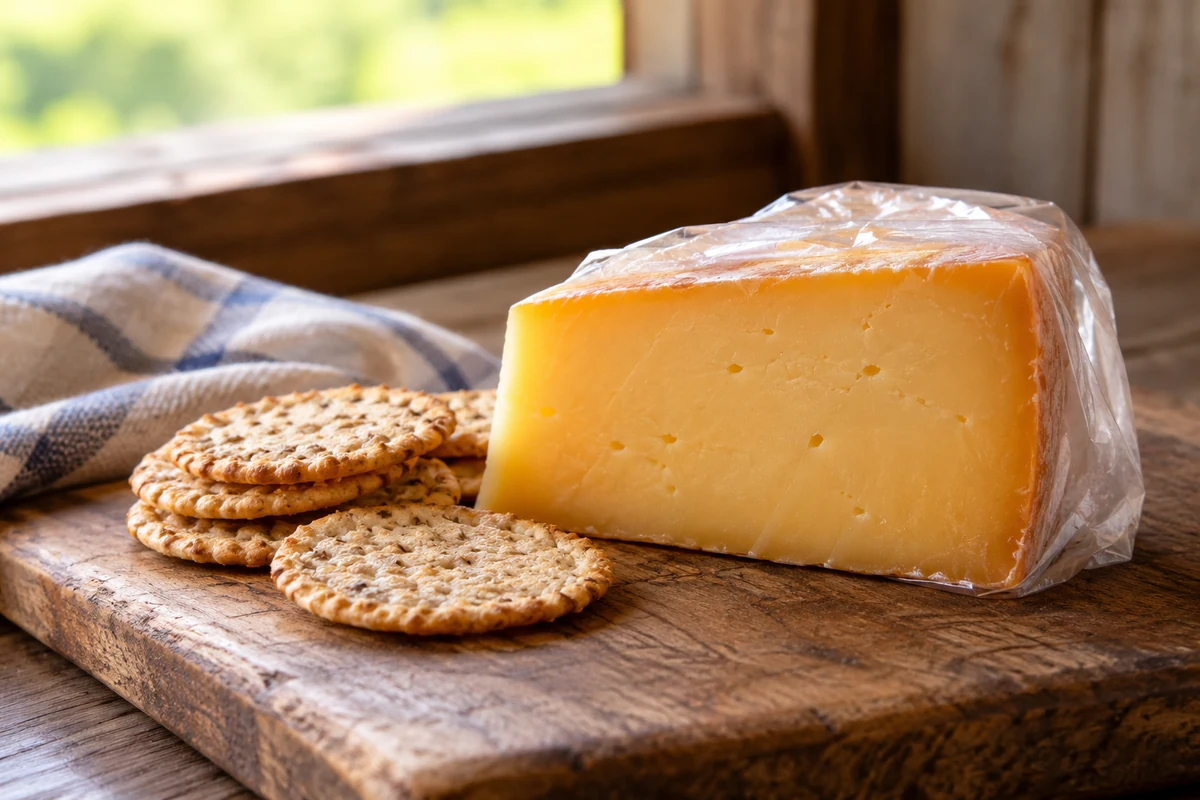
The larger package is not automatically the better buy. Compare the price per matching unit of weight, then consider the total amount you are committing to use. A block may cost less per pound yet leave you with more cheese than your household wants. A small wedge can be the more useful purchase even when its unit price is higher.
Shape matters, too. A rectangular block may be convenient for repeated sandwich slices. A wedge may suit a small plate but produce uneven pieces. Check whether a rind is present and ask whether it is intended to be eaten; do not assume every outer layer is edible.
If counter-cut portions are offered, ask for the approximate size you need and confirm the price basis before it is wrapped.
Your decision: compare usable quantity, total cost, and shape together. Choose the package that fits your meal rather than rewarding size alone.
4. Read Cheese Ingredient Labels
Two cheeses with similar names can have different ingredients. One may include peppers, smoke flavoring, herbs, or coloring; another may have a simpler ingredient list. Read the package in your hand rather than relying on the name printed above the display.
For dietary preferences, identify the detail you need clarified. If the source of enzymes matters to you, ask whether the producer supplies that information rather than guessing from the cheese style. If you need verified organic status, look for the applicable labeling instead of treating country-store surroundings as proof.
For allergies, the FDA’s food-allergy guidance supports checking ingredient and allergen labeling. Plain wrapping is not an assurance of allergen suitability. For cheese cut or repacked in the store, ask to see the original product information and ask about shared equipment when relevant.
Your decision: if an essential ingredient or handling question remains unanswered, select a better-documented option or leave it behind.
5. Bring a Cooler for Cheese
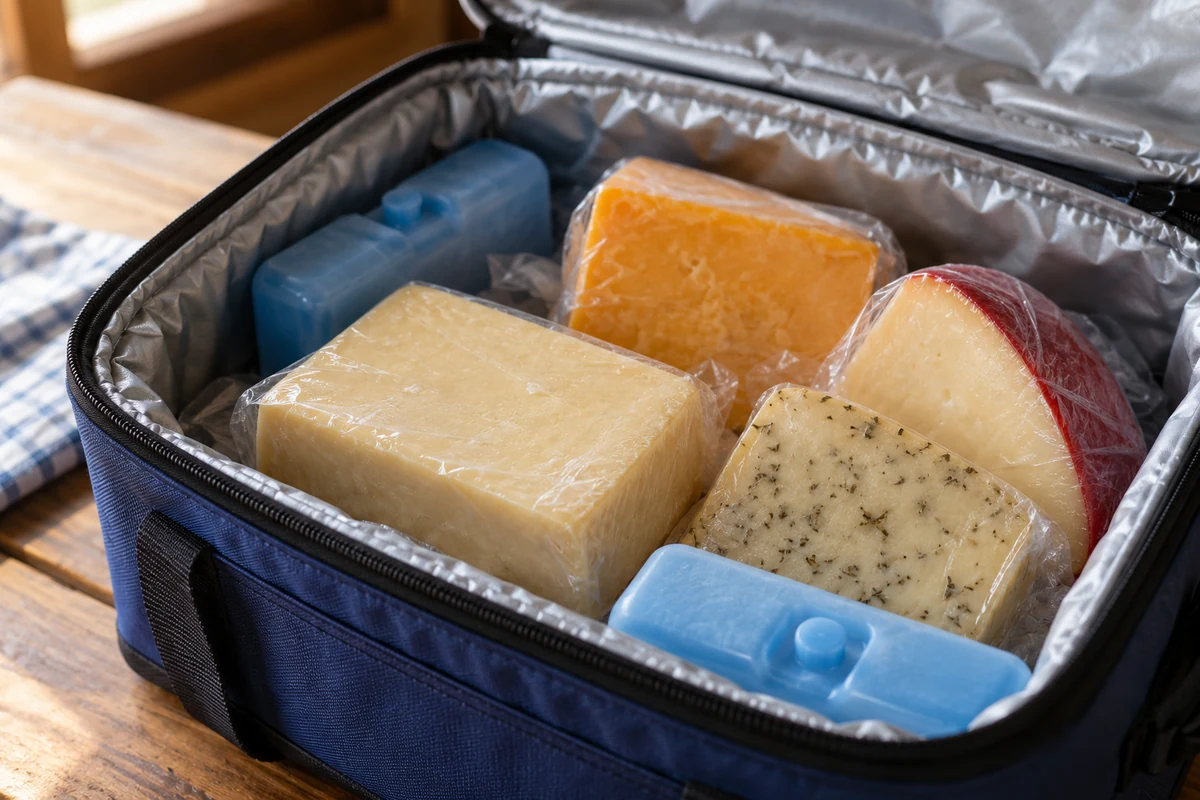
Plan refrigerated purchases around the trip home, not just the walk to the car. Bring an insulated cooler with cold packs and enough usable space for the packages you intend to buy. A cooler already filled with other purchases is not much help when the cheese reaches checkout.
Keep cheese in its intact wrapping and protect paper labels from moisture. A clean, secondary container can help prevent packages from being crushed or labels becoming unreadable. Crackers and other dry accompaniments can travel separately so they do not take up the space reserved for cold food.
The cooler-packing guide can help you plan the setup before leaving. At the counter, ask about product-specific transport requirements if the label is unclear; an insulated bag does not remove the need to follow them.
Your decision: match the purchase to your carrying capacity. If you cannot transport a refrigerated item appropriately, save that purchase for another trip.
6. Buy the Cold Food Last
Inside the store, browse shelf-stable foods and household goods first. Choose the cheese toward the end, then check out and pack it promptly. This is easier than carrying a refrigerated package while deciding between baskets, books, or pantry staples.
For a trip with several stops, place the cheese purchase as late as practical. The three-stop route guide offers a useful framework for reducing backtracking, but your route still needs to fit each store’s current schedule. Confirm the details that affect your plan, including whether the store sells refrigerated cheese and how you can pay.
If the cheese stop must come first, be realistic about what comes afterward. A long browsing stop or an added outing changes the transport plan.
Your decision: make the last part of the trip straightforward. Finish shopping, secure the cheese in the cooler, and head home rather than adding optional detours.
7. Build a Small Cheese-and-Cracker Plate
A good small plate needs contrast, not a crowd of packages. Start with one cheese you expect everyone to enjoy. If you want variety, add a smaller amount of a distinctly different option: perhaps a firmer cheese beside a softer one, or a mild flavor beside a sharper one, if available.
Choose a plain cracker when the cheese itself is strongly seasoned. With a milder cheese, a more flavorful cracker may make sense. Fruit or a small amount of a spread you already own can round out the plate without creating another shopping assignment.
Ask, “How would you describe the flavor and texture of these two?” That is more useful than asking which cheese is universally best. If crackers are sold in bulk, compare package size with your actual needs using the bulk-food pantry checklist.
Your decision: buy one dependable cheese, an optional small contrast, and one cracker—not an entire display’s worth of extras.
8. Keep Storage Directions With the Cheese
The purchase is not fully organized until you can identify it at home. Keep the producer’s name, product name, ingredient information, dates, and handling directions with the cheese. A quick photograph is a useful backup when a wrapper may become torn or damp.
Before discarding packaging, check whether the directions change after opening. Do not transfer instructions from a different cheese simply because the two look alike. If you buy a counter-cut piece without sufficient information, ask the seller for the producer’s product-specific guidance before leaving.
If you divide a purchase between households, pass along the label information as well as the cheese. The recipient needs more than “this came from a country store.” Make sure any new wrapping does not obscure the original identity or directions.
Your decision: keep the information attached to the food. If you cannot tell which cheese is which, your careful label comparison at the counter loses much of its value.
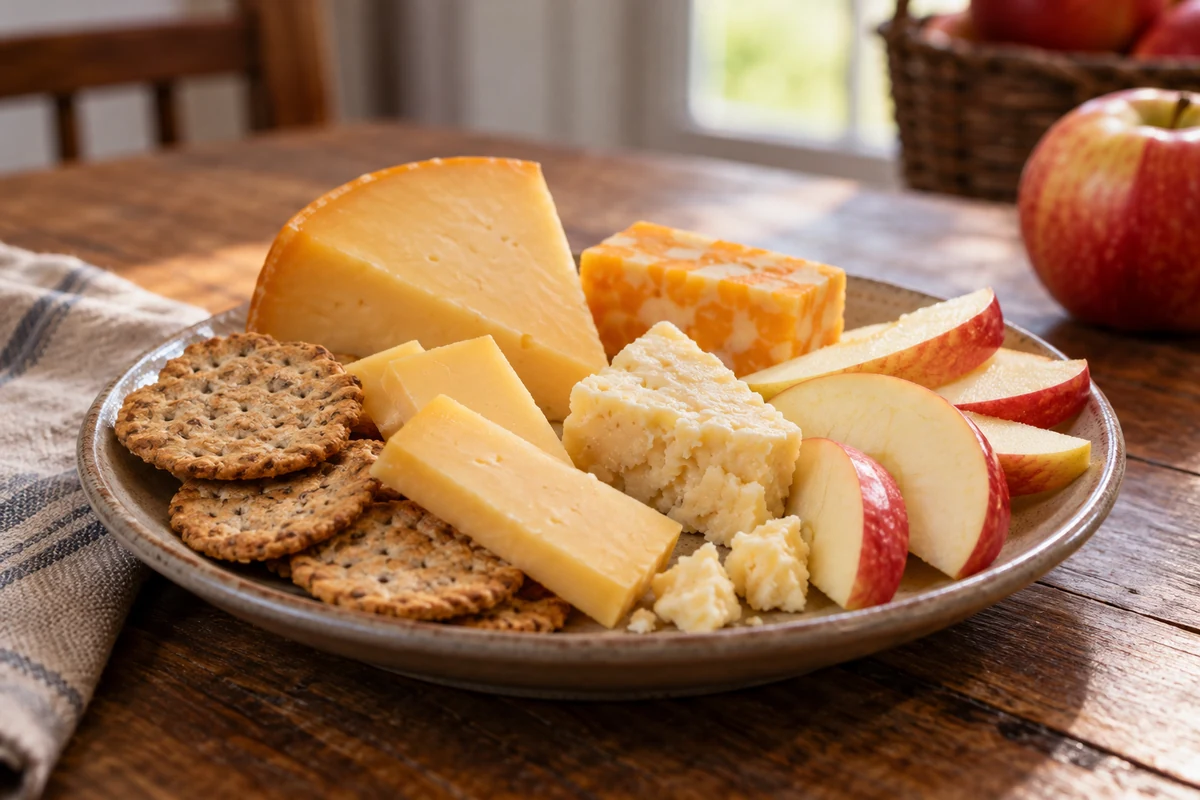
Put the portion decision to work with these country store snack board ideas, including small gatherings and a simple two-person plate.
Quick comparison: which purchase fits your plan?
Use this table to narrow your choice before comparing individual packages. The best option is the one that matches both your intended use and the information available—not necessarily the largest or most distinctive cheese.
| Shopping choice | Useful when | Main tradeoff | Check before buying |
|---|---|---|---|
| Small wedge | You want to try an unfamiliar cheese | Potentially higher unit cost; limited quantity | Flavor, rind, and total package price |
| Larger block | You already have several uses planned | More cheese to use and accommodate | Matching-unit price and handling directions |
| Sealed producer package | You value readily available product details | Portion sizes may be less flexible | Ingredients, producer identity, and dates |
| Counter-cut portion | You want a particular amount | Information may need to be supplied separately | Original label and whether cutting is offered |
| Two small contrasting cheeses | You are making a modest shared plate | Two purchases can encourage extra accompaniments | Whether guests will enjoy both |
A compact checklist to copy before leaving
Write down your intended meal and what is already in the pantry first. That gives the checklist a purpose: keeping the purchase useful, rather than simply making sure you bring more things.
- Meal or occasion: __________
- People eating cheese: __________
- Preferred texture or flavor: __________
- Portion and spending limit: __________
- Ingredients or origin details to verify: __________
- Current store schedule and payment options checked
- Cooler, cold packs, and protective container ready
- Dry accompaniments planned from what I already own
- Cheese purchase placed near the end of the trip
- Product label and handling directions kept
For the rest of your bag, the country-store packing guide helps separate useful supplies from unnecessary extras.
Four common cheese-shopping questions
Is cheese sold in an Amish country store always Amish-made?
No. The retailer and producer may be different businesses. Ask who made the cheese and where it was produced. A store’s setting, ownership, or packing label does not by itself establish the cheese’s origin.
Can I assume the store will offer samples or cut a smaller piece?
No. Both services depend on the store and the product. Ask politely, then choose among the available package sizes if sampling or cutting is not offered. Do not base your whole purchase plan on either service being available.
Is a large block better value than a small wedge?
Only if the price comparison and your likely use support it. Check equivalent units of weight, then consider total cost and how much you actually want. An unused bargain is less useful than a smaller purchase that fits your meals.
What should I do if the wrapper has few details?
Ask for the original producer information and product-specific handling directions. Photograph or retain what the seller provides. If an essential dietary or handling detail cannot be clarified, choose a package with clearer documentation rather than filling the gap with assumptions.
Images are AI-generated editorial illustrations, not photographs of particular stores or makers.
Ready to choose a stop? Use the near-me directory to find possible stores, verify that your chosen location carries cheese, and put one specific meal at the top of your shopping list.