
Amish Bakery Shopping Guide: What to Buy and When to Arrive
Plan an Amish bakery stop with practical tips for choosing baked goods, confirming schedules, packing purchases, transporting pies, and building a bakery road trip.
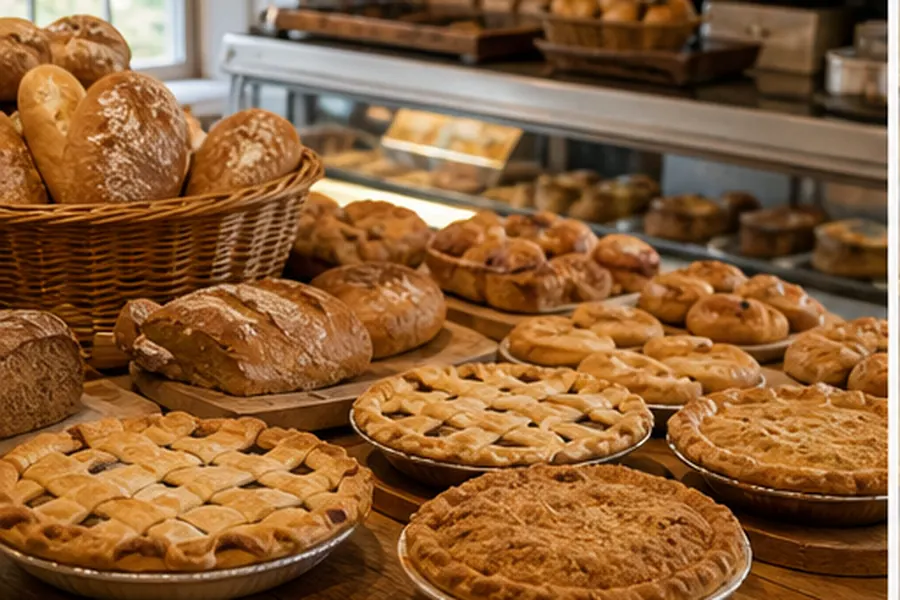
An Amish bakery stop can be a memorable part of a country drive, but a little planning makes the experience much easier. Selection, baking schedules, payment options, and business hours can differ significantly from one bakery to another. This guide will help you decide what to look for, when to arrive, what to ask before visiting, and how to bring delicate purchases home safely.
Amish bakery shopping guide for planning your first stop
The best bakery visit starts before you reach the front door. Independent bakeries may operate from storefronts, market stands, farm properties, or shared retail spaces, and each business sets its own schedule and policies. Some may focus on bread and rolls, while others may offer pies, cookies, quick breads, or savory items.
Use the Amish Store Locator bakery directory to begin researching possible stops. You can also search the full directory, browse listings by state, or open the near-me search while traveling.
Treat directory information as a starting point rather than a guarantee. Business hours, seasonal closures, product availability, accepted payment methods, and baking schedules can change. Verify important details directly with the bakery before making a long drive or building your day around a particular purchase.
For examples from official bakery and market websites, see our guide to bakery hours, payment methods, and preorders. It explains how a market building’s hours can differ from the bakery counter’s schedule.
When should you arrive at an Amish bakery?
There is no universal “best time” that applies to every bakery. A useful arrival time depends on when the business opens, which products are baked that day, whether goods are made in batches, and how quickly popular items sell.
In many cases, an earlier visit may provide a broader selection. However, arriving at opening does not necessarily mean every product will already be ready. One bakery might prepare bread before opening, while another may bring out different items throughout the morning or afternoon.
The safest approach is to call ahead when contact information is available. Ask specific questions rather than simply asking whether the bakery will be open.
Helpful call-ahead questions include:
- What are your current hours for the day I plan to visit?
- Are those hours different during the current season?
- Which days do you bake bread, pies, rolls, or other items?
- What time are the products I want usually available?
- Do you recommend arriving at a particular time?
- Can I reserve or preorder an item?
- How much notice is needed for a preorder?
- Do you accept cards, or should I bring cash?
- Are there directions or parking instructions I should know?
- Will holiday, weather, or family schedules affect the posted hours?
If no phone number is listed, look for an official website or social page maintained by the business. You may also want to identify a backup stop nearby in case the bakery is closed or the day’s selection is different from what you expected.
What Amish baked goods might you encounter?
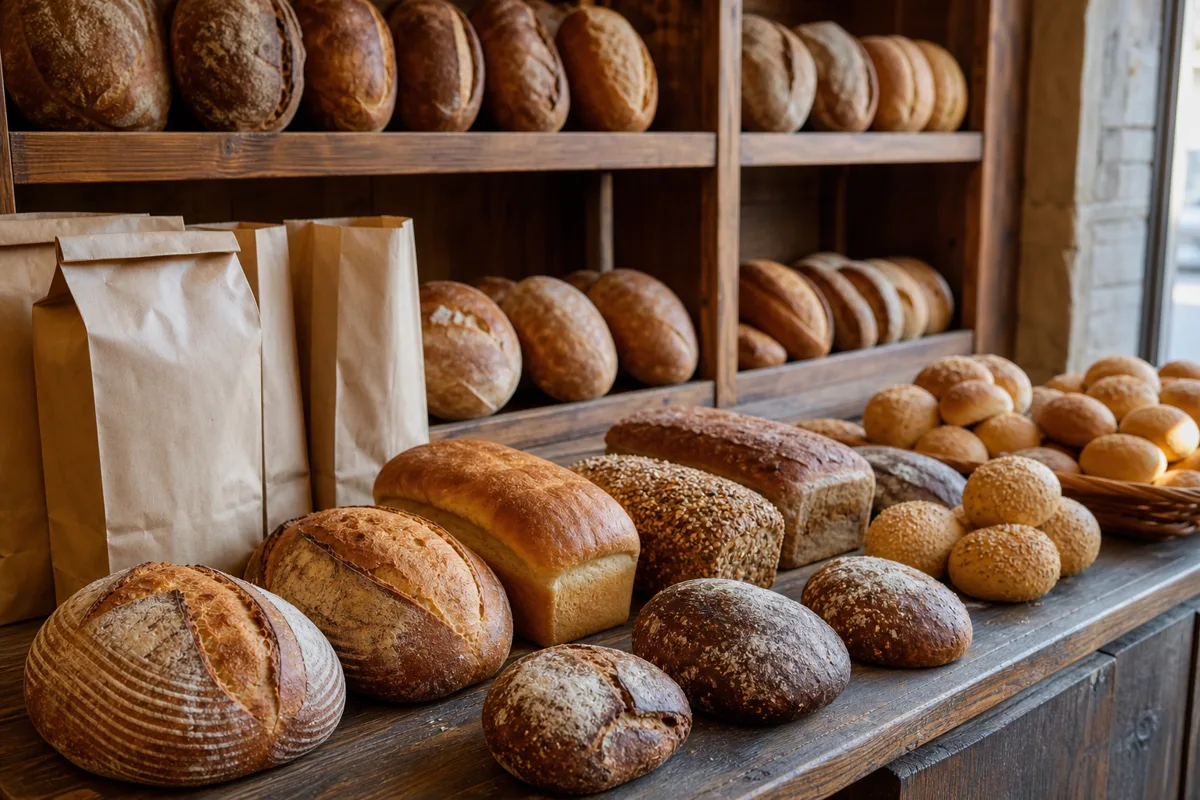
The products offered by an individual bakery depend on its recipes, equipment, season, baking day, and business model. No category or item should be assumed to be available. Think of the following as a shopping checklist that can help you compare options rather than a promise of inventory.
For route-planning ideas, read how to find Amish bakeries near your route.
Breads
Bread is often a practical purchase because it can be used for toast, sandwiches, or meals after the trip. Possible choices may include white, wheat, multigrain, rye, sourdough-style, cinnamon, raisin, or other specialty loaves.
When comparing breads, consider:
- Loaf size and shape
- Sliced versus unsliced packaging
- Ingredients and allergen information
- Intended storage method
- Whether the loaf can be frozen
- How soon you expect to eat it
Ask when the bread was baked and follow any storage directions on the package. “Fresh” does not provide enough information to determine shelf life, so avoid guessing how long a loaf will keep.
Rolls and buns
Dinner rolls, sandwich buns, sticky buns, cinnamon rolls, and similar products can be useful for a shared meal or breakfast. Packaging matters if you will be driving for several hours. Soft rolls can be compressed by heavier purchases, while iced or glazed products may become messy if tilted or left in a warm vehicle.
Check the quantity in each package before buying. If you are serving a group, confirm whether the rolls are individual portions or larger than expected.
Pies
Pies are popular road-trip purchases, but they require more transport planning than cookies or packaged bread. Availability may depend on the season, baking schedule, and whether advance orders are needed.
Before selecting a pie, ask:
- Does it need refrigeration?
- How should it be stored during the drive?
- Is the box sturdy enough for travel?
- Is the filling likely to shift if the pie tilts?
- Are serving or storage instructions included?
- Should the pie be eaten or frozen within a specified period?
Do not assume that all fruit, cream, custard, nut, or specialty pies have the same storage requirements. Follow the bakery’s directions and the product label.
Cookies and bars
Cookies and dessert bars are generally easier to divide among travelers and may fit more securely into a packed vehicle. Packages can still be crushed, so place them above jars, coolers, and other heavy purchases.
Consider buying an assortment only if the package clearly identifies the contents, especially when allergies or dietary restrictions are relevant. Ask the bakery directly about ingredients and preparation practices rather than relying on appearance.
Cakes and quick breads
Depending on the business, you may encounter whole cakes, loaf cakes, muffins, cupcakes, or quick breads. Flavors and formats may change throughout the year.
Whole cakes and decorated cupcakes need a level surface and enough space to prevent the box from sliding. Quick breads are often simpler to pack, but they should still be protected from heat and crushing. Review labels for storage guidance and any information about glazes, fillings, frostings, nuts, or other ingredients.
Savory baked goods
Some bakeries may offer savory products such as cheese bread, herb bread, meat-filled pastries, hand pies, breakfast items, or other prepared foods. These items should not automatically be treated as shelf-stable.
Ask whether a product must stay hot, cold, or refrigerated, and confirm how soon it should be eaten. If you cannot transport it under the recommended conditions, choose another item or plan to eat it at an appropriate stop.
Preserves and accompaniments
A bakery or neighboring store may sell preserves, fruit spreads, honey, syrups, pickled products, butter alternatives, or other accompaniments. These can pair well with bread and rolls, but selection varies by location.
Check seals and labels before purchase. Place jars upright in a padded box or reusable bag, and keep them separate from soft baked goods. Follow the label’s instructions regarding refrigeration after opening and storage after purchase.
How to choose without overbuying
Bakery displays can make it tempting to buy more than your household can reasonably use. Before entering, think about the number of people you are shopping for, how much freezer space you have, and how many hours remain in your trip.
A simple buying plan might include:
- One item to eat during or shortly after the trip
- One bread or roll package for upcoming meals
- One gift or shareable item
- An optional freezer item, if the label or bakery confirms that freezing is suitable
Inspect package sizes instead of estimating from the display. A loaf, pie, or bag of rolls may be larger or smaller than the version you usually purchase at a supermarket.
If you are shopping for someone else, ask about ingredient needs before the trip. Product names alone do not confirm ingredients, allergens, preparation methods, or suitability for a particular diet.
Packing and pie transport tips
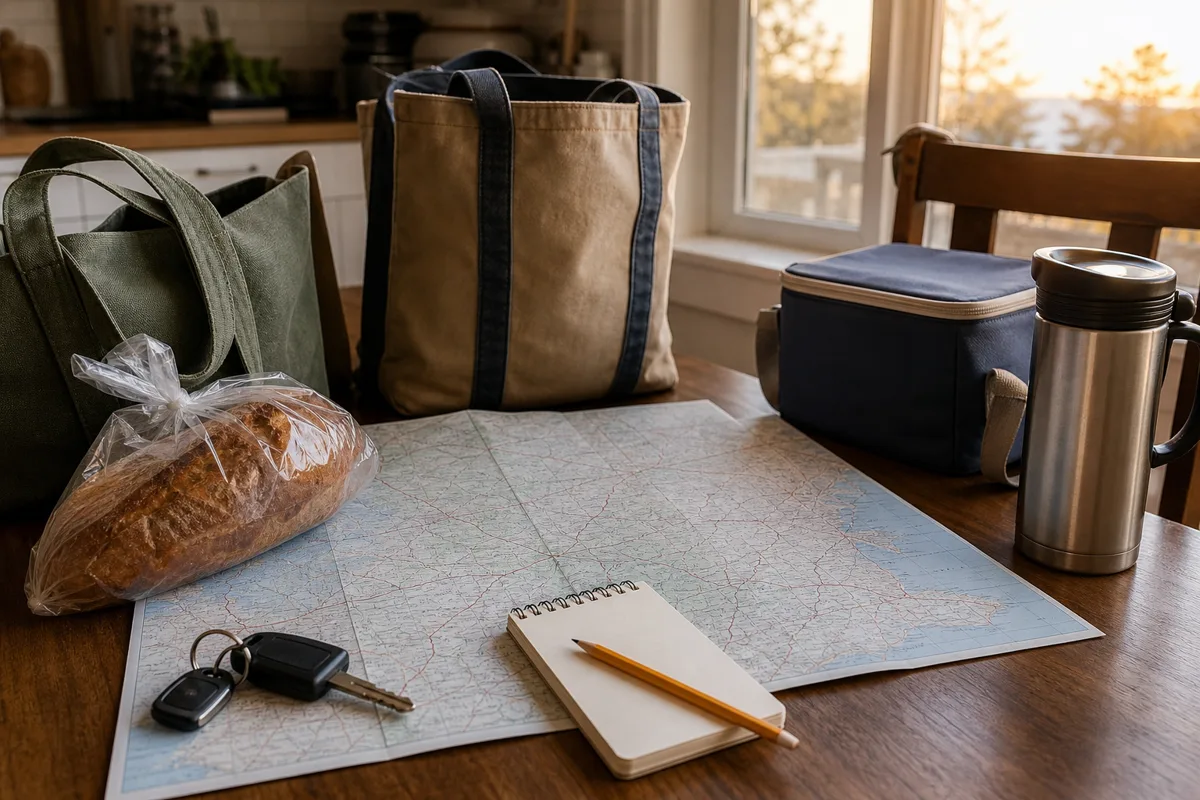
Bring a few basic supplies so your purchases are protected for the rest of the route. Our guide to what to bring to an Amish country store can help you prepare for both bakery and general store stops.
Useful supplies may include:
- A clean, shallow box for bread and cookies
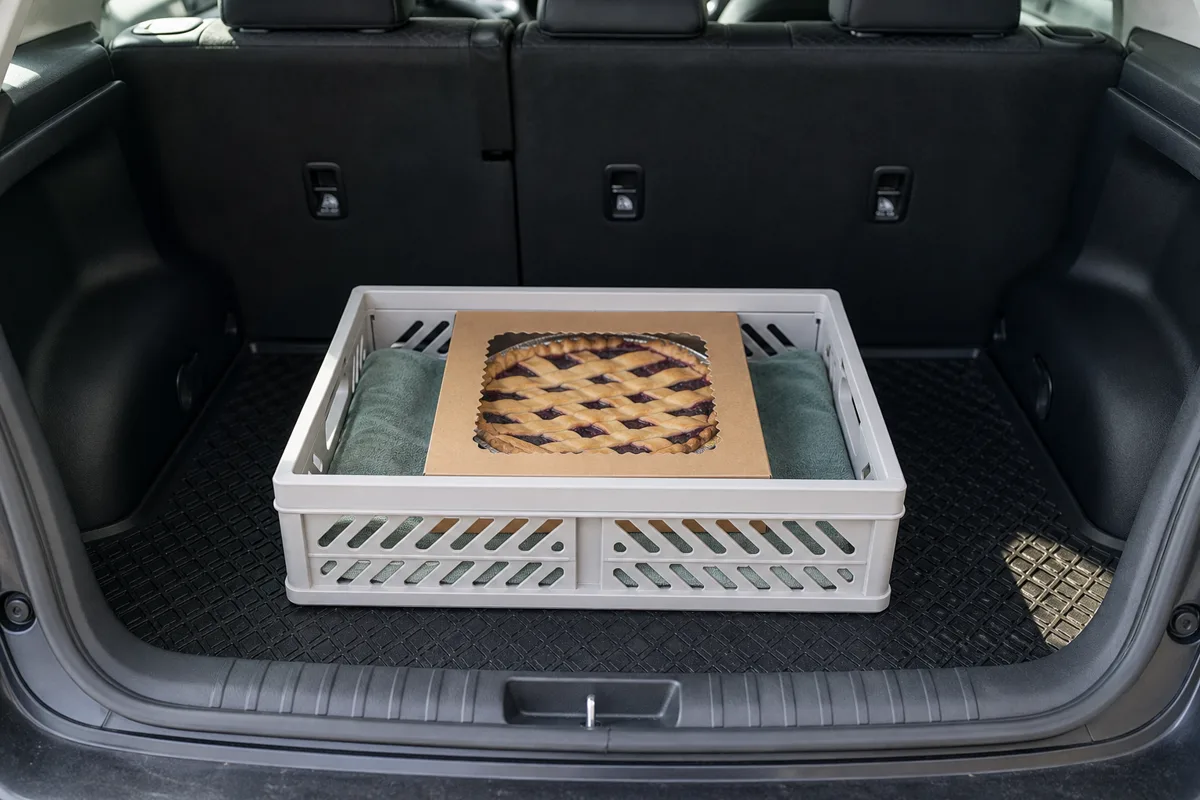
- A separate flat box or tray for pies
- Nonslip shelf liner or a clean towel
- Reusable bags for packaged goods
- Padding for jars
- A cooler with appropriate cold packs
- Cash in small denominations if payment methods are uncertain
- A written shopping list
- Contact information for each planned stop
For pie transport, place the box on a clean, flat surface. The cargo area or floor may work better than a sloped vehicle seat, provided the area is clean and the pie will not be exposed to excessive heat. Put nonslip material beneath the box and avoid stacking anything on top.
Do not place warm baked goods directly against cold packs unless the bakery recommends that method. Likewise, a cooler does not make every product safe for an unlimited period. Ask for handling instructions and follow the label, particularly for items that require temperature control.
Storage and freezing after the trip
Storage requirements vary by product and recipe. Always defer to the package label and the bakery’s instructions instead of applying one rule to every loaf, pie, cake, or pastry.
When you arrive home:
- Read labels before removing or discarding packaging.
- Refrigerate products when instructed.
- Keep items in the recommended container or wrapping.
- Mark unlabeled packages with the purchase date.
- Ask the bakery before freezing if instructions are not provided.
- Divide suitable products into practical portions before freezing.
- Protect frozen goods from air and crushing.
- Follow any thawing or reheating directions supplied by the business.
If a product has no label and you are unsure how it should be stored, contact the bakery. Do not assume that a familiar-looking item has the same ingredients or storage needs as a version purchased elsewhere.
Planning a bakery road trip
A successful bakery road trip usually works better with a short, flexible route than with an overly ambitious schedule. Start with one priority bakery, add one or two optional stops, and leave time for slower roads, parking, shopping, and unexpected closures.
Use the guide to finding Amish bakeries near your route to build a practical itinerary. If you are searching from your phone, an Amish bakery near me search can help identify possibilities based on your current area.
For each potential stop, record:
- Business name and address
- Confirmed hours for your travel date
- Phone number
- Baking days or product timing
- Preorder deadline
- Payment methods
- Parking or access notes
- Refrigeration needs
- One backup destination
Schedule temperature-sensitive purchases toward the end of the trip when practical. If a must-have item is only available early, bring suitable transport equipment and minimize the time it spends in the vehicle.
Avoid creating a schedule that depends on every bakery having every product. A better goal is to visit a few businesses, see what is available, and choose items that can be transported and stored properly.
Bakery shopping etiquette and practical reminders
Every bakery is an individual business, so pay attention to posted signs and instructions. Rules regarding parking, entrances, photography, restrooms, pets, and access to non-retail areas may differ.
A few practical reminders can make the stop smoother:
- Park only in designated areas.
- Stay within customer spaces.
- Ask before taking photographs.
- Keep children supervised.
- Do not handle unpackaged products unless invited.
- Have payment ready at checkout.
- Be patient if service takes longer than expected.
- Respect posted closures and private-property boundaries.
If a bakery is closed, do not enter private areas to locate the owner. Continue to your backup stop or return during verified business hours.
Final checklist before you leave
Before beginning your drive, confirm the essentials:
- Have you verified the bakery’s hours directly?
- Did you ask when your preferred products are expected?
- Is a preorder required?
- Do you know which payment methods are accepted?
- Do you have a box, cooler, padding, and nonslip material?
- Can you keep pies and cakes level?
- Is there room to separate heavy jars from soft bread?
- Have you saved a backup bakery?
- Do you have enough time to follow product storage instructions?
The most useful Amish bakery shopping guide is one that leaves room for variation. Confirm the details that matter, arrive with realistic expectations, and buy according to your transport and storage capacity. That approach makes fresh bread shopping easier whether you are making a quick local stop or planning a full day on the road.
Frequently asked questions
What time should I arrive for the best selection?
There is no single time that works for every bakery. Call ahead and ask when your preferred items are normally available, whether products are baked in multiple batches, and whether preorders are recommended. Verify the day’s opening time directly before traveling.
Can I preorder bread or pies?
Some bakeries may accept preorders, while others may sell only what is available that day. Ask whether ordering is possible, how much notice is required, when pickup should occur, and which payment methods are accepted. A preorder should be considered confirmed only after the bakery acknowledges it.
How do I keep a pie safe during a long drive?
Ask whether the pie requires refrigeration, then follow the bakery’s instructions and product label. Keep the box level on a clean, nonslip surface, prevent other items from sliding into it, and avoid leaving it in a hot vehicle. Use a suitable cooler when refrigeration is required.
How can I tell whether an Amish bakery is open?
Check available directory and official business information, but verify hours directly whenever possible. Baking schedules, seasonal hours, holidays, weather, and temporary closures can affect availability. Keep a backup destination on your route in case the business is closed or its selection has changed.