
8 Country Store Noodle Shopping Tips for Cozy Dinners
Shop country store noodles with eight practical tips for choosing widths, reading labels, comparing package costs and planning cozy soups and pantry suppers.
This practical guide follows our source, correction, and uncertainty standards.
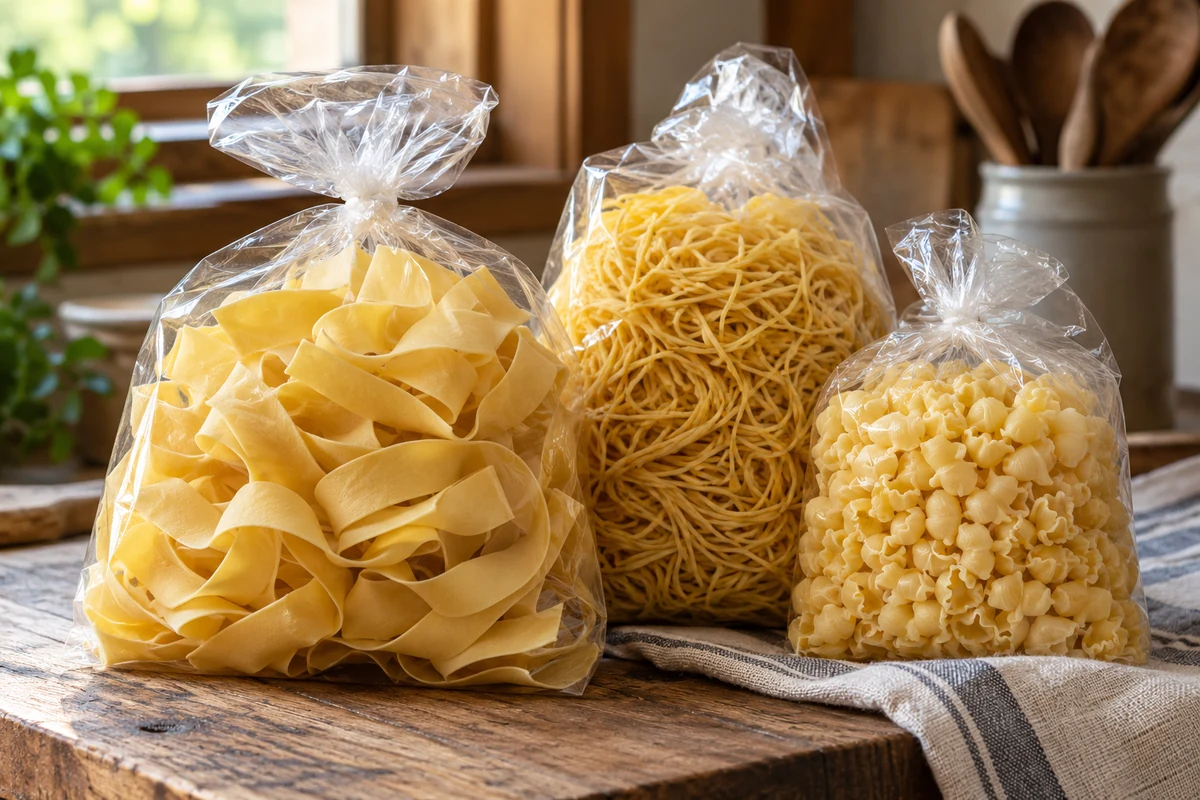
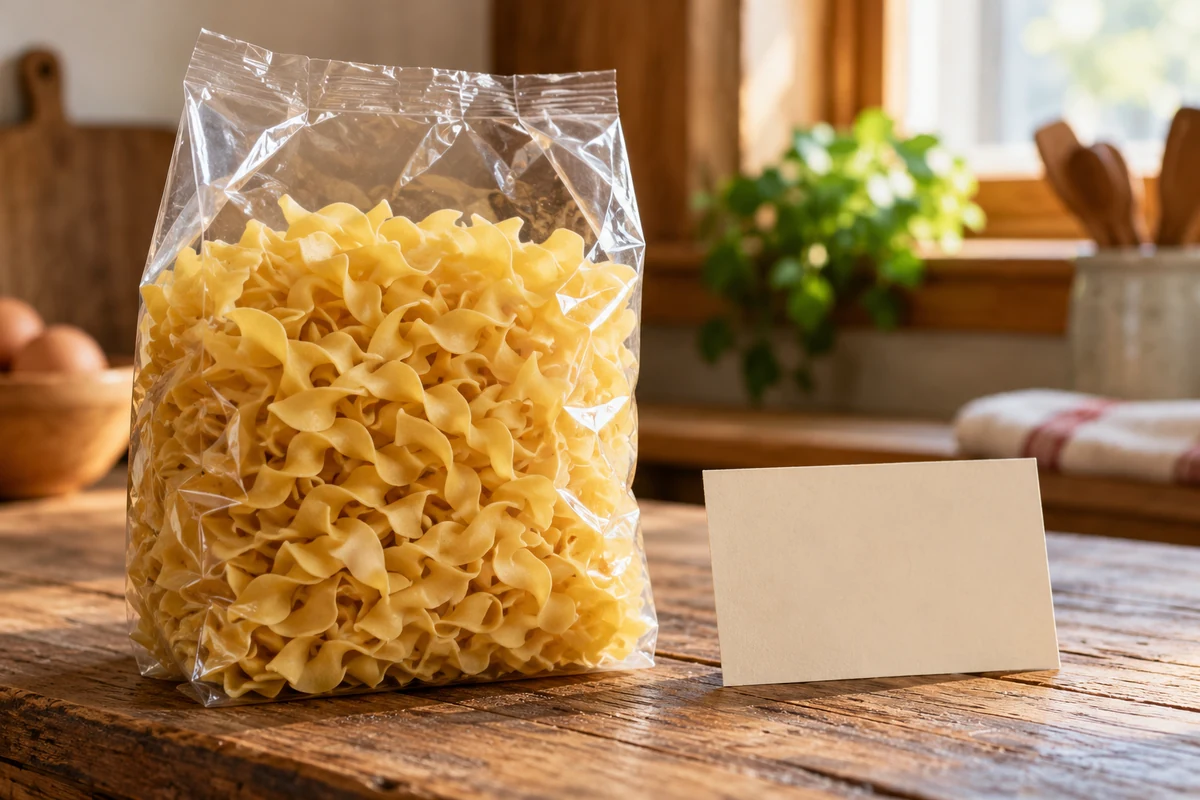
AI-generated editorial illustration; not a photo of a listed business.
A soup bowl, a noodle side dish and a pantry supper each call for a slightly different shopping choice. Width, ingredients and cooking directions help you decide which country store noodles suit the meal you have in mind. These eight tips walk through those differences, along with package sizes and packing for the trip. Choose your first dinner use before picking another variety to try.
How to Choose Country Store Noodles: 8 Practical Tips
1. Wide or Narrow Noodles?
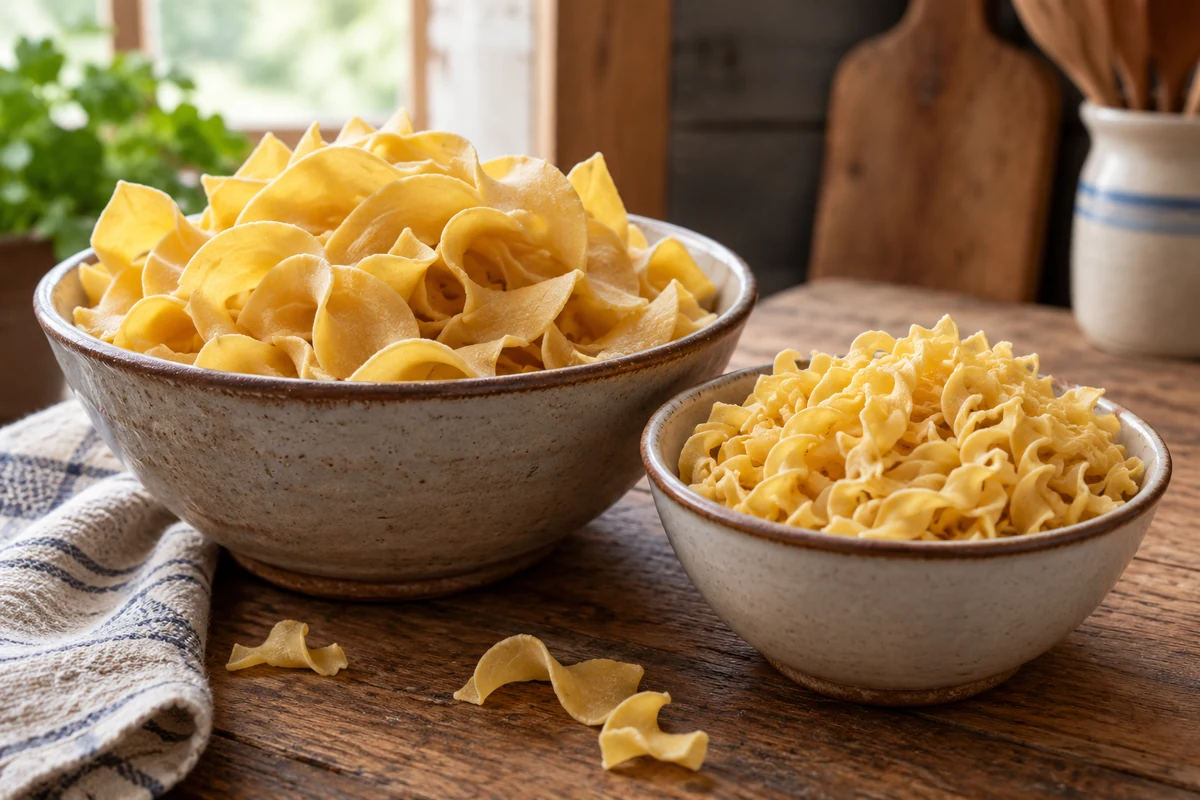
Start with the texture and bite you want. Wide noodles make a more substantial forkful and often suit meals where the noodle is a main feature. Narrow noodles can be easier to distribute through a bowl of broth or a mixed dish. Neither width is automatically better quality, and thickness matters alongside width: two broad noodles may behave differently if one is noticeably thicker.
Compare the actual pieces through the package rather than relying only on names such as “homestyle.” Check whether the lengths look manageable for your intended dish, too.
Ask: “Are these two varieties different only in width, or also in thickness and ingredients?”
If you mainly want a generous noodle side, choose the wider option. If you want noodles scattered throughout a spoonable supper, start narrower. Buy both only when you have a distinct use for each.
2. Read the Egg Noodle Ingredients
“Egg noodles” is a starting description, not a complete ingredient list. Compare the flour, egg ingredients and any additional ingredients on the actual packages. A short list may suit your preference, but it does not by itself establish better flavor, special nutritional value or handmade production.
Keep origin separate from ingredients. A country store may sell noodles made elsewhere, including commercially produced noodles. An Amish-owned shop does not make every product Amish-made. If that distinction matters to your purchase, ask who produces the noodles and whether the label identifies the maker.
For allergies, read ingredient and allergen information; plain packaging is not a safety assurance. The FDA’s food allergy guidance explains why label information matters. If a repacked bag lacks the details you need, ask for the original product information. Choose a clearly documented alternative if those details remain unavailable.
3. Choose Noodles for Soup
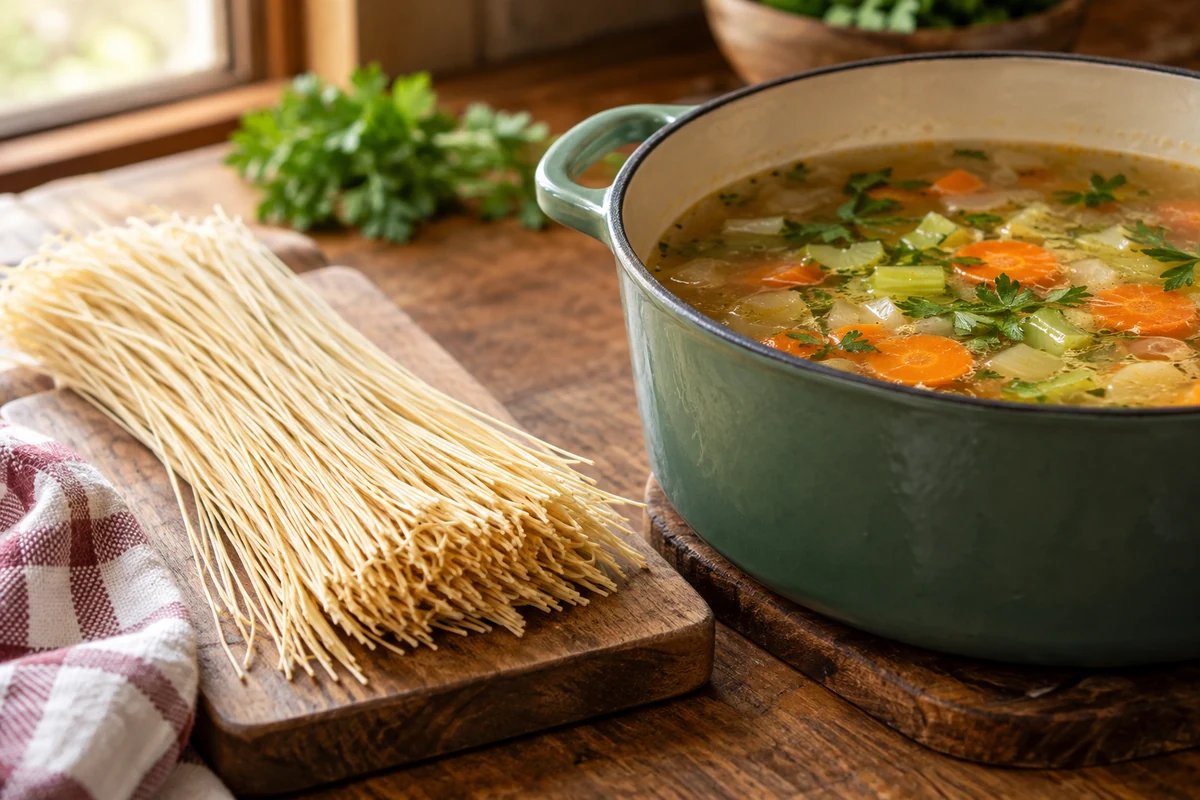
Picture the spoon, not just the bag. Long, broad pieces can be awkward in a small spoon, while shorter narrow noodles and small pasta shapes offer a different balance of noodle and broth. Check length as carefully as width, especially if you prefer a soup with several ingredients in each spoonful.
Consider whether you want a delicate noodle presence or a substantial, noodle-heavy bowl. A small shape may suit the first goal; a thicker egg noodle may suit the second. Shape alone will not tell you how firm a product stays, so look for a soup recommendation and usable directions.
A useful question is: “Which of these is intended for soup, and does the maker give dish-specific directions?” Choose the package with the clearest match to your plan. Treat that guidance as product-specific rather than applying one noodle’s directions to every bag.
4. Plan a Noodle Side Dish
A side dish purchase works best when you know what the noodles are supporting. Alongside a substantial main dish, a straightforward noodle may be enough. When the noodles will carry much of the meal’s appeal, width, thickness and your household’s preferred texture deserve more attention.
Think about the finished plate: do you want broad ribbons as a distinct side, or smaller pieces that are easier to combine with vegetables or a sauce? This is a shopping decision, not a reason to buy every shape on the shelf.
Check the serving information and your meal plan before choosing the bag size. Ask whether the producer suggests that particular noodle for a side dish rather than assuming a display pairing is an instruction. Your actionable choice: buy one suitable variety and identify its main-dish partner before leaving the aisle. That makes the bag an ingredient for dinner, not an unassigned pantry addition.
5. Compare Package Size and Cost
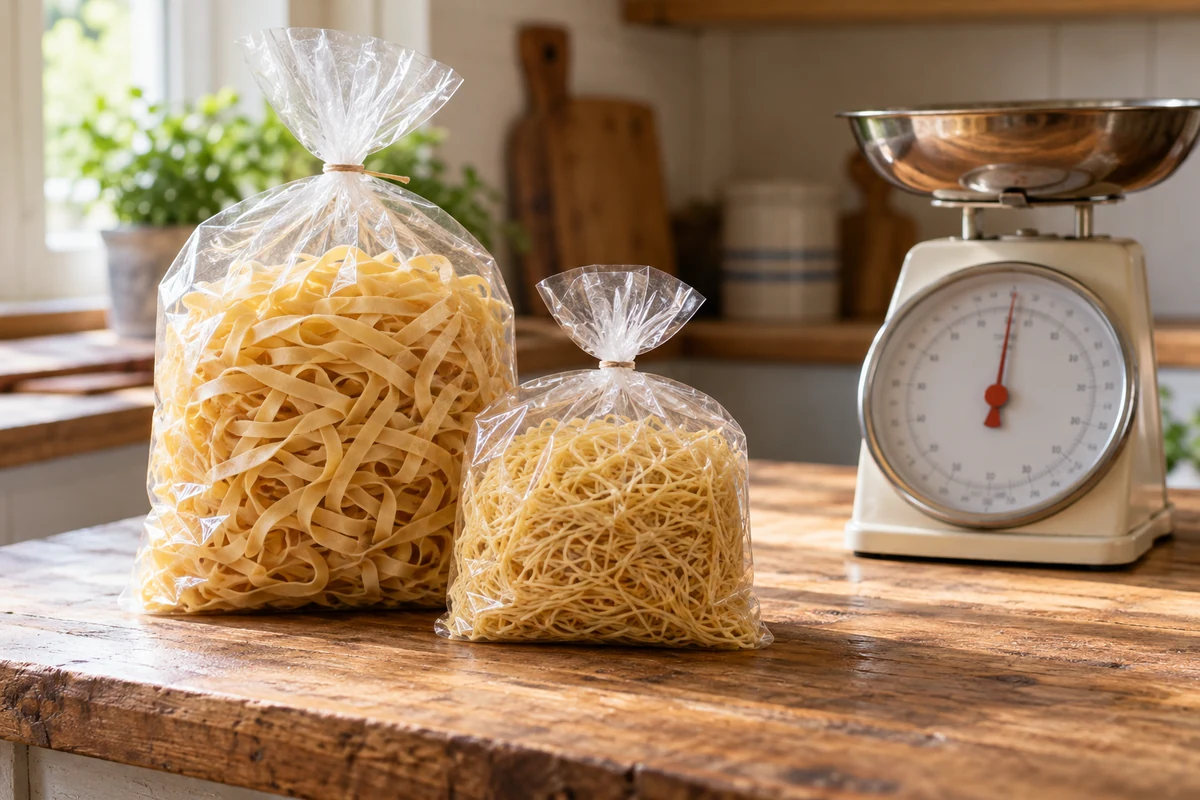
A large, airy bag can look like more food than a compact one. Compare net weight, not the height of the package, and use the same weight unit for each option. Divide the package price by its labeled weight when the shelf does not provide a unit price.
Then compare like with like. A different ingredient list, a different producer or a distinct noodle style may explain a cost difference without making either purchase wrong. Ask whether the shelf price applies to the whole package or is based on weight if the display is unclear.
The larger bag is only useful if its contents fit your household’s plans. Our small-household bulk food shopping guide can help you weigh that tradeoff. For an unfamiliar noodle, choose a manageable trial package; consider a larger one after you know you enjoy it and have repeat uses planned.
6. Protect Noodles From Crushing
Dry noodles need a little space in the shopping bag. Broad ribbons and long pieces can break under jars, cans or other heavy purchases. Broken pieces may still suit a mixed dish, but they will not give you the same appearance or bite as intact noodles chosen for a side.
Before checkout, inspect the seal and look for excessive loose fragments at the bottom. Some breakage can occur, so judge the package against your intended use rather than expecting every piece to be perfect.
Ask for fragile bags to be packed separately from heavy goods, or bring a rigid tote that keeps weight off them. The country store packing guide offers more trip-planning ideas. Put the noodles where other purchases cannot slide onto them. If you are buying several fragile pantry items, leave room for them before filling the tote with jars.
7. Keep the Cooking Directions
The useful part of a plain package may be its small printed label. Before buying, check that it includes readable directions or that the producer provides instructions you can take home. A familiar noodle shape is not a reliable substitute for guidance on that particular product.
If you move noodles into a pantry container, keep the label with them. Preserve the product name, ingredient information, directions and any date or lot details rather than saving only the cooking portion. A clear phone photo is a useful backup, especially for a label that may tear when the bag opens.
Ask: “Is there a printed instruction sheet for this noodle?” Follow the actual label and ask the producer about product-specific handling when needed. If the information is missing and cannot be supplied, choose another package. Convenience includes being able to identify and use what you bought later.
8. Pair Noodles With a Pantry Supper
Give each bag a simple job before buying companion ingredients. For a broth-based supper, your shopping group might include noodles, packaged broth, beans and vegetables. For a more substantial noodle dish, it might include a suitable sauce and a protein your household already enjoys. These are pairing ideas, not complete recipes; choose a recipe or product directions that fit the ingredients.
Check the pantry first so the trip does not produce another duplicate sauce or broth. The Amish bulk food pantry checklist can help you build a focused list around existing supplies.
Do not assume every companion item is locally produced or Amish-made simply because it shares the shelf. Check those claims separately when they matter to you. Finish with a small decision: name the first supper for your noodles, then buy only the missing components. One complete meal plan is more useful than several unrelated bargains.
If you are choosing between pantry meal bases, compare the effort and package sizes in the dried bean and lentil guide.
Quick Comparison: Which Package Fits Your Plan?
Use this table to narrow the shelf choices, then let the individual product’s label settle the details. Noodle width is a useful clue, but it cannot establish ingredients, production method or cooking behavior on its own.
| Your priority | Option to examine first | Main tradeoff | Check before choosing |
|---|---|---|---|
| A substantial noodle side | Wide egg noodles | Larger pieces give a more prominent bite | Thickness, directions and serving information |
| An easy-to-spoon soup | Short narrow noodles or small shapes | Smaller pieces create a different texture from broad ribbons | Actual length and soup suitability |
| Trying an unfamiliar product | A smaller package | Unit cost may differ from the larger size | Enough for your planned dish |
| Repeating a favorite meal | A larger package of a known noodle | More pantry space and a larger purchase | Net weight, unit cost and repeat uses |
| Buying for a particular ingredient preference | A clearly labeled option | Appearance may not reveal recipe differences | Full ingredients and any relevant allergen information |
| Buying specifically for maker origin | A product with verifiable producer details | Store ownership and product origin can differ | Who made it and where that information appears |
Make the Store Stop Worthwhile
Use the store directory search to find actual shopping options near your planned stop. A directory listing is a starting point, not confirmation that a store currently carries a particular noodle width or brand. Choose a shop that fits the rest of your grocery plan rather than making a special journey for an unconfirmed package.
One focused inquiry can cover the important gaps: “Do you currently carry dry egg noodles? Are ingredient information and directions available, and what package sizes do you offer?” If Amish-made origin is important, add a separate question about the producer. Confirm the store’s current shopping hours through its available contact information before setting out.
Keep a fallback on your list: a different labeled noodle that suits the same meal, or permission to skip the purchase. A useful shopping trip does not require buying noodles simply because you made the stop.
Copyable Noodle Shopping Checklist
- Name the first meal: soup, side or pantry supper.
- Check noodles and companion ingredients already at home.
- Choose a preferred width, length and texture.
- Read ingredients and relevant allergen information.
- Verify maker origin if that affects the purchase.
- Compare net weight and cost in the same units.
- Select a quantity with realistic planned uses.
- Check the seal, visible breakage and readable directions.
- Pack separately from heavy jars and cans.
- Keep the label if transferring to another container.
Frequently Asked Questions
Are country store noodles always Amish-made?
No. The phrase describes where you are shopping, not necessarily who made the product. A store can carry several producers’ goods. Ask for maker information rather than treating plain packaging, a country setting or store ownership as proof of origin.
Are wide noodles better than narrow noodles?
Neither is universally better. Wide noodles offer a larger bite; narrower, shorter noodles may fit a spoonable dish more easily. Thickness and the product’s directions also matter. Choose for the meal rather than treating width as a quality ranking.
Is the biggest bag usually the best value?
Compare unit cost first, then consider how much you will actually use. A lower cost per unit does not make an unfamiliar oversized purchase the right choice. A smaller trial bag can be a more practical introduction to a new noodle.
What should I do if a plain bag has no directions?
Ask whether the store can provide the producer’s printed instructions and product information. Do not borrow directions from a similar-looking noodle as though they were interchangeable. If useful documentation is unavailable, select a labeled alternative.
Images are AI-generated editorial illustrations, not photographs of particular stores or makers.
Before your next store trip, write one noodle supper on your list, check its missing ingredients and choose the package that fits that meal.