
8 Dried Bean and Lentil Shopping Ideas for Everyday Meals
Shop dried beans and lentils with eight practical ideas for choosing varieties, comparing bag sizes, reading soup mixes, and planning everyday pantry meals.
This practical guide follows our source, correction, and uncertainty standards.
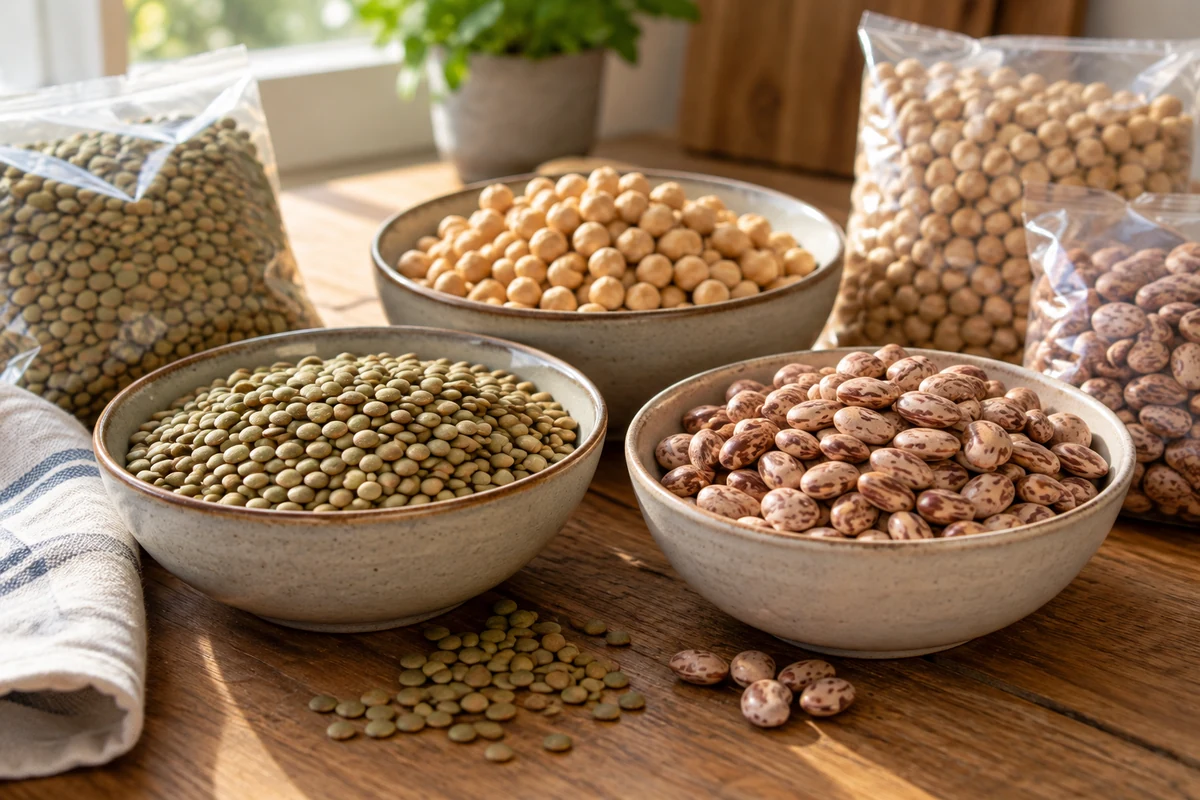
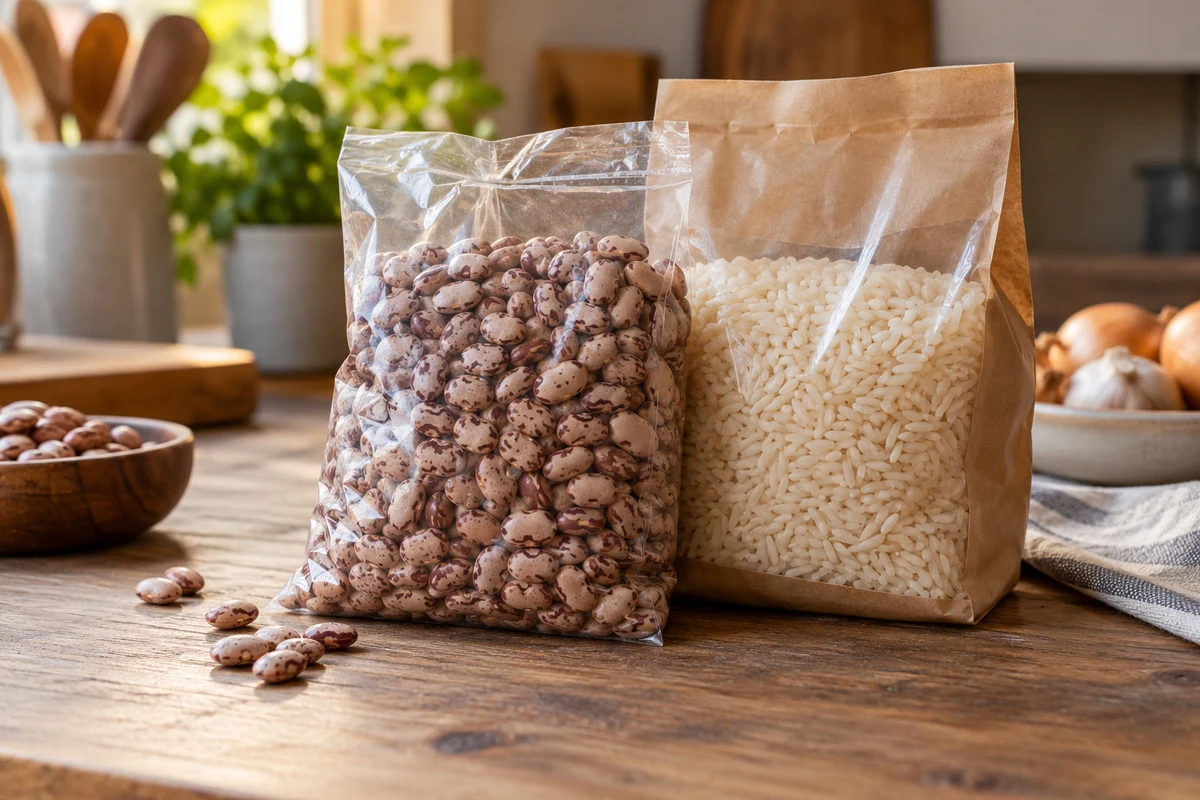
AI-generated editorial illustration; not a photo of a listed business.
Give each bag of beans a meal to look forward to: a familiar supper, a flexible soup or a grain-and-bean pantry dinner. Choosing that use first makes the varieties and package sizes easier to compare. This guide to dried beans and lentils offers eight shopping ideas for building a useful everyday pantry. Keep your available cooking time in mind, and bring the product’s preparation directions home with you.
8 Ways to Shop for Dried Beans and Lentils
1. Start With a Familiar Bean
Begin with a bean you already enjoy, even if you usually buy it canned. Pinto beans might fit your usual bean bowls; black beans could belong in a favorite soup; chickpeas may suit the salads or stews you already make. Familiar flavor gives you one less thing to figure out while learning a different preparation routine.
The tradeoff is convenience. A dry product is not a direct, ready-to-use replacement for a can, and a recipe calling for cooked beans needs that distinction respected. Before buying, check whether your chosen recipe starts with dry or cooked beans.
If the bag uses an unfamiliar name, ask, “What variety is this, and is there preparation guidance for this particular product?” Avoid selecting solely by color or appearance.
Your decision: Buy one familiar variety first. Add an unfamiliar bean only when you have a specific recipe and a package size that makes experimenting reasonable.
2. Compare Lentils for Your Recipe
Lentils are not interchangeable merely because they sit together on the shelf. Whole green or brown lentils generally retain more texture, while split red lentils tend to soften and break down. That difference matters when you want distinct lentils in a salad rather than a thick, soft soup.
Read beyond the color name. Look for whether the product is whole or split, and match that description to the recipe. A recipe designed around split lentils may not give the result you want with a whole variety, even when the finished dish has similar seasonings.
Ask, “Does this package have directions, and does the supplier identify the variety?” If a label says only “lentils,” useful details may be missing.
Your decision: Choose for the finished texture first. If your recipe specifies a particular lentil, follow that choice rather than substituting whichever bag appears cheapest.
3. Choose a Manageable Bag Size
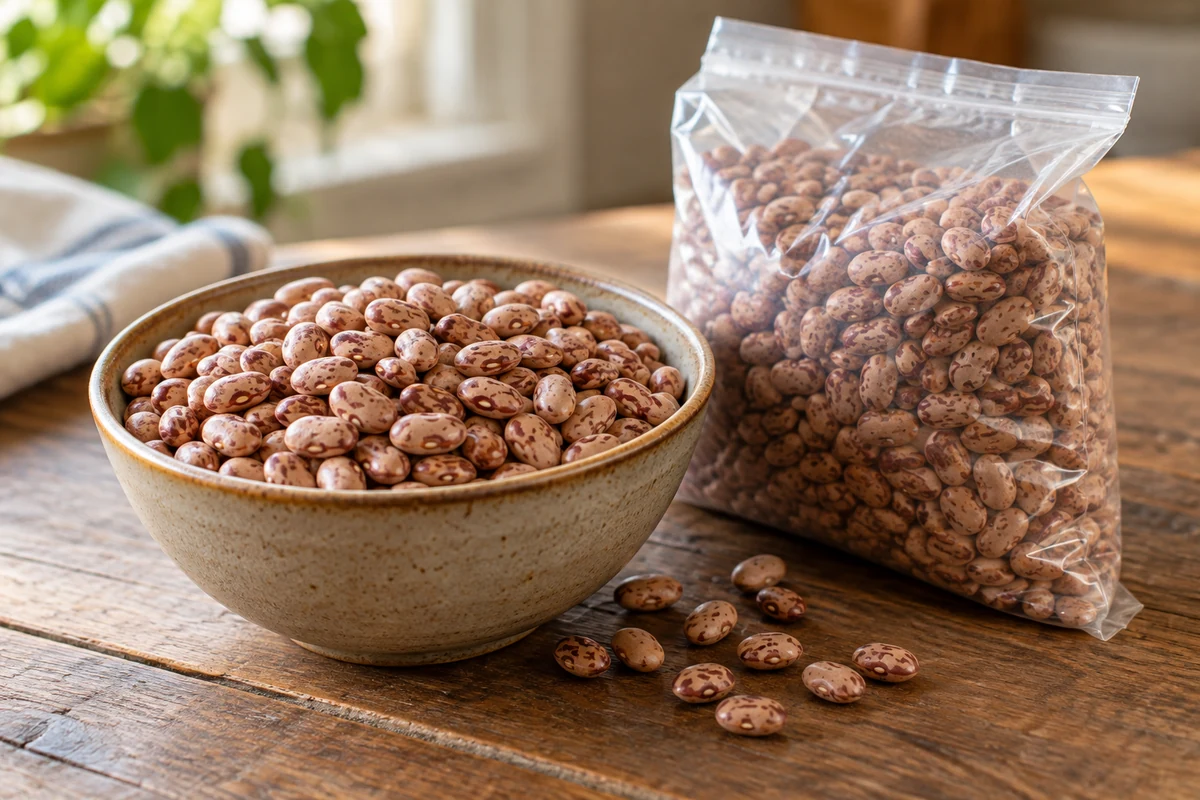
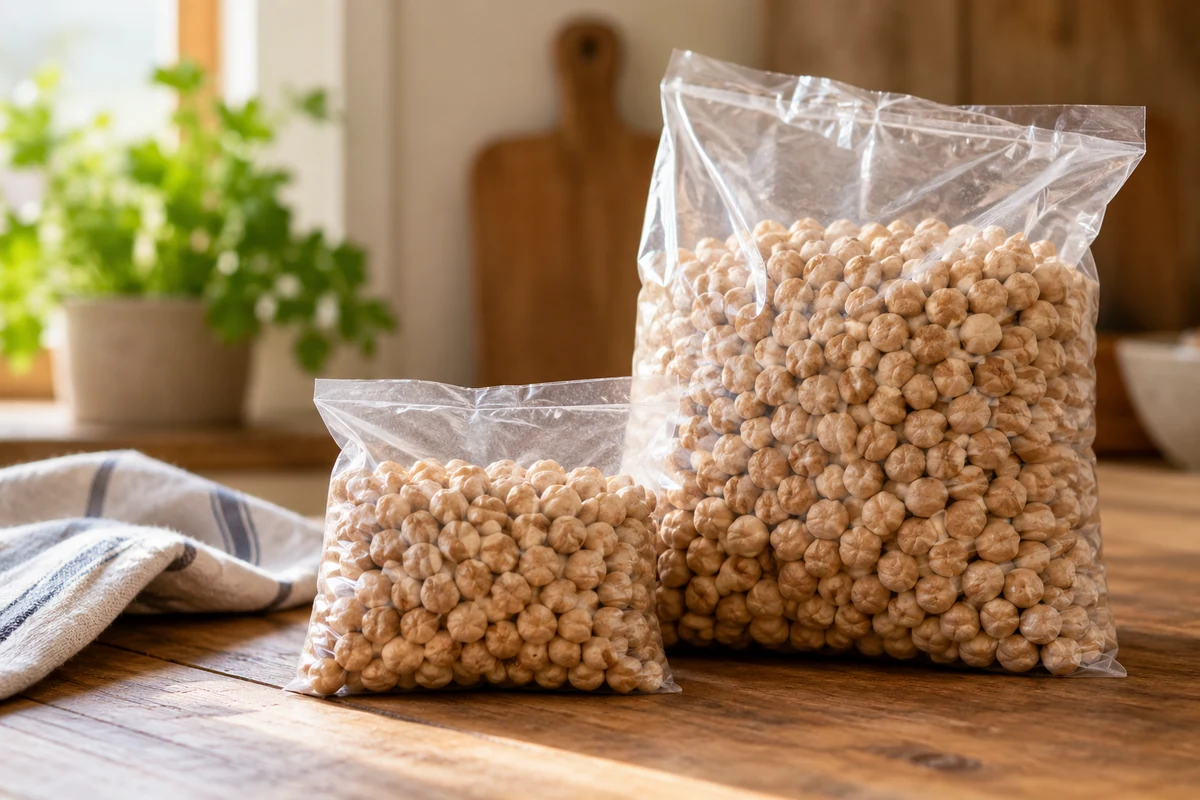
The largest bag deserves a place in your cart only if it fits your actual habits. Compare the labeled net weights and calculate the price per ounce or pound using the same unit. Then consider whether the larger purchase leaves enough room in your grocery budget for the rest of the meals it is meant to support.
A small bag can be the better choice for a new variety, a compact pantry, or a household that eats beans occasionally. A larger bag may make sense when you repeatedly use the same bean and already have a suitable place to keep it according to its label.
Ask whether smaller packages are available; don’t assume a bulk-food shop sells only large quantities. Our small-household bulk-food shopping guide can help frame that choice.
Your decision: Pick the smallest practical size that supports your planned meals, then reconsider a larger package after you know your usage.
4. Plan Two Meals Before Buying
Give each bag two plausible jobs before putting it in the basket. Pinto beans might support a bean-and-rice bowl and a vegetable soup. Chickpeas could suit a stew and a salad, provided your chosen recipes explain the preparation each requires. Green lentils might work in a grain salad and a hearty soup.
This is a planning exercise, not a requirement to prepare one large batch or reuse leftovers. Each meal can be made separately using its own recipe and the product’s directions. The point is to establish that the ingredient belongs in your routine.
Check the supporting groceries, too. If both meals require ingredients you rarely buy, the bean purchase may be less practical than it first appears.
Ask yourself, “Would I still want these meals next week?”
Your decision: Write two meal names beside the variety on your list. If you cannot name a second appealing use, choose a smaller trial bag.
5. Read Dry Soup Mix Directions
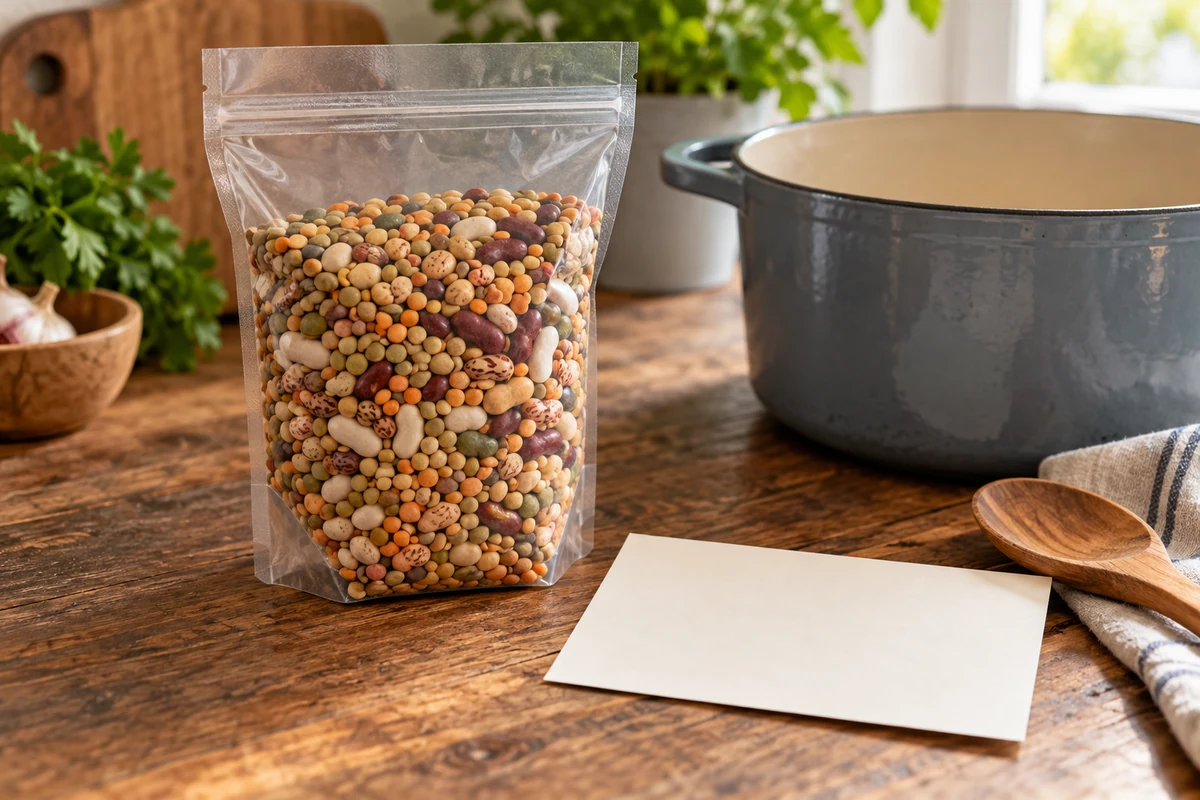
A colorful soup mix can be a convenient starting point, but the front of the bag rarely tells the whole shopping story. Turn it over and identify what is included: beans alone, beans with grains, a seasoning blend, or a separate seasoning packet. Then read what you must supply yourself.
Some mixes are pantry ingredients rather than complete meals. Required additions can change both the total cost and whether the mix suits your household. Compare the full ingredient list with buying a plain bean and using seasonings you already own.
For allergies, read the ingredient and allergen information; plain packaging is not assurance of suitability. If necessary information is absent, ask for it before purchasing.
A useful question is, “Are these the complete directions for this exact mix, including any separate steps?”
Your decision: Choose a mix only when its ingredients, required additions, and preparation instructions are clear enough to plan around.
6. Keep Beans Labeled in the Pantry
An attractive pantry container should not separate the contents from their identity. Before buying a bag you intend to transfer, make sure you can preserve its variety name, ingredient information, preparation directions, and any date or lot details supplied. Keeping the original label with the container is often easier than rewriting everything.
Follow the product’s storage and handling instructions, and use a suitable food-storage container if you decant it. Avoid topping up an unidentified older supply with a new purchase; that makes it harder to track which instructions belong to which beans.
At the shelf, check that the package is intact and the print is readable. Ask, “Can I get the original product information?” if a repacked bag lacks useful details.
The bulk-food pantry checklist can help you inventory what is already at home.
Your decision: Keep enough information to recognize and use the purchase confidently after the shopping trip is forgotten.
7. Build a Beans-and-Grains List
Shop for combinations without assuming the ingredients belong in the same pot. Black beans and rice, lentils and barley, or chickpeas and couscous can give a meal direction, but each component may require different preparation. Choose a recipe that accounts for those differences rather than improvising from two packages at dinner time.
Start with the grain already in your pantry. If you have rice, finding a useful bean may be enough; you do not need another grain simply because it is displayed nearby. Add only the supporting ingredients your intended meals actually need.
Watch package proportions as well. An oversized grain bag beside a small experimental bean purchase can leave you with a new imbalance instead of a useful pairing.
Ask, “Which of these ingredients am I missing, and which am I duplicating?”
Your decision: Make a short paired list—one bean or lentil, one grain, and necessary additions—while crossing off everything you already have.
8. Check Cooking Guidance Before Dinner
Dry beans are a planned ingredient, not automatically a last-minute dinner shortcut. Before committing to a bag, read the full preparation guidance and compare it with the equipment and time your chosen recipe requires. Lentils may fit a different routine, but the actual product and recipe still determine the plan.
Do not assume one bean’s directions apply to every variety, or that a method is suitable simply because it works for another pantry staple. Where package guidance is incomplete, ask the producer or supplier for product-specific instructions rather than guessing.
This check belongs at the shopping stage. A bargain you cannot comfortably prepare is not yet a useful dinner purchase.
Try asking, “Where can I find the complete preparation instructions for this product?”
Your decision: Buy for a meal you can realistically schedule. If tonight’s recipe needs ready-to-use beans, a dry bag is a future pantry purchase, not a shortcut for that meal.
For a quicker pantry-meal alternative, the country store noodle guide helps you choose a shape and package size that fit your routine.
Quick Comparison: What Belongs in Your Basket?
Use this table to narrow the choice, then check the individual package. Texture and convenience depend on the product and the recipe, not just the category name.
| Choice | Useful starting point | Main tradeoff | Check before buying |
|---|---|---|---|
| Familiar dry bean | A dish you already enjoy | Requires advance preparation planning | Does the recipe start with dry or cooked beans? |
| Whole green or brown lentils | Meals where some texture matters | Not equivalent to split lentils | Exact variety and recipe match |
| Split red lentils | Soft-textured soups and similar dishes | Usually won’t provide distinct, firm lentils | Whole versus split labeling |
| Plain bean assortment | Trying variety in a planned dish | Mixed contents need appropriate directions | Instructions for that exact blend |
| Seasoned dry soup mix | A guided meal starting point | May require several extra groceries | Ingredients, additions, and complete directions |
| Larger single-variety bag | An established household favorite | More money and pantry space committed | Comparable unit price and realistic usage |
Find a Store That Fits Your List
Use the directory to find stores near you, then look for descriptions that mention bulk foods, pantry groceries, or dry goods. A bakery-focused listing may not suit this particular shopping mission. Directory information can help you shortlist a stop, but it does not guarantee a specific bean, package size, or current selection.
One focused inquiry is more useful than a vague request about “bulk food”: “Do you carry plain dried beans or lentils, and are they sold in sealed packages or by weight?” Confirm the store’s current shopping arrangements before making a special trip. The country-store packing guide can help with the practical side; do not assume outside containers are accepted.
Also separate the seller from the product’s origin. An Amish-owned shop may carry commercially supplied beans alongside other foods. A country-store setting does not establish that beans are Amish-grown, locally grown, organic, or hand-packed. If origin matters to your purchase, ask who grew or supplied the product and what the label verifies. An uncertain answer is a reason to leave the claim unconfirmed, not to fill in the story yourself.
Copyable Shopping and Decision Checklist
Copy this into your phone and fill in the blanks before leaving:
- Pantry inventory checked: ______
- Bean or lentil variety: ______
- Two planned meals: ______ / ______
- Recipe starts with dry or cooked beans: ______
- Suitable bag size and budget: ______
- Net weight and comparable unit price checked
- Ingredients and any relevant allergen information read
- Soup-mix additions added to the grocery list
- Complete product-specific directions available
- Label information can stay with the contents
- Store details checked before a special trip
A filled-in list also makes substitutions easier. If the intended lentil is unavailable, you can judge an alternative against the recipe rather than choosing another bag merely to avoid leaving empty-handed.
Frequently Asked Questions
Are dried beans from an Amish store necessarily Amish-grown?
No. Store ownership and product origin are separate facts. Beans may come from a commercial distributor or another supplier. Ask about the specific product and rely on verifiable labeling rather than the shop’s appearance.
Is a bulk bag always the better value?
No. Compare equal units of weight, then consider how much you will actually use. A smaller bag can be a sensible trial purchase even when its unit price is higher. There is no universal saving.
Can I substitute any lentil for another?
Not without considering texture and preparation. Whole and split lentils can behave differently, changing the finished dish. For a first purchase, match the variety specified by your recipe and consult the package directions.
What if a repacked bag has no directions?
Ask the seller for the producer’s or supplier’s complete guidance for that product. If you cannot obtain enough information to identify and prepare it confidently, choose a clearly labeled alternative instead.
Images are AI-generated editorial illustrations, not photographs of particular stores or makers.
Start with your pantry today: choose one familiar bean or lentil, write down two meals, and use store search to shortlist a shop worth checking for that purchase.