
8 Questions to Ask When Buying a Wood Serving Board
Use this wood serving board buying guide to compare size, wood, finish, care and gift costs, with eight practical questions to ask before choosing a board.
This practical guide follows our source, correction, and uncertainty standards.
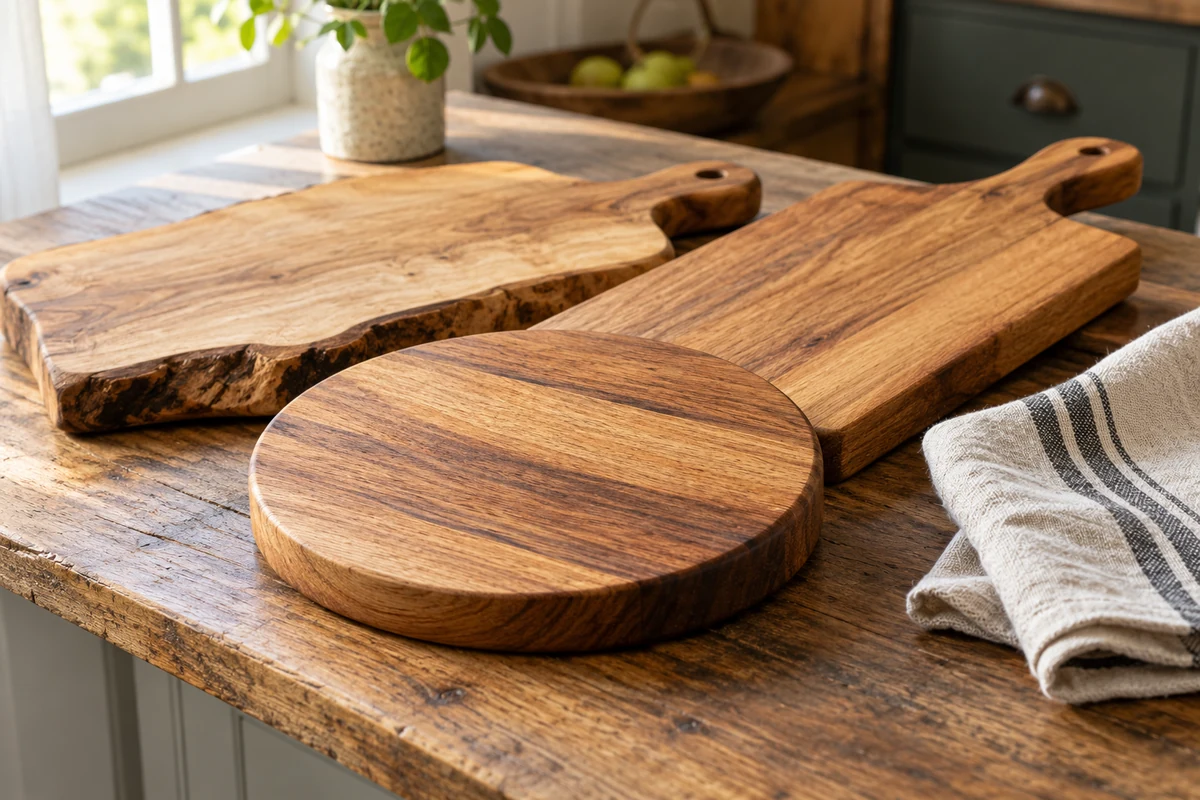
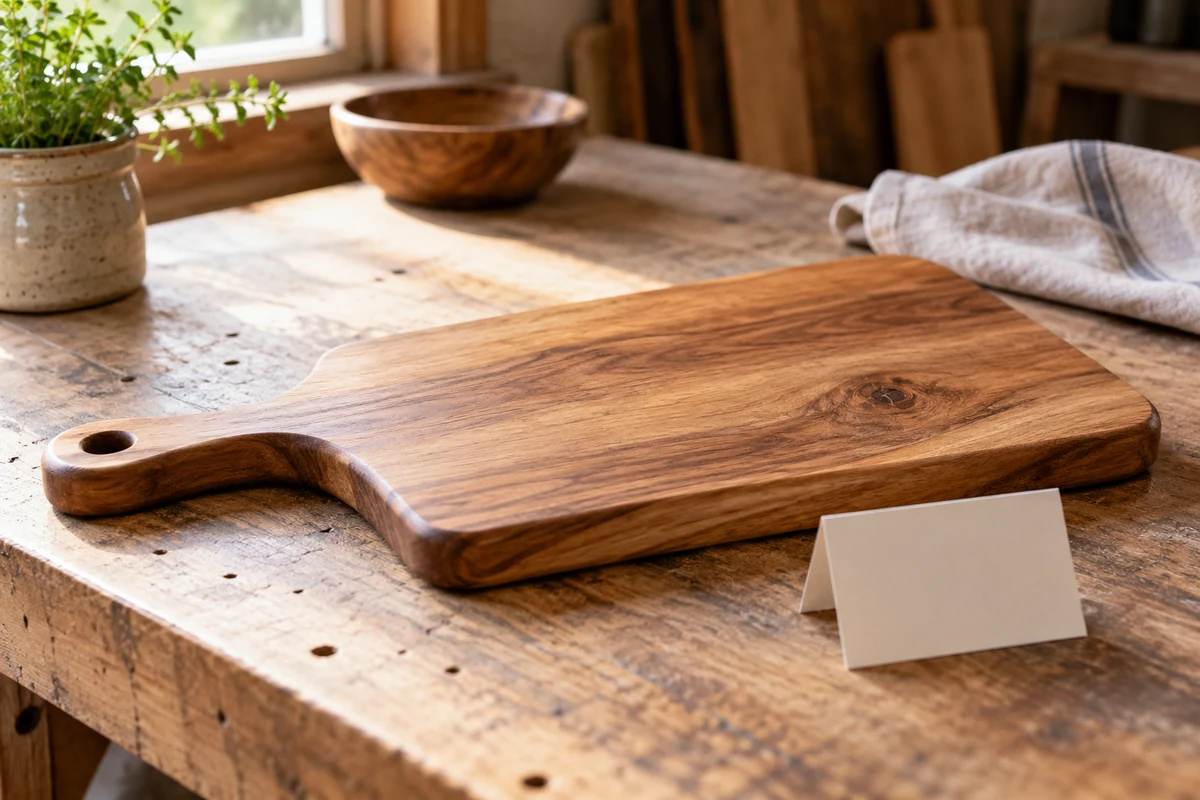
AI-generated editorial illustration; not a photo of a listed business.
Measure the part of your table you can spare for a serving board, with plates and glasses already in place. Those dimensions make a useful filter when several beautiful boards catch your eye. This wood serving board buying guide covers eight questions about fit, materials, finish, care and the complete purchase. Bring the measurements along and compare each board with the job you want it to do.
Your wood serving board buying guide: eight questions that matter
Take a tape measure, your usable table dimensions and a photo of the cupboard where the board will live. You can use the store directory search to identify possible shopping stops, then confirm which carry serving boards; a country-store listing alone does not establish inventory or maker origin.
1. Measure the Serving Space
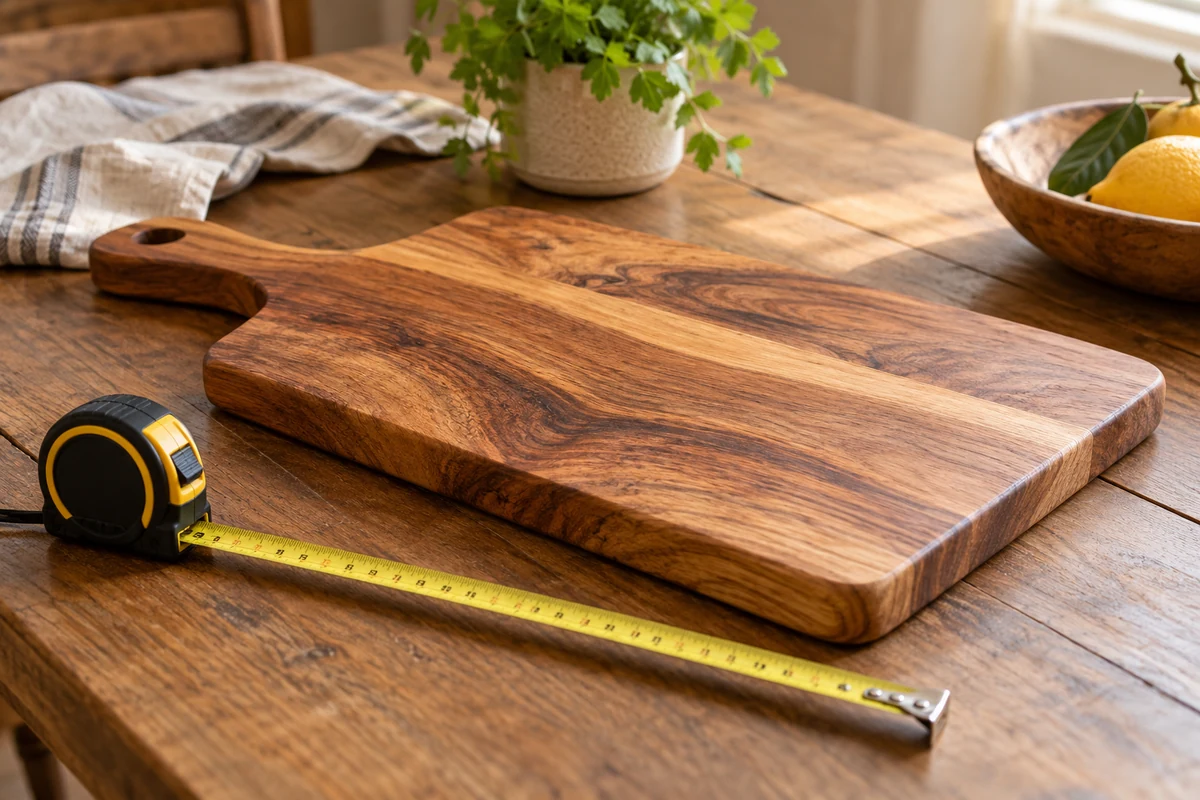
Start with the table or counter, not the board’s outline. Measure the area left after plates, glasses and any centerpiece are in position. On a narrow table, a modest rectangle may be more useful than a wide round board, even when both look manageable in your hands.
Ask for two measurements: the total footprint, including the handle, and the usable serving surface. A long paddle handle takes up table space without holding much food. Likewise, a deep groove or broad decorative edge reduces the flat area available for bowls and crackers.
Before shopping, cut a paper template to your likely size and place it where you would serve. Add the actual dip bowl you usually use. Choose the board that fits a normal gathering, not just the largest occasion you can imagine. If it forces guests to move their glasses, go smaller.
2. Ask What Wood the Board Uses
Ask for the wood species rather than accepting “hardwood” or “natural wood” as the whole answer. Maple, walnut and cherry are examples you may encounter, but a species name is not a complete quality guarantee. Construction, surface preparation and the intended use matter too.
Look at whether the board is one piece or assembled from strips, and ask about any contrasting sections. A glued-up board is not automatically inferior to a single-piece board. Instead, inspect the finished object for open seams, cracks, rough patches or an unexplained filler in the serving area. With permission, set it on a flat surface and check for rocking.
A useful question is: “What wood and other materials are in this board, and is this construction intended for serving food?” Choose a board whose materials the seller can identify. Treat dramatic grain as a visual preference, not proof of better performance.
3. Confirm the Food-Contact Finish
The first distinction is between a board made for direct food contact and a decorative piece shaped like one. Neither a natural-looking surface nor a glossy coating answers that question. Ask what finish was applied and whether the finished board is ready for its stated food-contact use.
Then describe what you plan to put on it: unwrapped bread, cheese, fruit or small dishes. Ask whether that use fits the maker’s instructions and whether the board is for serving only or also for cutting. A serving board should not be assumed to tolerate knives simply because it is wooden.
Try this script: “What is the finish, what uses is it intended for, and can I have the care instructions in writing?” If those answers remain vague, choose another board for direct food contact. Also check whether engraving, paint, resin or decorative inlays change where food may be placed.
4. Compare Board Weight and Handles
Pick up the board with permission, using the grip you would actually use at home. Test it with both hands rather than judging by a quick one-handed lift from a display. A thick board may feel substantial, but its empty weight is only the starting point once you add food and dishes.
Check the underside and edges. Can your fingers get underneath when it sits flat? Are the handles comfortable, or do narrow cutouts press into your hands? Ask whether an extended handle is intended for carrying the loaded board or mainly for positioning and hanging it.
For someone who finds heavy kitchenware difficult, a smaller board may be a better gift than a grand platter. Do not test a loaded display yourself; ask the seller about intended carrying use. Choose a comfortable two-handed grip, or plan to place the empty board on the table and arrange food there.
5. Ask About Board Cleaning
Care is part of the purchase, not a detail to discover after the first gathering. Ask how this particular board should be washed, dried and maintained, following the maker’s instructions rather than a general tip attached to a different wood product.
Find out whether the finish needs periodic renewal and, if so, which product the maker specifies. “Oil it occasionally” is less useful than a named compatible product and clear guidance on when maintenance is needed. Do not assume an oil already in your kitchen is appropriate.
Look closely at carved lettering, grooves, bark edges and recessed handles. These features may appeal visually while adding cleaning work. Ask how to clean those areas without damaging the surface. If you want a low-fuss everyday piece, favor a simpler shape with accessible surfaces. For a gift, include the original care card so the recipient does not have to guess what upkeep the board requires.
6. Choose a Board That Fits Storage
Measure the route into storage as well as the storage space itself. A board may fit the inside of a cupboard but not pass easily through its opening. Handles, feet and irregular live edges can make a seemingly slim piece awkward to slide beside trays.
Ask about the board’s full thickness and recommended storage position. Do not assume a handle hole means the board is suitable for whatever wall hook you already own. If hanging is part of your plan, confirm the intended use of the hole and choose appropriate mounting hardware separately.
At home, try your paper template in the cupboard or tray slot. Consider where the board can dry as directed before being put away, too. A board that requires rearranging three shelves each time is unlikely to become an everyday favorite. Choose the size you can retrieve and replace comfortably, even if a larger one looks more impressive.
7. Ask Who Made the Board
An Amish-owned shop, an Amish-made board and a generic board sold in a country store are three different things. Any could offer a useful product, but the setting does not establish who made it. If origin matters to your purchase, ask directly and without assumptions.
Useful questions include: “Was this made by the shop, by another workshop or supplied through a wholesaler?” and “What information can you provide about the maker?” A tag or receipt description is helpful when available. Do not demand personal details; clear product provenance can be enough.
Also ask who handles questions about the finish, repairs or a problem discovered after purchase. If you are comparing shops across a region, browse stores by state and verify product details with each candidate. When Amish-made origin is important, buy on the basis of a clear, supported description—not rustic lettering, plain packaging or the store’s surroundings.
8. Check the Complete Gift Cost
Compare the total purchase, not just the board’s marked price. Depending on the seller and your choices, extras could include personalization, wrapping, a specified maintenance product, shipping or a stand. Ask which are optional and whether any care item is needed before first use.
Check the return terms before adding initials or a message. Personalization may change those terms, and a large board can be a difficult gift when you do not know the recipient’s storage space. A plain, manageable board with clear care instructions may be more thoughtful than a heavily decorated one.
If you are adding food, choose packaged items with readable labels and follow each product’s handling instructions. Our Amish store gift basket ideas can help keep the combination useful. Decide on an all-in budget, then prioritize the board itself; wrapping and extras should not rescue an unsuitable size, uncertain finish or uncomfortable grip.
For a serving or storage gift with a different function, compare the practical checks in the handmade basket shopping guide.
Quick comparison: which style suits your routine?
Shape is a practical starting point, not a quality ranking. Compare actual dimensions and construction rather than assuming every board in a category behaves alike.
| Board style | Useful for | Main tradeoff | Check before choosing |
|---|---|---|---|
| Compact rectangle | Everyday bread, cheese or a small snack spread | Less room for separate bowls | Usable area and finger clearance |
| Long, narrow board | Serving along the center of a table | Can crowd place settings at the ends | Total length, including handles |
| Round board | A central arrangement people reach from several sides | Width can dominate a small table | Space remaining for plates |
| Paddle board | Small servings and a recognizable gift shape | Handle adds storage length | Whether the handle supports carrying |
| Irregular or live-edge board | Buyers who value distinctive outlines | Uneven edges can complicate layout and care | Flat serving area and edge-cleaning instructions |
If two boards are close contenders, choose the one that solves your most frequent serving task. The occasional larger gathering can use additional dishes rather than dictating every everyday purchase.
Make the shopping stop count
Use nearby store listings to narrow your options, then make one focused inquiry before traveling: ask whether the store currently carries wood serving boards and can provide material, finish and care details. Confirm its hours separately; directory browsing is a starting point, not a guarantee of stock or opening times.
Bring your measurements, a photo of your storage space and your total budget. The country-store shopping checklist can help with the rest of your trip planning. At the shop, compare only a few plausible boards first. Eliminating pieces that cannot fit your table or cupboard makes the finer decisions much easier.
Copyable shopping and decision checklist
- Table space available: ______
- Maximum total length, width and thickness: ______
- Usable serving area fits my usual dishes.
- Wood species and other materials identified.
- Direct food-contact use and finish confirmed.
- Serving-only or cutting use clarified.
- Empty weight and two-handed grip comfortable.
- Cleaning, drying and maintenance instructions included.
- Storage opening and position work.
- Maker origin clarified if important to me.
- Total cost and return terms checked.
- Final choice fits my routine—not just the display.
Frequently asked questions
Can a wood serving board also be a cutting board?
Sometimes, but confirm that with the maker. A board sold for presentation may have a finish, decoration or construction intended only for serving. If you want to slice bread or cheese directly on it, ask about that specific use before buying rather than treating the two labels as interchangeable.
Is a thicker board always better?
No. Thickness affects weight and storage, but it does not by itself establish good construction or suitability. A thick board that is uncomfortable to lift can be less useful than a lighter, well-made alternative. Evaluate the whole piece: flatness, seams, surface, grip and the maker’s intended use.
Does an Amish store sell only Amish-made boards?
No such assumption is warranted. A shop may carry goods from different suppliers, regardless of ownership. Ask about the individual board’s origin. If the seller cannot establish that it is Amish-made, assess it as a board of unconfirmed origin rather than assigning a maker identity from the retail setting.
What should I choose if I do not know the recipient’s kitchen?
Favor a manageable size, simple surfaces and clear care instructions. Avoid personalization until you understand the return terms. Include a gift receipt if the seller offers one, and skip optional accessories unless they serve a known need. The recipient’s available storage matters more than an elaborate presentation.
Images are AI-generated editorial illustrations, not photographs of particular stores or makers.
Before choosing a shop, measure the place where your board will be used and the opening where it will be stored. Write those limits on the checklist, then use them to rule out the wrong boards before comparing grain, shape or decoration.