
8 Handmade Basket Shopping Tips for a Useful Home
Make handmade basket shopping practical: measure your space, compare handles and weaves, ask about materials, and choose a basket that earns its place at home.
This practical guide follows our source, correction, and uncertainty standards.
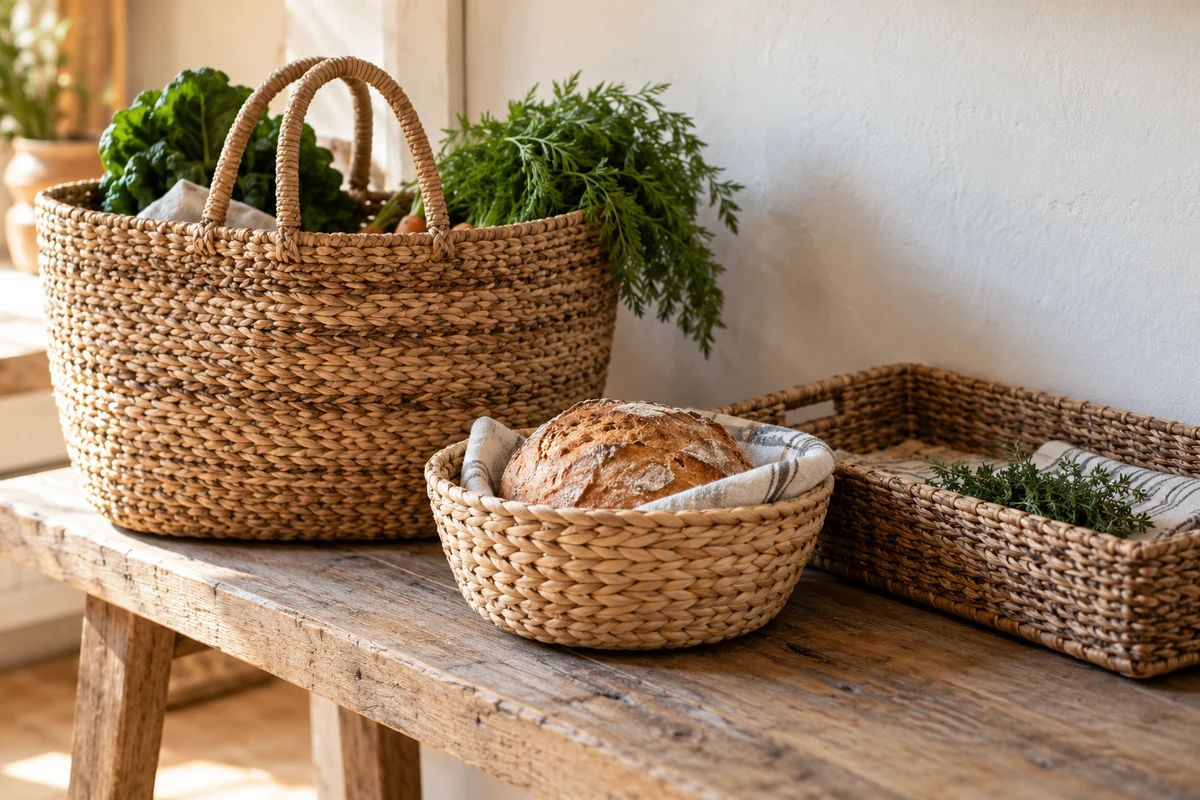
AI-generated editorial illustration; not a photo of a listed business.
Choose a place for the basket before choosing the basket itself. A bread basket, a market carrier and an entryway catchall need different shapes, weaves and handles. These handmade basket shopping tips explain eight practical checks for matching a piece to everyday use. A few measurements and clear care instructions can help a lovely purchase become something you reach for often.
Eight handmade basket shopping tips for everyday use
1. Measure Before Buying a Basket
Measure the space the basket must fit, not just the object it will hold. For a shelf, record the usable width, depth, and height beneath the shelf above. Include any cabinet lip or door hinge that narrows the opening. A fixed handle may prevent a basket from sliding into a space even when the body fits perfectly.
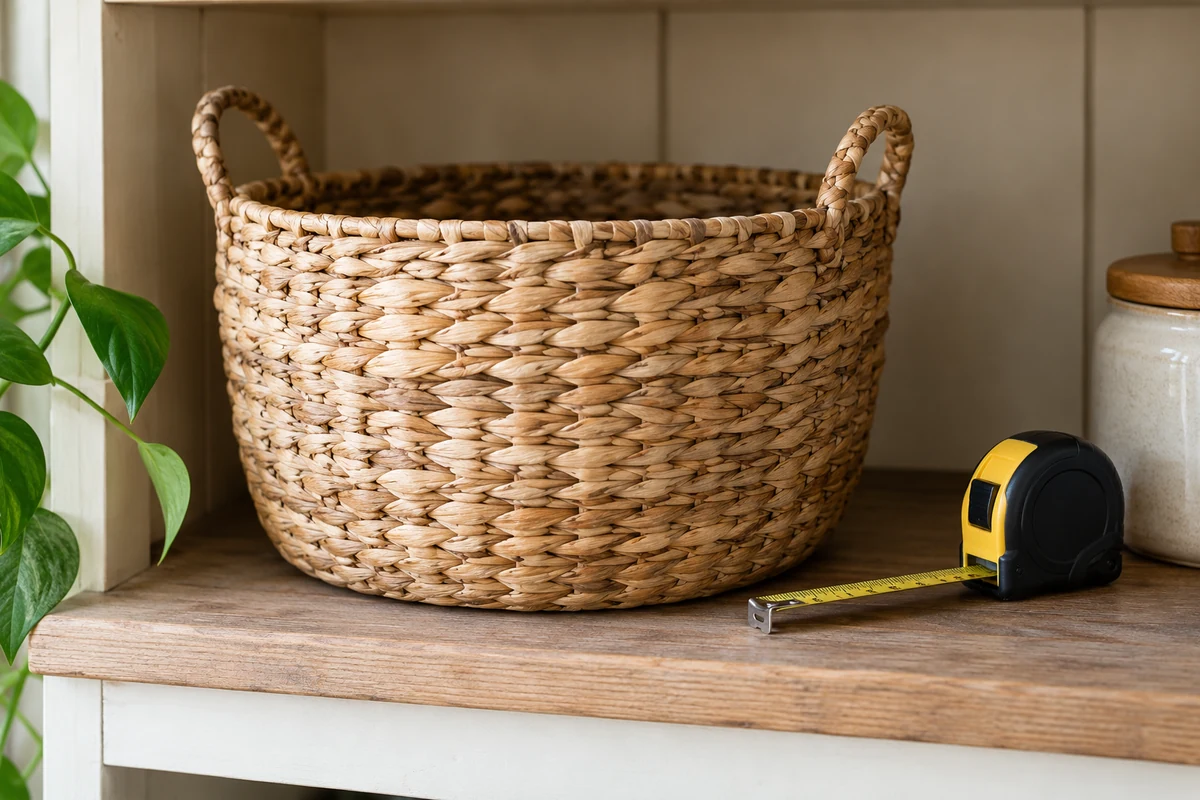
Bring a tape measure and a note showing both your maximum outside dimensions and the minimum inside space you need. Tapered sides can make a generous-looking basket surprisingly small at the bottom. For papers, napkins, or folded linens, a paper template of the intended contents is useful.
Ask: “Do these measurements include the rim and handles?” Check the widest point yourself with permission. Choose a basket with enough clearance to pull out comfortably; a tight fit becomes irritating when the basket is full. If it will sit on a bench, leave room for someone to sit.
2. Choose the Basket for One Job
Decide whether you are buying a carrier, a serving piece, or stationary storage. A market basket needs comfortable handling and a construction suited to carrying its intended contents. A basket for clean guest towels needs the right capacity and a surface that will not snag fabric. A tray for mail needs easy access more than depth.
Write the job in one sentence: “Hold the current week’s incoming mail on the console.” That gives you a better buying test than “help organize the house.” It also makes comparisons fair: a decorative tray and a substantial carrying basket solve different problems.
Ask what use the seller recommends, particularly before planning to carry heavy items. Do not treat a product name as a load rating. If you are assembling a present, the gift basket ideas guide can help you choose contents first. Buy the container around the job, rather than inventing a job around the container.
3. Inspect Handles and the Base
Set the empty basket on a flat surface and see whether it sits steadily. Look underneath for broken strands, protruding ends, or areas that could catch on a tabletop. Small variations can be part of handwork; a rocking base or an uncomfortable grip is still a practical drawback if you will use the basket daily.
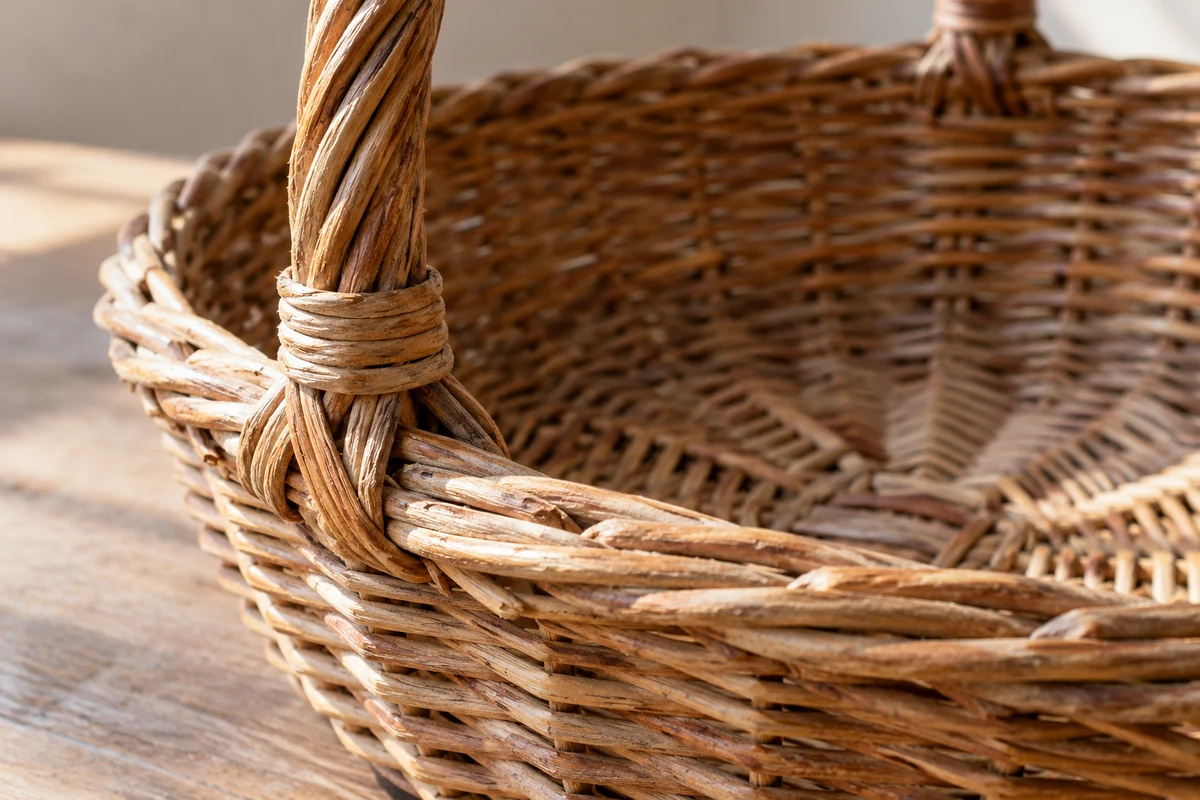
Trace the handle attachments visually. Are there splits near the attachment points? Does a movable handle swing freely without scraping the rim? Hold the basket as you expect to carry it, checking whether your fingers have enough room and whether the grip presses sharply into your hand.
Ask permission before testing with contents, and never stress-test shop merchandise. A useful question is: “Is this intended for carrying things, or mainly for display?” For a carrier, prioritize a sound base and comfortable grip over decorative details. For a table basket, prioritize stability and a smooth underside.
4. Ask About Basket Materials
Ask what the basket is made from and whether it has a stain, dye, paint, or protective finish. Material names alone will not tell you how a particular piece handles moisture, sunlight, or repeated use. A mixed-material basket may also need different care for its woven body, wooden base, and handle.
Origin deserves a separate question. “Handmade,” “Amish-made,” and “sold in an Amish-owned store” are not interchangeable descriptions. Country stores can carry goods from several sources, and the setting does not establish who made an individual basket.
Try this script: “What material is this, what finish is on it, and what can you tell me about who made it?” Accept a clear limit to what the seller knows. If verified Amish-made work is your priority, use the store search to identify places to contact, then ask about the specific piece. Choose on documented details, not rustic appearance or plain packaging.
5. Compare Open and Tight Weaves
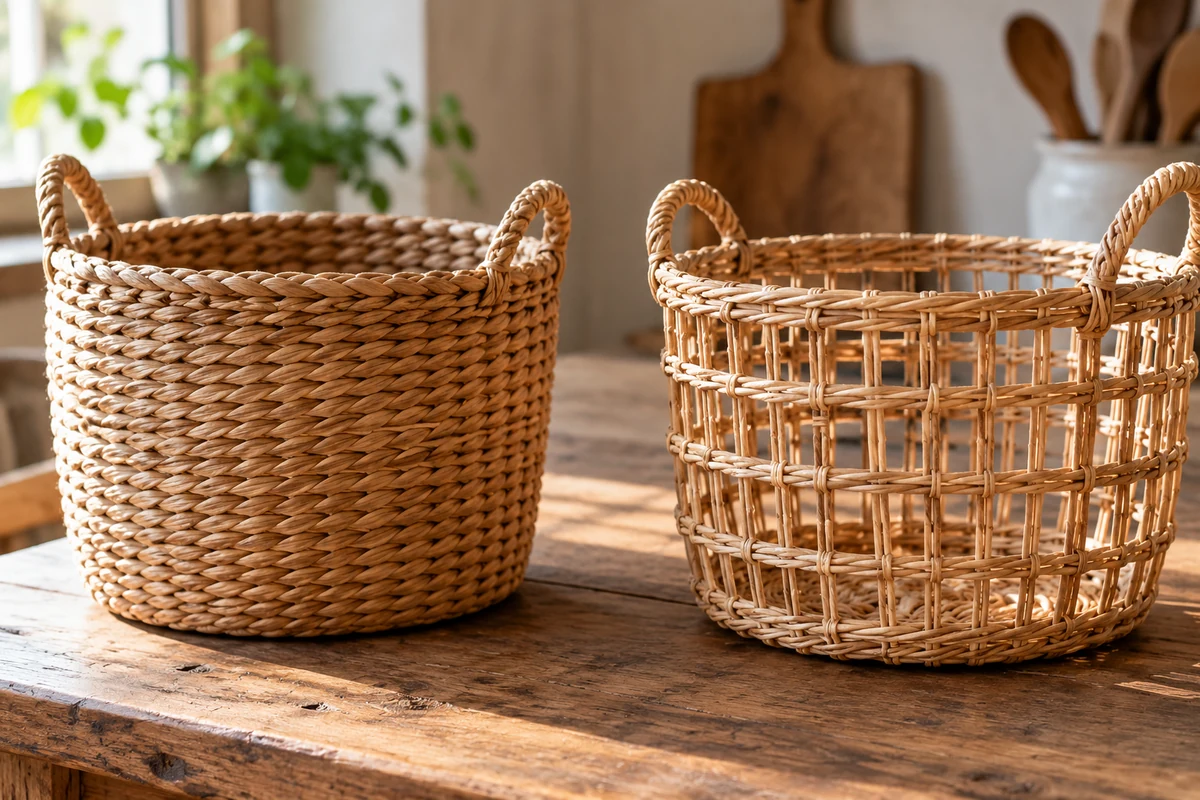
Look at the weave with the intended contents in mind. An open weave can make scarves or rolled cloths easy to see, but small objects may slip through. A tighter weave can contain smaller items better, although it may make debris harder to spot and remove. Neither pattern alone proves strength; materials, construction, and condition also matter.
Run your eyes along the interior for loose ends that might catch knitwear or delicate linens. If you want a liner, check whether it is included, removable, and replaceable. A liner changes the usable space and adds another item to clean.
For stationery, compare the gaps with your smallest loose item rather than your largest notebook. Ask: “Would you recommend a liner for what I plan to store?” Choose the weave that contains your belongings without extra fuss. If every use requires wrapping or rearranging the contents, another design may serve you better.
6. A Bread Basket That Fits the Table
Start with the bread you usually serve and the space left after plates, glasses, and serving dishes are arranged. A long loaf, sliced bread, and a few rolls do not need the same shape. A shallow basket can make passing and reaching easier; a deeper one may hold more but obscure the contents or crowd a small table.
Check the interior length rather than relying on the rim measurement. Consider whether you can lift the basket comfortably with a napkin in place and whether a fixed handle will get in the way.
Ask whether the basket is intended for food contact and what liner, if any, the producer recommends. A cloth liner does not by itself establish food suitability. If you are also choosing baked goods, the bakery shopping guide can help you plan that purchase. Pick a size for your ordinary table, unless occasional large gatherings are its explicit job.
7. A Small Entryway Catchall Basket
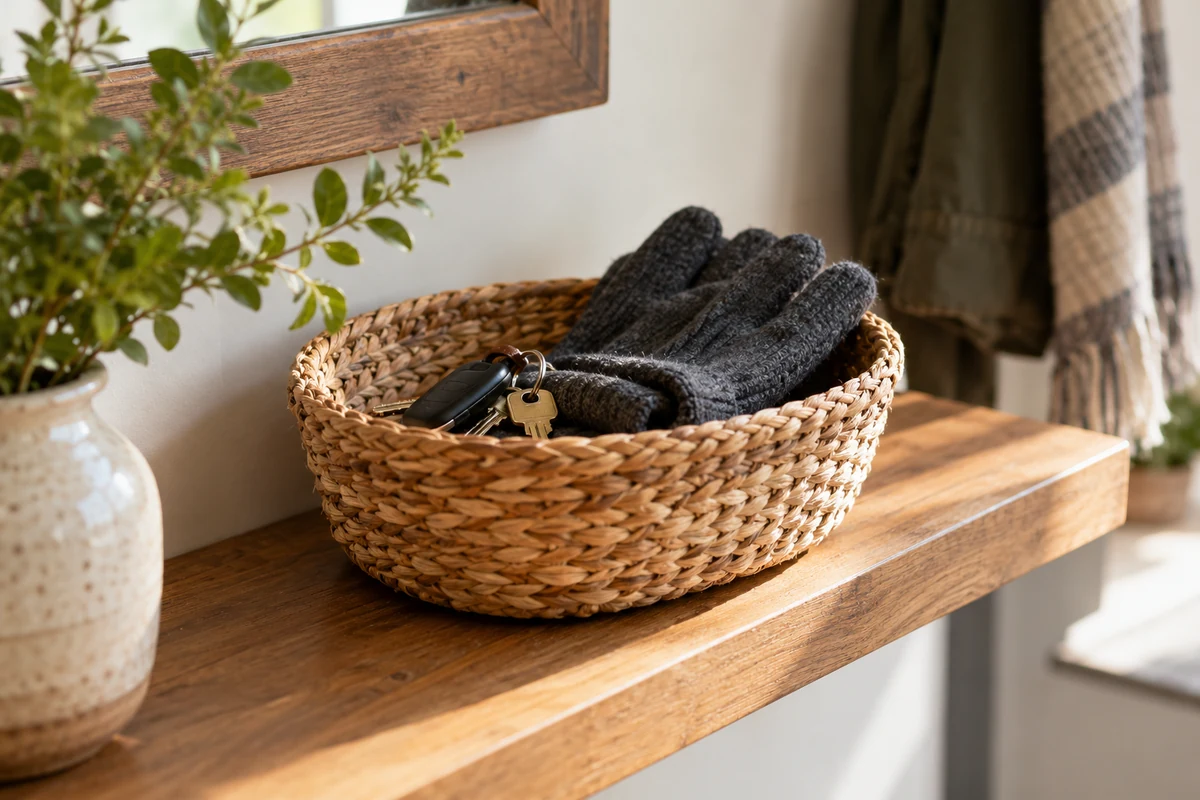
An entryway basket works best when it catches a defined set of belongings, not everything that enters the house. List what actually needs a landing place: keys, a wallet, sunglasses, perhaps one piece of outgoing mail. A shallow tray keeps those things visible. A deep basket can turn a quick grab into a search.
Measure the narrowest part of the console or shelf, and check that the basket will not overhang into a walking path. Look for an interior that will not snag a key ring or scratch an unprotected item. A removable insert may help, provided it does not slide around.
Ask about the underside if the basket will sit on a finished surface. Then make a simple decision: can each everyday object be seen and lifted without moving three others? Choose the smallest basket that handles the real routine comfortably. Leave overflow storage to another spot rather than buying an oversized catchall.
8. Ask About Cleaning and Care
Before paying, ask for the care instructions for that basket’s materials and finish. Do not assume woven pieces can be soaked, scrubbed, or treated with household oil. “How should I remove dust, and what should I do if something spills?” is more useful than a general question about durability.
If the basket includes a liner, confirm how to clean it and whether it comes out without pulling on the weave. For dyed or painted pieces, ask whether there are placement precautions, such as avoiding damp surfaces or prolonged direct sunlight. Follow the maker’s or product’s actual directions rather than a universal basket-care trick.
Consider repairability, too: does the seller know whether a damaged handle or loose strand can be assessed for repair? Availability will vary. Photograph any care card with permission and keep the receipt. If the recommended care is more effort than you want, choose a different basket or a less demanding job for it.
For a table gift that serves a different purpose, the wood serving board guide covers the measurements and care questions to compare.
Quick comparison: match the basket to the job
Use this table to narrow your choices before comparing color or decorative trim. These are shopping priorities, not guarantees about any particular basket.
| Intended use | Features to prioritize | Tradeoff to check | Best in-store test |
|---|---|---|---|
| Market carrying | Comfortable handle, stable base, suitable construction | Capacity can exceed what feels comfortable to carry | Ask about intended loads; check your grip |
| Bread serving | Table-friendly footprint, accessible interior | Extra depth can make passing awkward | Compare inside dimensions with your usual bread |
| Shelf storage | Outside dimensions, easy retrieval | A wide rim or fixed handle may block the opening | Measure the widest and tallest points |
| Entryway catchall | Shallow sides, small-item containment | A large basket invites unrelated clutter | Check whether daily essentials stay visible |
| Folded linens | Smooth interior, adequate usable space | Rough ends may catch fabric | Inspect inside corners and the rim |
When two baskets seem equally suitable, compare what is included: a liner, care information, and clear construction details may matter more to you than a decorative flourish. Set your budget before browsing, but do not assume a higher price proves origin or durability.
Plan a focused shopping stop
Start with nearby directory listings, or browse by state when planning a trip farther away. A directory helps you identify actual stores; it does not confirm that a particular basket is in stock. Check the listing details and contact promising shops about the category you want before making a special journey.
Keep the inquiry specific: “I’m looking for a shallow woven basket that fits a shelf. Do you carry baskets, and can you tell me about their materials and origin?” Confirm current hours and payment options at the same time. Bring your measurements, template, tape measure, and a photo of the intended spot. For a fuller packing list, see what to bring to an Amish country store.
Copyable basket-buying checklist
- One intended job: __________
- Maximum outside width × depth × height: __________
- Minimum usable inside space: __________
- Budget, including any liner: __________
- Handle clearance and grip checked
- Base stable; underside and interior inspected
- Weave contains the smallest intended item
- Materials, finish, and maker information clarified
- Food-contact suitability confirmed if relevant
- Care instructions and return terms understood
- Fits the job without an improvised workaround
Frequently asked questions
Are baskets sold in Amish country always Amish-made?
No. Location, store ownership, and product origin are separate facts. Ask about the individual basket and what supports its description. If the seller cannot verify its maker, evaluate it as a basket of unconfirmed origin rather than assuming otherwise.
Does an uneven weave mean poor quality?
Not automatically. Handwork can include variation. Focus on whether irregularities affect stability, containment, comfort, or the items you will store. Broken strands, sharp protrusions, and loose attachments deserve closer attention than a minor visual difference.
Is a bigger basket better value?
Only if you need the capacity and can use the basket comfortably. Extra size can waste shelf space, overwhelm a table, or make carrying awkward. Compare usefulness for the intended job rather than paying for volume you will not use.
Can one basket serve food and organize household items?
Possibly, but confirm its intended food use and cleaning instructions first. A dedicated serving basket is often simpler than repeatedly switching purposes. Do not assume that adding a napkin makes any decorative or storage basket suitable for food.
Images are AI-generated editorial illustrations, not photographs of particular stores or makers.
Before browsing, choose one spot at home, measure it, and write down exactly what the basket needs to hold. Take that note to your next shopping stop—and let fit, construction, and care decide which basket comes home.