
8 Bulk Oat Shopping Ideas for an Easier Breakfast Pantry
Make bulk oats shopping simpler: compare rolled, quick and steel-cut oats, check labels and unit costs, and buy an amount your breakfast routine can use.
This practical guide follows our source, correction, and uncertainty standards.
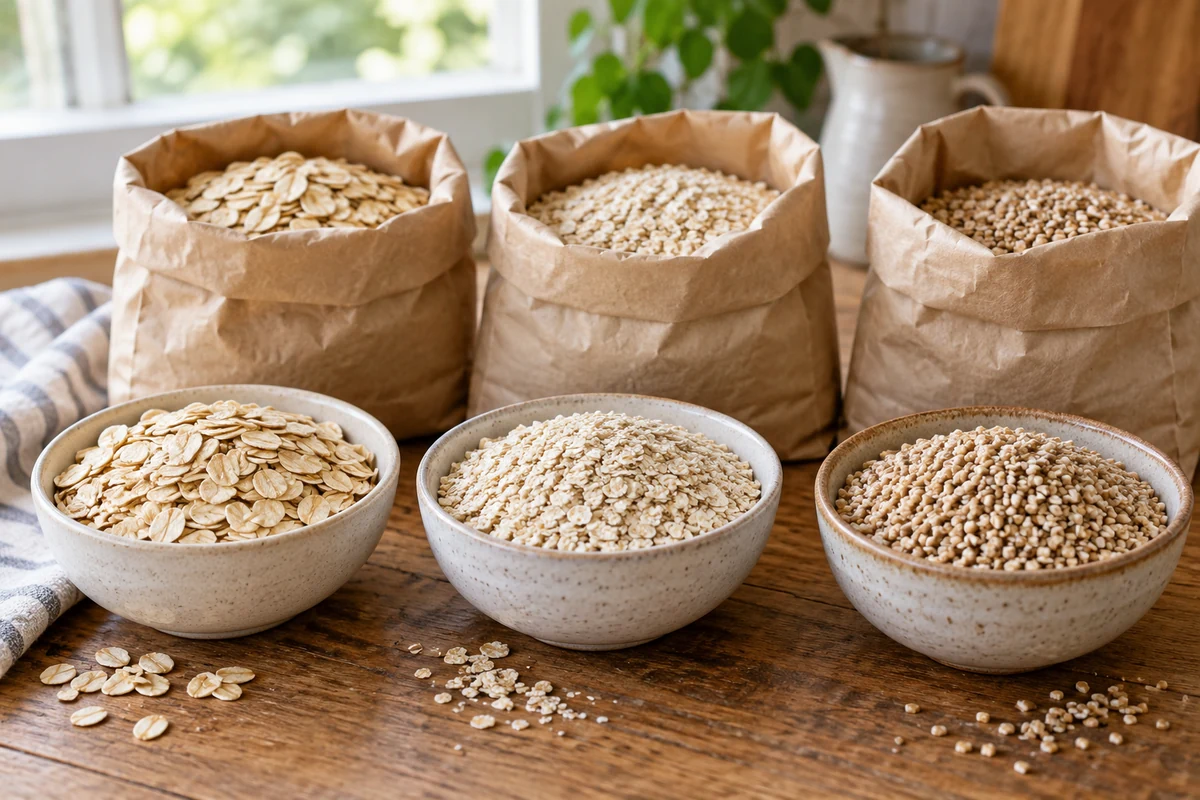
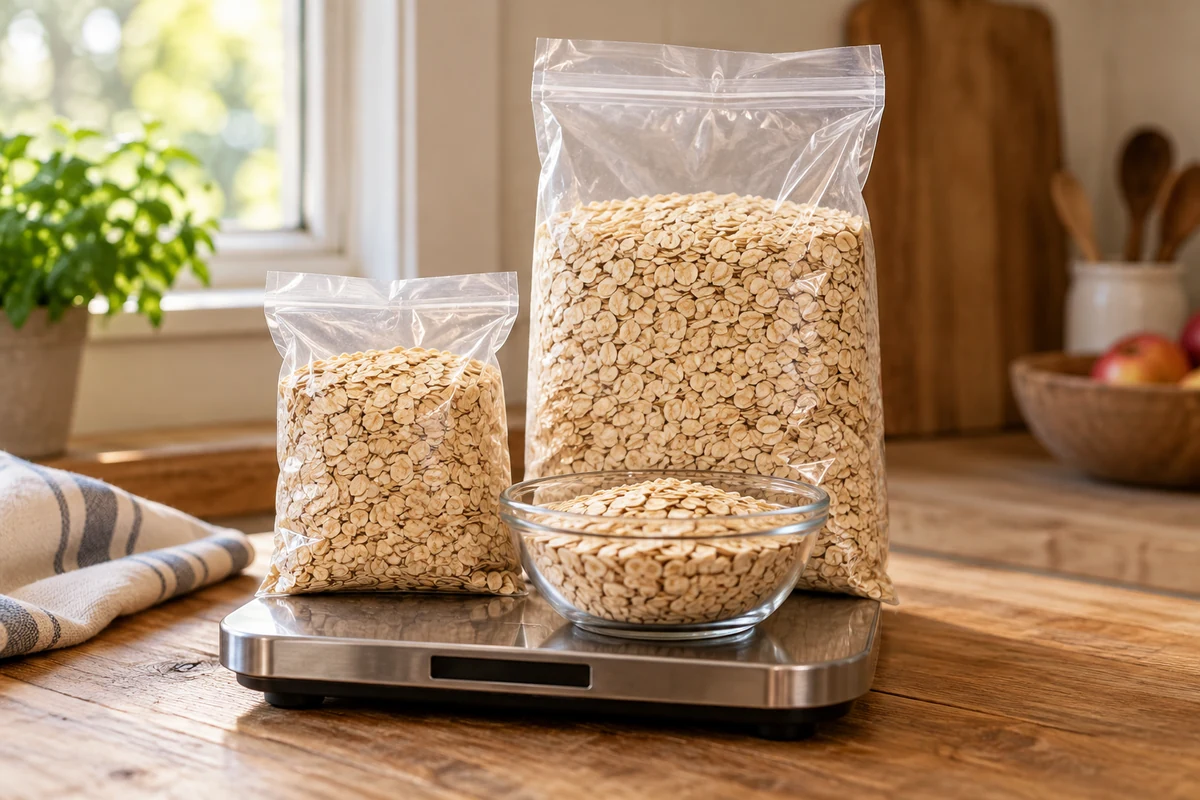
AI-generated editorial illustration; not a photo of a listed business.
Breakfast shopping works best when it matches the morning you actually have. A leisurely pot of oats and a quick weekday bowl can require different products, amounts and preparation time. These bulk oats shopping ideas help you compare eight details before choosing a bag, including texture, directions, toppings and pantry space. Keep the breakfast routine simple enough that the purchase gets used.
Eight bulk oats shopping ideas for a more useful pantry
1. Match the Oat to Your Morning
Start with your least flexible morning. If breakfast happens between packing lunches and finding shoes, choose an oat whose package directions fit that window. If you enjoy a slower breakfast, a firmer, chewier option may be worth the extra preparation it requires.
Texture matters as much as convenience. Someone who likes a soft, fairly uniform bowl may prefer quick oats; someone who wants more distinct flakes may favor rolled oats. Neither preference makes one shopper more serious about breakfast than another.
Ask yourself: “What do I already eat willingly, and what regularly gets skipped?” Buy for that pattern first. If you want to try a different oat, choose a small test package rather than replacing your dependable staple. An unfamiliar bargain becomes expensive pantry clutter when its texture is wrong for the household.
2. Rolled, Quick or Steel-Cut?
Rolled oats are flattened flakes, quick oats are generally thinner or more finely processed flakes, and steel-cut oats are cut pieces of oat groats. Those physical differences affect texture and preparation. They are not simply three package names for the same breakfast experience.
Look for a specific product description rather than relying on appearance through a bag. Quick oats and instant oatmeal products are not interchangeable labels; an instant product may also include flavorings or other ingredients. Steel-cut products can differ in preparation requirements, too.
A useful counter question is: “Is this plain oats, and can I see the original product directions?” If you also want oats for baking, match the type your recipe specifies rather than assuming every form substitutes directly. Choose one familiar type as your main purchase, then add a second only if it has a clear job.
3. Buy Oats for Your Real Routine
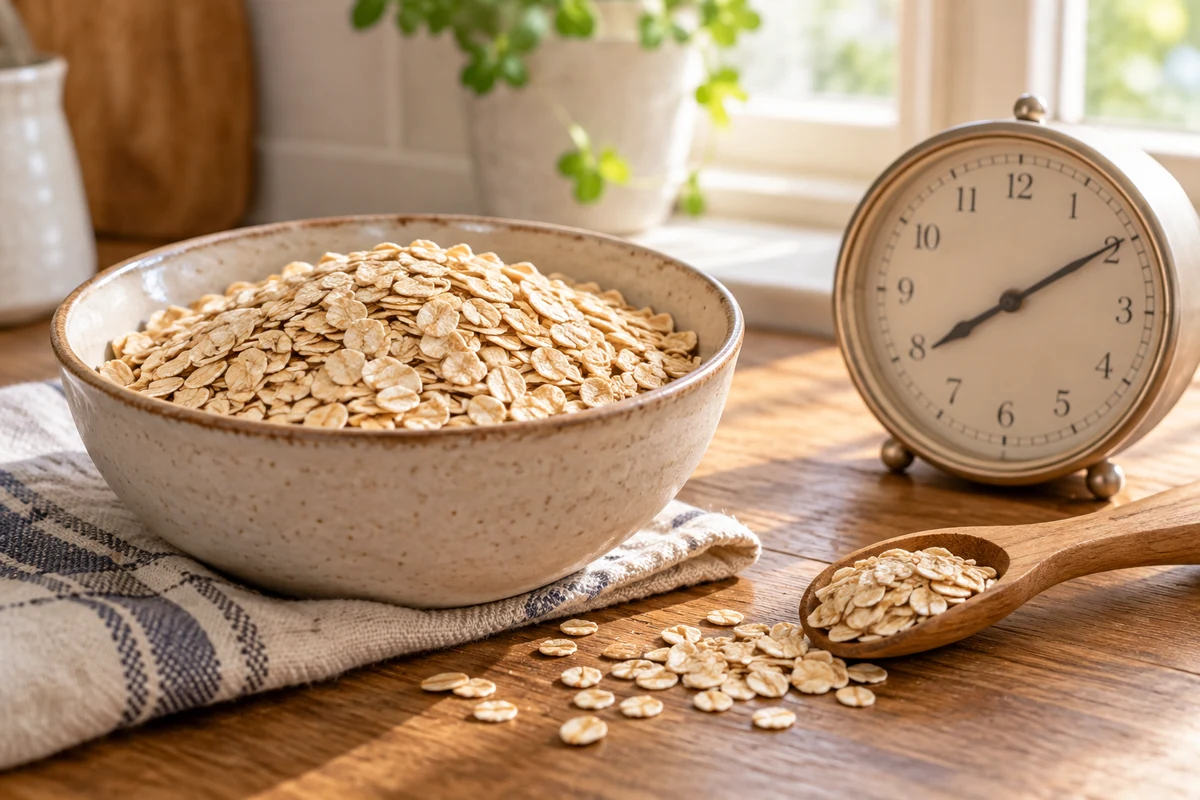
Count actual oat breakfasts, not hoped-for ones. A household that eats oatmeal occasionally needs a different bag from one that serves it most mornings. Include other established uses, such as a familiar baking recipe, but do not build your quantity around several new habits at once.
Before leaving home, check the remaining oats and the container you intend to use. An inexpensive oversized bag is inconvenient if half of it has nowhere suitable to go. Use your current package consumption as a starting point for estimating the next purchase.
Ask whether smaller packages of the same oat are available; “bulk foods” does not always mean one enormous sack. For households with limited cupboard space, this small-household bulk shopping guide can help with quantity decisions. Choose an amount that fits both your demonstrated use and the product’s labeled storage guidance.
4. Keep the Oat Cooking Directions
Two bags labeled oats can require different preparation, so the directions belong with the purchase. Before paying, check that the package identifies the oat type and provides usable instructions. A handwritten product name alone may not tell you everything you need.
If oats have been repacked, ask whether the store can provide the original supplier’s directions and product information. Photograph the label while it is legible, or keep it with the container after transferring the oats. Include the ingredient list and any lot or date information, not just the preparation panel.
Try this short script: “I’ll be putting these in a pantry container. Which label information should I keep, and are there product-specific handling instructions?” If the directions remain unclear, choose a better-documented package. The goal is to avoid standing at the cupboard later, guessing which oats you bought or how the producer intended them to be prepared.
5. A Small Oats-and-Toppings List
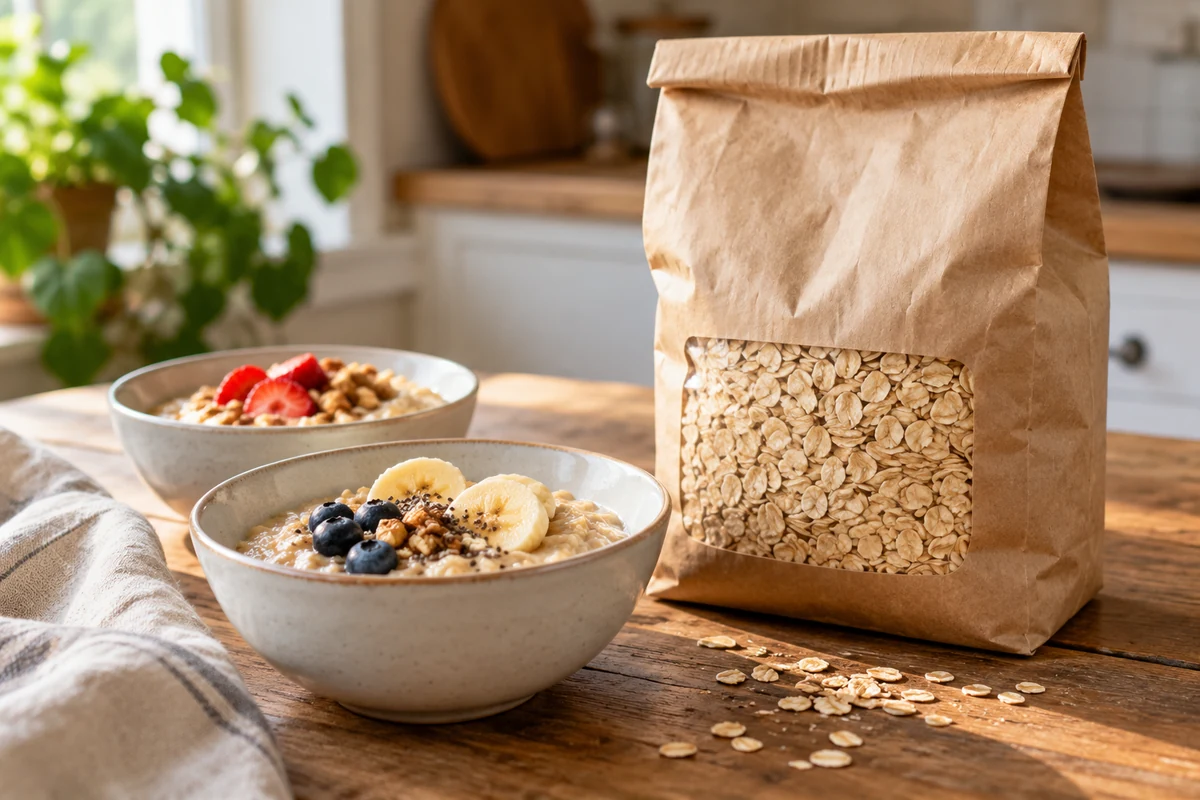
Give toppings a smaller budget and a smaller footprint than the oats themselves. One fruit option and one crunchy option may be enough to make a plain breakfast appealing without creating a second pantry project. Raisins and a familiar seed, for example, have distinct roles; several similar sweetened fruit mixes may not.
Check what is already open at home before adding anything. Cinnamon, nuts, or dried fruit you regularly use elsewhere can make more sense than a specialty topping purchased for one imagined bowl. The bulk-food pantry checklist is useful for checking breakfast purchases against the rest of your cupboard.
Ask whether a topping is plain, sweetened, salted, or coated, and read its ingredients. Decide on one dependable pairing first. Add variety after you know the oats themselves suit you; buying multiple toppings will not fix a texture nobody likes.
6. Read Flavored Oat Mix Labels
A flavored mix can be a practical convenience purchase, especially when you want fewer separate ingredients to manage. Compare what the mix contains with what you would otherwise add yourself. Dried fruit, sweeteners, spices, milk ingredients, and nuts can change both the flavor and who can use it.
Read the serving information as well as the ingredient list. The weight of a flavored mix includes its additions, so its package weight is not a direct measure of how much plain oatmeal you are buying. Consider whether everyone wants the same flavor or whether plain oats offer more flexibility.
For food allergies, review ingredient and allergen information; the FDA’s food allergy guidance explains why labels matter. Plain packaging is no assurance of suitability. Ask about repacking and shared handling where relevant, and leave an unclear product behind rather than treating an unlabeled mix as equivalent to a familiar packaged one.
7. Compare Oat Cost by Weight
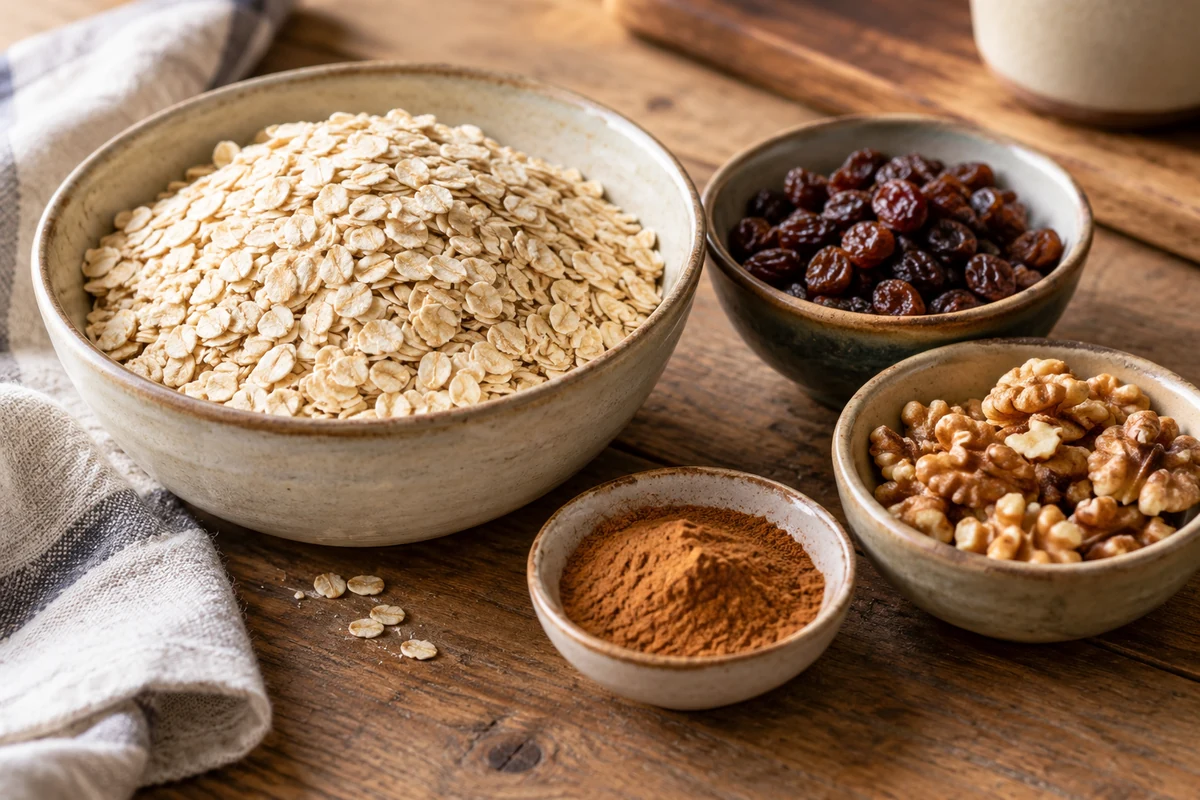
Compare like with like: plain rolled oats against plain rolled oats, preferably in the same weight unit. Divide the package price by its net weight to find the cost per pound or ounce. A shelf label may do that work already, but check that both labels use the same unit.
For a weighed purchase, ask how the net food weight is determined and how any container charge is handled. Do not assume a larger bag has the lower unit cost, or that a bulk display automatically beats a packaged option.
Then consider the whole purchase. A lower unit cost may not help if you buy much more than you use, need an extra container, or make a separate drive just for oats. Use nearby directory listings to identify stores worth checking alongside your other errands. Choose the best usable value, not merely the lowest number on a shelf.
8. Label Your Breakfast Pantry
Decide how you will identify the oats before discarding any packaging. “Oats” is not a sufficiently useful label when two similar containers hold different products. Write the exact type, such as quick oats or rolled oats, and keep the original product information accessible.
A practical label can include the purchase date and the package’s date wording, plus a note about where you saved the directions. Preserve supplier and lot details when provided. Your own purchase date helps track pantry rotation, but it does not replace the producer’s instructions or establish a new shelf life.
If you still have an older batch, keep the batches identifiable rather than automatically mixing them. Ask the seller for product-specific storage guidance when the label leaves questions unanswered. Put the oats you intend to use next where they are easy to reach, and mark an unfamiliar trial purchase so it does not disappear behind the staple.
If honey is one of your regular oatmeal toppings, the country store honey guide helps you compare labels, sizes and useful pairings.
Quick comparison before you choose a bag
Use this table to narrow the options, then let the actual package directions settle preparation questions. Oat names are a starting point, not a substitute for product information.
| Option | What you are choosing | Useful fit | Check before buying |
|---|---|---|---|
| Plain rolled oats | Flattened flakes with some texture | A familiar breakfast staple; recipes specifying rolled oats | Flake type, directions, net weight |
| Plain quick oats | Generally thinner or more finely processed flakes | A softer bowl and a shorter preparation routine | That they are plain; exact directions |
| Steel-cut oats | Cut groat pieces with a firmer texture | Mornings when the product’s preparation fits your schedule | Whether this particular product has modified preparation directions |
| Flavored oat mix | Oats combined with other ingredients | Fewer separate breakfast decisions | Ingredients, allergens, serving information, total cost |
If two choices seem equally suitable, prefer the one you already know how to use. Experimenting with a smaller amount later keeps the main pantry purchase dependable.
Find a store—and separate setting from origin
Use the store search to identify relevant directory listings, then confirm whether a promising store carries the oat type and package size you want. Stock, packaging formats, payment arrangements, and hours are store-specific. One focused inquiry before a longer drive is more useful than assuming every country store has the same bulk-food department.
Also separate the seller from the product’s origin. An Amish-owned shop may sell commercially supplied oats; a plain bag or a country-store setting does not establish that the contents are Amish-made, locally grown, organic, or hand-processed. If origin matters to your purchase, ask who supplies or processes the oats and what documentation accompanies that claim.
Before setting out, the country-store packing guide can help you prepare. Do not assume a store accepts customer containers; check its policy before bringing one for filling.
Copyable breakfast-shopping checklist
- Check remaining oats and available cupboard space.
- Choose the oat type that fits an ordinary morning.
- Set a quantity based on current use, not a new habit.
- List no more than two needed toppings.
- Compare matching products using the same weight unit.
- Read ingredients and relevant allergen information.
- Keep directions, supplier details, and package date information.
- Confirm any origin claim that matters to the purchase.
- Label the pantry container without losing the original information.
Frequently asked questions
Are bulk oats always cheaper?
No. Compare unit costs for equivalent products, then consider how much you will use. A smaller package can be the better purchase when a larger one exceeds your household’s needs or requires extra storage supplies.
Can I swap quick oats for rolled oats?
Not automatically. They differ in texture and preparation, and the difference can matter in baking. For breakfast, follow the chosen product’s directions; for a recipe, use the specified oat type unless it offers an alternative.
Does an Amish store sell Amish-made oats?
Not necessarily. Store ownership and product origin are separate questions. Ask about the supplier or processor if that distinction matters to you, rather than treating the store’s name or the package’s appearance as proof.
What if a repacked bag has very little information?
Ask for the original product label, preparation directions, and relevant ingredient details. If the seller cannot clarify information you need, choose another package. A low price does not compensate for uncertainty about what you are buying.
Images are AI-generated editorial illustrations, not photographs of particular stores or makers.
Before your next shopping trip, check the oats already in your cupboard and write down one preferred type, one realistic quantity, and the toppings you actually need.