
8 Honey Buying Tips and Country Store Pairing Ideas
Shop country store honey with eight practical tips on origin, jar size, value, tea and oat pairings, plus simple gift ideas and a copyable buying checklist.
This practical guide follows our source, correction, and uncertainty standards.
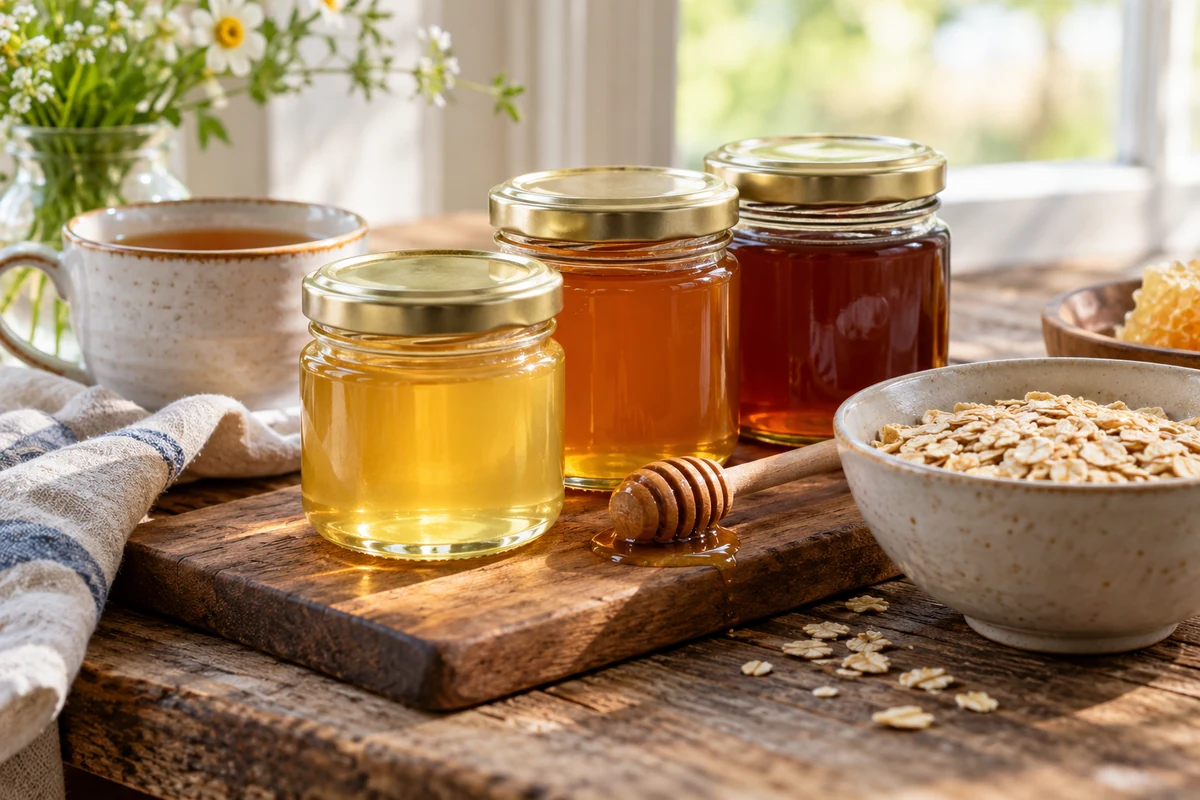
AI-generated editorial illustration; not a photo of a listed business.
Honey can be a tea companion, an oat topping or one half of a compact food gift. Each use gives you a reason to compare the label, jar size and recipient’s preferences. These country store honey ideas walk through eight buying decisions, from origin information to practical pairings. Enjoy comparing the shades and textures while asking the questions that identify what you are buying.
8 country store honey buying tips and pairing ideas
1. Read the Honey Origin Label
Turn the jar around before choosing by color or front-label artwork. Look for the named producer or packer, any stated geographic origin, the ingredient information, and contact details. A packing address identifies a business location; it does not necessarily tell you where the honey was harvested.
Honey sold in an Amish-owned store is not automatically Amish-produced. A country store may carry goods from its own operation, neighboring suppliers, and broader distributors. Treat those as separate possibilities, not interchangeable descriptions.
Ask: “Who produced this honey, and where was it harvested?” If the label uses “local,” ask what area that means. If it says “raw” or “organic,” look for supporting information rather than assuming the setting proves the claim.
Choose the jar whose stated origin matches your priorities. If provenance matters more than presentation, an informative label is worth more than a rustic lid or handwritten-looking font.
2. Compare Honey by Weight
Jar height is a poor value guide. Thick glass, broad shoulders, and decorative shapes can make similar quantities look quite different. Find the net weight, which excludes the container, and compare jars using the same weight unit.
For a straightforward shelf comparison, divide each price by its net ounces or net pounds. Do not mix a weight measurement with a fluid-volume measurement. If the shelf already gives a unit price, check that both labels use the same basis before relying on it.
A lower unit price is only one part of value. A heavy gift jar may be worth paying for when presentation matters; a large everyday jar may not suit someone who rarely uses honey. Different origins or product styles also need not be equivalent purchases.
Set a quantity limit before choosing the apparent bargain. For more help matching package sizes to actual use, see our small-household bulk-food shopping guide.
3. Start With a Small Honey Jar
An unfamiliar honey deserves a trial purchase, especially if you are choosing it for a specific tea or breakfast. Amber shade alone cannot tell you whether you will enjoy the flavor. Read any producer tasting description, then choose the smallest practical size when uncertainty is high.
Ask whether a smaller jar contains the same honey as the larger one. Similar packaging does not guarantee that the variety or source is identical. If sampling is available, it can help, but do not plan your purchase around a tasting that the store may not offer.
The tradeoff is straightforward: a small jar may cost more per ounce, but it limits the money committed to an unknown favorite. Buy one new option rather than several nearly identical jars.
After trying it, keep a picture of the label and note what you liked. That gives you a useful reference for a repeat purchase, without assuming every future batch will taste identical.
4. Choose Honey for Tea
Choose for the tea you actually drink, not an imagined collection. A delicate tea may call for a honey described as mild, while a fuller-flavored tea may suit something more assertive. These are starting points for preference, not rigid pairing rules.
If the label offers no flavor guidance, ask, “Which of these tastes milder, and which has a more noticeable honey flavor?” A staff member may have useful product knowledge; if not, a small jar keeps the experiment manageable. Do not use color as your only answer.
Think about serving, too. A squeeze container may be convenient for frequent cups, while a wide-mouth jar may suit someone who prefers a spoon. Neither format establishes quality or origin.
For your first purchase, pair one honey with one familiar tea. That makes it easier to decide whether the honey adds a flavor you enjoy or simply overwhelms what you already like.
5. Pair Honey With Breakfast Oats
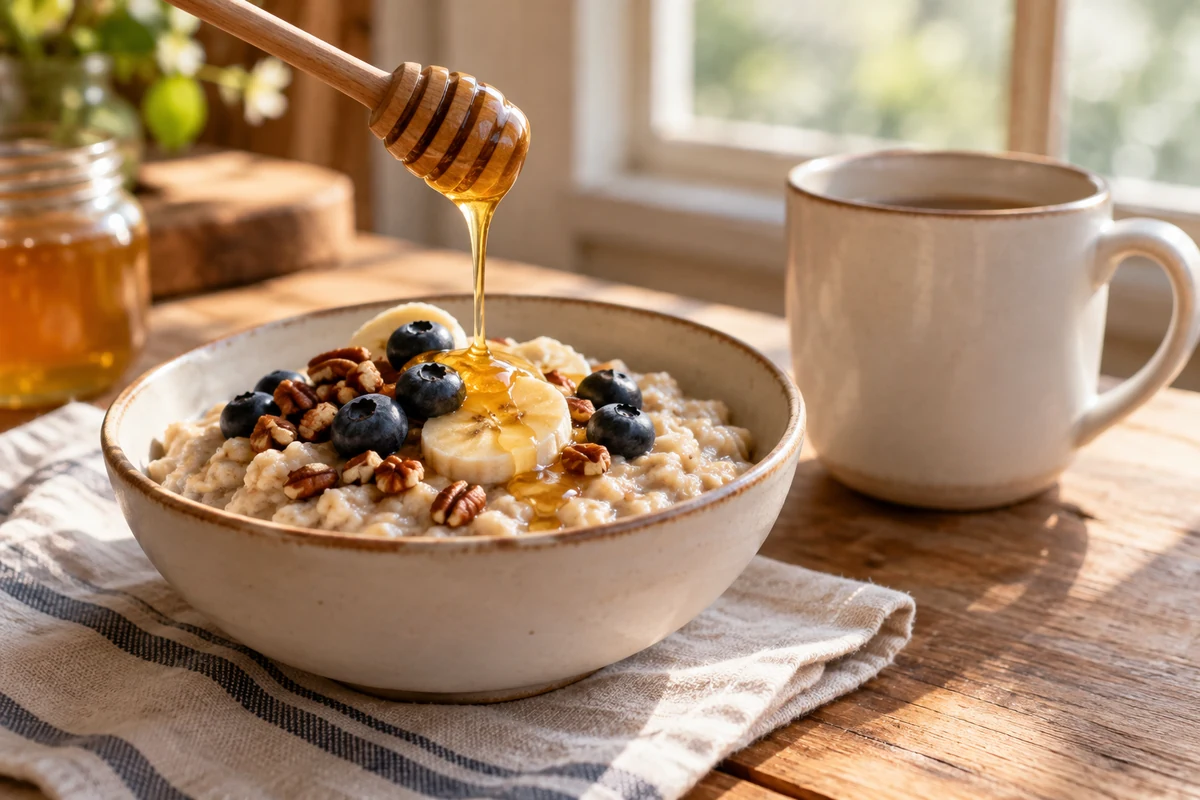
Oats give honey a practical everyday role, but the rest of breakfast should guide the purchase. Plain oats leave more room for a noticeable honey flavor. Sweetened oat packets or granola may already provide the sweetness you want, making another large jar unnecessary.
Build the shopping combination around what is missing at home: oats plus a small honey jar, or honey plus one familiar topping such as raisins. There is no need to buy a whole breakfast display. If nuts or other packaged toppings are involved, check their labels separately rather than treating the grouping as one product.
Ask which oat format you are buying and follow its package directions; similar-looking bags may serve different routines. Our Amish bulk-food pantry checklist can help keep the wider basket focused.
Choose this pairing when oats already have a place in your week. Otherwise, test the habit with modest packages before committing to bulk quantities.
6. A Simple Honey-and-Tea Gift
A useful honey gift can be just two well-chosen things: one sealed, clearly labeled jar and a tea the recipient enjoys. Add a short card identifying the pairing, but leave the original labels readable. A recipient should not have to unwrap a decorative covering to discover what is inside.
Check whether the person prefers caffeinated tea or a caffeine-free option, and read the tea package rather than guessing from its name. For a recipient managing food allergies, review ingredient and allergen information; plain packaging does not establish suitability.
A small jar keeps the gift easy to try. Elaborate baskets add cost and bulk without necessarily improving the present. If you want a third item, consider a reusable spoon rather than another unfamiliar food.
Use our Amish store gift basket ideas for practical combinations. Describe the gift accurately as country-store purchases unless the individual products’ Amish-made or other origin claims have been verified.
7. Ask About Honey Texture
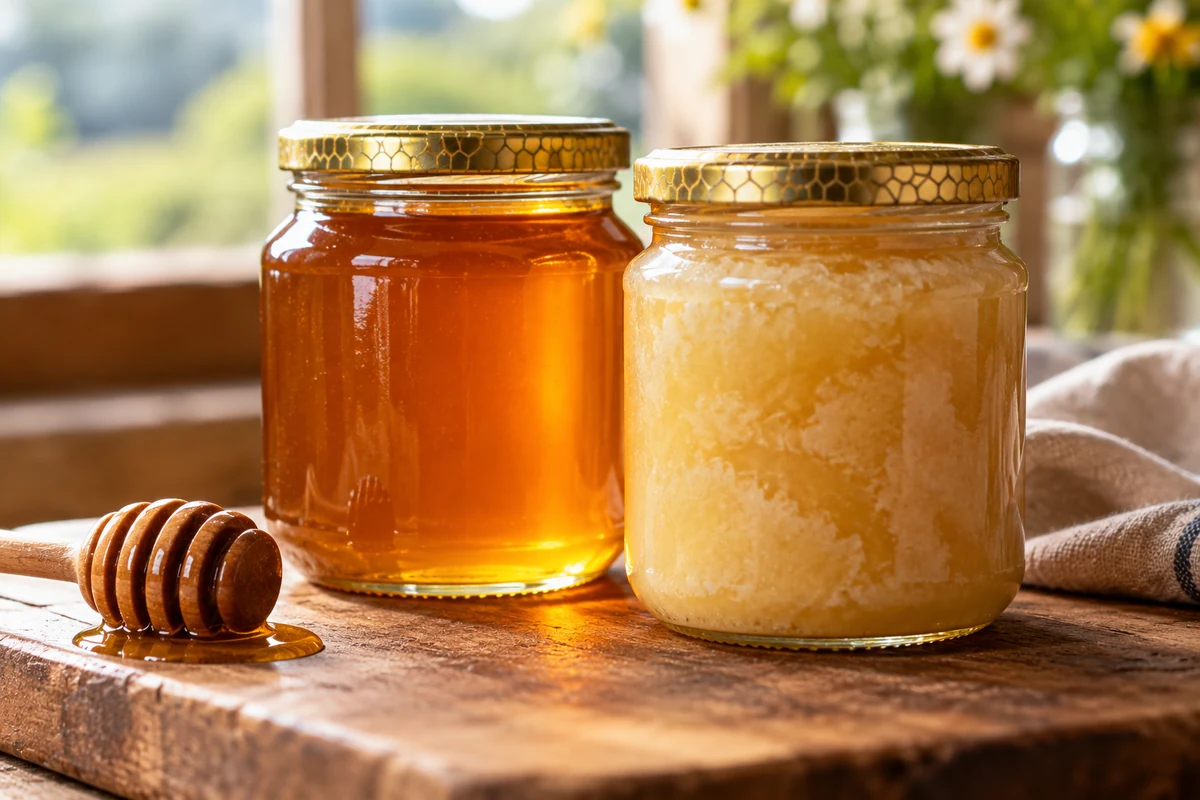
Texture deserves its own question. Liquid honey, intentionally creamed honey, and honey that has developed crystals can feel quite different on a spoon. Crystallization can occur naturally; crystals alone do not tell you that a jar is poor quality, nor do they prove a claim such as “raw.”
Ask, “Is this intended to stay pourable, or is it a spreadable style?” Then connect the answer to use. Someone who likes a tidy spread for toast may prefer a deliberately creamy texture. Someone who wants to dispense honey directly into tea may care more about the container and pourability.
Check the ingredient statement as well, especially on flavored or specialty products. A product name on the front is not a substitute for knowing what is included.
Choose the texture you want to use now. If it changes later, consult the producer’s guidance rather than improvising a treatment that may not suit the container or product.
8. Keep Honey Storage Instructions
The useful part of a honey label continues after checkout. Keep the product’s storage and handling instructions, along with any lot information and producer contact details. If those details are on a removable tag, save it or take a readable photograph before discarding the wrapping.
When directions are unclear, ask, “What handling do you recommend after opening, and whom should I contact if the texture changes?” This is especially worthwhile for flavored honey or other honey-based products that may have different instructions from a plain jar.
For a gift, pass along the original package rather than transferring the contents into an unlabeled decorative container. For your own pantry, retaining the label also makes a successful purchase easier to identify next time.
Choose a jar with a sound closure and readable product information. Attractive packaging is a bonus, but it should not make the honey difficult to identify, use, or ask the producer about later.
For a tea pairing or a small gift, check the recipient’s brewing habits using the country store coffee and tea guide.
Quick comparison: which jar fits your purpose?
Use this table to narrow the shelf to two candidates. It is a decision aid, not a ranking of honey quality: the right purchase depends on what you value and how you will use it.
| Your priority | Look for | Main tradeoff | Best question |
|---|---|---|---|
| Traceable origin | Clear producer and harvest-origin information | Attractive jars may provide little detail | Where was this honey harvested? |
| Everyday value | Net weight and comparable unit prices | More honey is not useful if you wanted less | Are these the same product in different sizes? |
| First-time tasting | A small jar and flavor description | Often a higher cost per ounce | Is there a smaller size of this one? |
| Tea pairing | Flavor suited to your usual tea | Strong honey can dominate delicate tea | Which option tastes milder? |
| Breakfast use | A convenient format for your routine | A bulk jar takes more commitment | Is this pourable or spreadable? |
| Giving | Sealed packaging and readable labels | Decoration can add cost and weight | Can the product information stay attached? |
If two jars still seem equally suitable, choose the smaller commitment. You can learn more from using one thoughtfully chosen jar than from buying several because their colors look appealing together.
Plan a focused country-store stop
Use the store search to find actual shopping options, then check the store’s available information or contact it about honey before making a dedicated trip. A directory listing is a starting point, not confirmation that a particular jar, size, or origin is in stock.
Keep the inquiry short: “Do you currently carry honey, and can you tell me whether the labels identify the producer or harvest origin?” Add a question about a small size or gift-ready packaging only if it matters to your purchase. Confirm current hours and payment arrangements as part of that same check.
Set a budget for the whole pairing, not just the jar. Tea, oats, toppings, and a gift container can turn a modest honey purchase into a much larger basket. Decide which companion item you need before browsing, and leave room to walk away if the available product information does not meet your priorities.
Copyable honey shopping checklist
- Purpose: tea / oats / spread / gift
- Maximum total spend: ______
- Preferred jar size or quantity limit: ______
- Producer and stated harvest origin checked
- Net weight and same-unit price compared
- Flavor and texture suited to intended use
- Ingredients and relevant allergen information reviewed
- Closure sound; label readable
- Handling instructions and contact details retained
- Companion item needed: ______
Frequently asked questions
Is honey from a country store automatically Amish-made?
No. The store’s ownership and the honey’s producer are separate facts. Check the label and ask who produced it. “Sold at an Amish store” is a useful description of where you bought it, but it does not establish who harvested or packed it.
Does darker honey always taste stronger?
Do not treat shade as a dependable taste test. Honeys vary, and appearance cannot fully describe flavor. Use the producer’s tasting notes or staff guidance where available; otherwise, a small jar is a practical way to learn your preference.
Is the biggest jar always the best value?
It may have a lower unit price, but check rather than assume. The better purchase also fits your quantity needs, budget, and intended use. A smaller jar can be the more sensible choice for a new flavor or an occasional tea drinker.
What should I check when giving honey and tea?
Keep both products sealed and labeled, confirm the recipient’s tea preferences, and review ingredient and allergen information where relevant. The FDA’s food allergy guidance supports checking labels; decorative or plain packaging is not an assurance of suitability.
Images are AI-generated editorial illustrations, not photographs of particular stores or makers.
Before your next stop, copy the checklist and fill in just three blanks: purpose, quantity limit, and total budget. Then find a store and ask whether its current honey selection offers the label information you need.