
8 Apple Butter Shopping Tips and Everyday Pairings
Make apple butter shopping easier with eight practical tips on texture, ingredients, jar size, breakfast pairings, simple gifts and bringing glass jars home.
This practical guide follows our source, correction, and uncertainty standards.
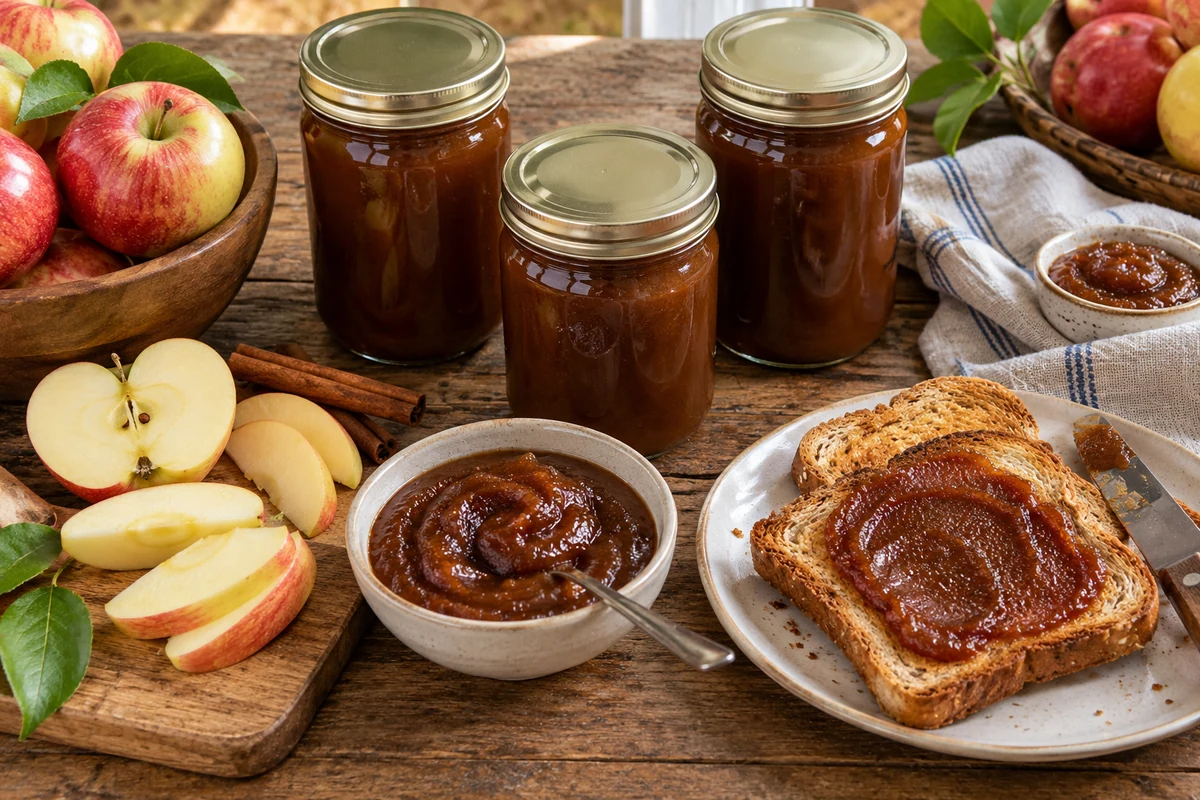
AI-generated editorial illustration; not a photo of a listed business.
Toast, pancakes and a simple breakfast gift each give apple butter a different job. The jar you choose should suit the texture and flavor you enjoy as well as how often you will open it. These apple butter shopping tips cover eight practical decisions, including ingredients, portion size, breakfast pairings and the ride home. Start with a breakfast you already like, then compare the actual jars available.
Eight apple butter shopping tips for a jar you’ll use
Apple butter is a smooth fruit spread, as described by Penn State Extension’s guide to fruit spreads. That gives you a starting point, but it doesn’t tell you how sweet, spiced or thick a particular producer’s version will be. Compare the actual products rather than assuming every jar with the same name tastes alike.
1. Compare Apple Butter Texture
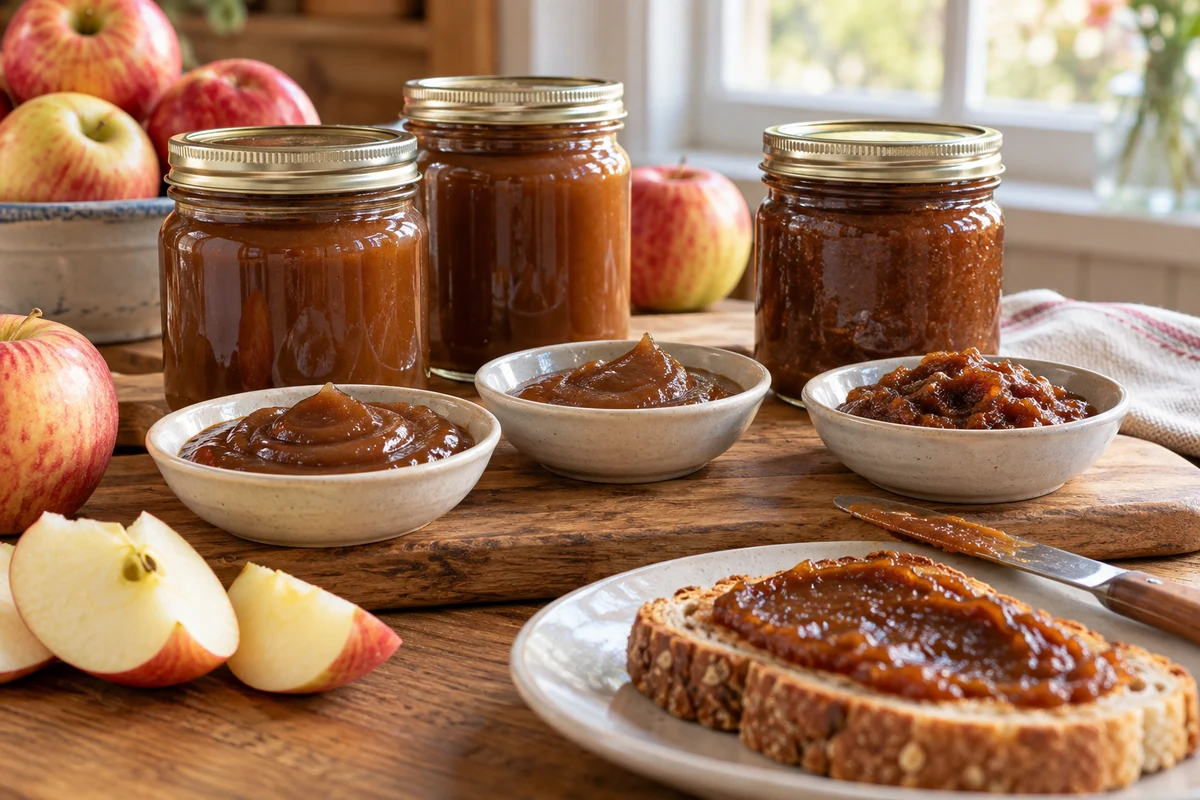
Think about what you want the spread to do. For thin toast, you may prefer something that spreads readily without tugging at the bread. For a biscuit or a spoonful alongside pancakes, a thicker texture might suit you better. Smoothness and thickness are separate qualities: a spread can be smooth yet quite dense.
A sealed jar offers limited clues. Color alone won’t reliably tell you the texture, sweetness or spice level, and there is no reason to open a retail jar to investigate. If the store offers samples, compare how the spread feels as well as how it tastes.
Ask: “Is this a thick spread, or does it spread easily in a thin layer?” If staff cannot describe it and no sample is available, choose the smaller size. Your first purchase should answer a question, not commit you to several jars of an unfamiliar texture.
2. Read the Apple Butter Ingredients
Start with the ingredient list rather than the front-label artwork. Look for the sweeteners and spices listed, then decide whether they match your preferences. Someone who wants an apple-forward spread may make a different choice from someone looking for a pronounced cinnamon flavor. Ingredient order can offer clues, but it won’t tell you exactly how the finished spread tastes.
For an allergy-related purchase, read the ingredient and allergen information and ask about anything unclear. Plain packaging is not evidence that a product avoids allergens.
Origin deserves its own question: “Who produces this apple butter, and where is it made?” A country store may sell both its own products and goods from outside suppliers. Amish-owned retail does not automatically mean Amish-made apple butter, and a rustic label establishes neither. Choose on verified information, not the visual style of the jar.
3. Start With a Small Jar
Match the first jar to a realistic pattern: toast a few mornings a week, a weekend pancake breakfast or an occasional biscuit. If only one person in the household wants apple butter, the largest size may be more commitment than convenience. You can always buy a larger jar after you know you like it.
Compare shelf prices using the same labeled unit of weight when possible. A lower unit price matters only if the larger quantity fits your budget and gets used; it isn’t an automatic saving. Also consider whether the jar’s shape will make the last portion easy to reach with your usual utensil.
The small-household bulk shopping guide offers a useful mindset here: buy for actual use rather than imagined abundance. For an unfamiliar producer, take one small jar and keep a note of the label for a possible repeat purchase.
4. Toast and Apple Butter Pairings
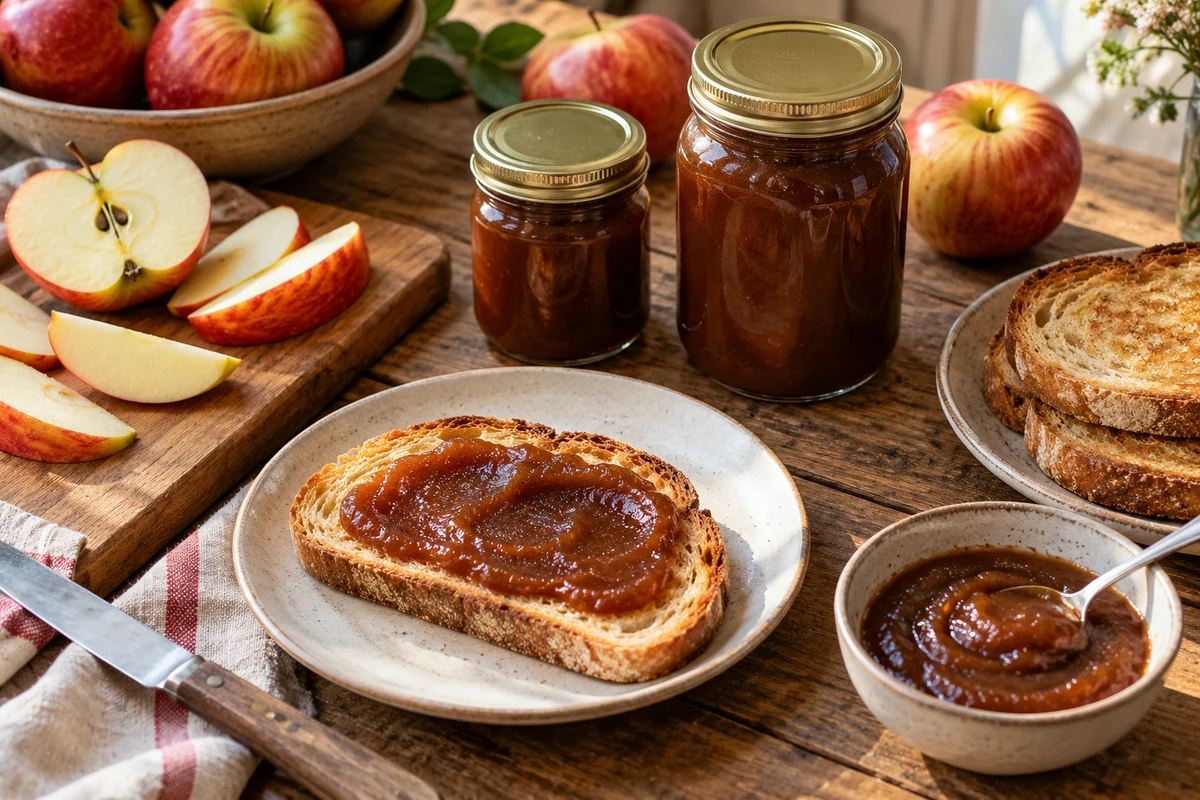
Use the bread you already enjoy as your reference point. A mild white or wheat loaf leaves more attention on the apple butter, while a seeded loaf brings its own texture and flavor. Cinnamon-raisin bread adds another sweet, spiced element; that may be exactly what you want, or more than you need.
For a savory contrast, consider toast with cheddar and a little apple butter. For a softer pairing, try it with cream cheese if that fits your dietary needs. These are pairing ideas, not reasons to buy several extra groceries before you’ve tasted the spread.
If you’re also choosing bread at a market, the Amish bakery shopping guide can help you narrow that purchase. Pick one loaf and one jar that sound good together. Ask which bread is relatively plain if you want the apple flavor to take the lead.
5. A Pancake Pantry Companion
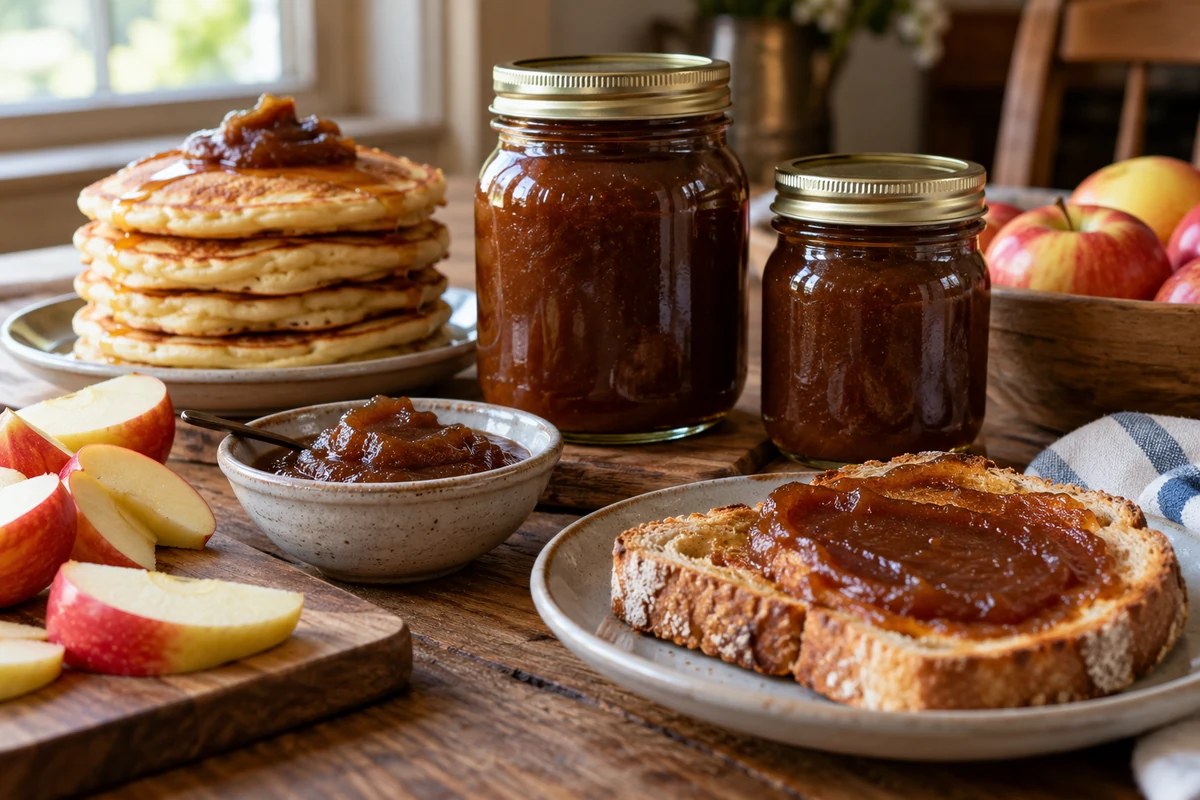
Apple butter can be an alternative to syrup or a small accompaniment to a pancake breakfast. The shopping question is whether you want another sweet topping or a different flavor altogether. A strongly spiced spread brings a different balance than a mild one, especially if your pancake mix already includes spice or fruit.
Before adding a mix to your basket, check what is at home. Buying apple butter to accompany an existing pantry staple is often more useful than buying a whole new breakfast arrangement. If you do need a mix, read its required additions so the gift or pantry purchase doesn’t come with unexpected errands.
Ask: “How would you describe the sweetness and spice in this one?” Then select one jar for your next planned pancake breakfast. Use the bulk-food pantry checklist if you’re combining this small purchase with a larger pantry restock.
6. Build a Two-Item Breakfast Gift
A jar of apple butter plus one well-chosen companion can make a thoughtful gift without a basket full of filler. A packaged pancake mix suits someone who enjoys weekend breakfasts. A loaf of bread may suit a nearby recipient when the handoff fits the bread’s label or seller-provided handling guidance. You don’t need both.
Consider the recipient’s kitchen habits before presentation. A mix that needs several additional ingredients may be less convenient than it first appears. Read both products’ labels for dietary fit, and leave those labels visible rather than covering them with ribbon or decorative paper.
Ask the seller to clarify any missing handling information before buying. Keep claims on your gift note modest: “Apple butter and pancake mix” is accurate without promising handmade or local origins. For other compact combinations, see the store gift basket ideas, then stop at the two items your recipient will actually use.
7. Check Storage After Opening
Read the handling directions before deciding which size to buy. A sealed jar’s retail display does not tell you what the product needs after opening. Follow the actual label, including any refrigeration or use-after-opening directions, and ask the producer for product-specific guidance when information is missing or ambiguous.
A useful question is: “What handling does this need once opened, and is that information printed on the jar?” For a gift, instructions the recipient can read later are more useful than advice passed along from memory.
Don’t borrow an opening timeline from another brand or assume every fruit spread has the same requirements. At home, keep the label available; noting the opening date can help you follow any label-based guidance. If the product’s directions don’t fit your likely pace of use or available space, choose a smaller jar or a different product with clearer instructions.
8. Pack Glass Jars for the Drive
Plan a stable place for the jar before you reach the checkout. A divided box or sturdy tote with cushioning between glass items helps prevent jars from knocking together. Keep heavy groceries from pressing against them, and don’t leave a jar loose where it can roll around the vehicle.
Before paying, look for visible glass damage, leakage or a visibly compromised seal. Ask the seller about anything questionable rather than taking that jar home. Check the product’s transport directions too; cushioning protects glass, but it doesn’t replace any handling requirements on the label.
If you’re buying several jars, ask whether dividers or a suitable box are available, without counting on the store to supply them. The country-store packing guide can help you prepare. Your decision is simple: buy only as many jars as you can carry securely, with room for the rest of your shopping.
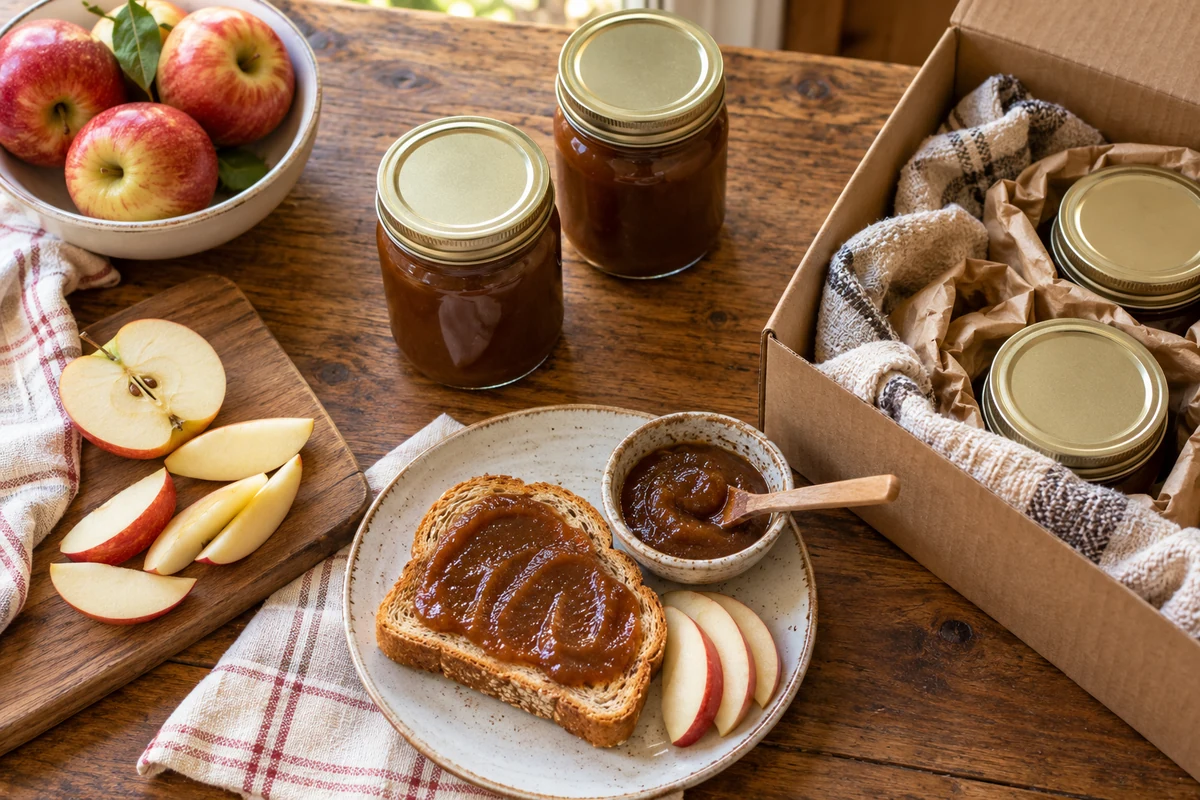
If you are comparing several breakfast spreads, the jam, jelly and preserves guide explains the texture choices to consider.
Quick comparison: choose for the breakfast, not the display
Use this table to narrow the purchase before comparing decorative labels or gift packaging. There isn’t one best jar for every household; the useful choice depends on who will eat it and what will accompany it.
| Your main use | What to compare | Practical first choice |
|---|---|---|
| Everyday toast | Spreadability, spice level, familiar bread pairing | One small jar with bread you already buy |
| Biscuits or hearty bread | Thickness and balance against the bread’s flavor | A texture the seller can describe clearly |
| Pancake breakfasts | Sweetness, spice and overlap with existing toppings | One jar before adding another syrup or mix |
| A two-item gift | Recipient preferences, readable labels, handling needs | Apple butter plus one useful companion |
| Occasional use | Jar size and product-specific opening directions | A smaller quantity that fits your routine |
| Several jars for a drive | Condition, transport instructions, packing space | A quantity you can separate and secure |
If you’re torn between two jars, change only one variable when possible. Comparing two similarly sized jars with different spice profiles teaches you more about your preferences than comparing different flavors, sizes and textures all at once.
A compact checklist to copy before shopping
Set your purchase limit before browsing. One jar for yourself and one gift is a clearer plan than “a few pantry things,” especially when several spreads look appealing.
- Main use: toast / pancakes / gift / other: ______
- Preferred texture and spice level: ______
- Bread or mix already at home checked.
- First-purchase size and total budget chosen.
- Ingredients, allergens and maker information reviewed.
- Product-specific opening and transport directions clear.
- Companion item needed—or intentionally skipped.
- Jar condition checked; padded carrying space ready.
To locate a shopping option, use the store directory search, then confirm directly whether a promising store currently carries apple butter. Also check its current shopping arrangements before making a special trip. A directory listing helps you find a place to investigate; it doesn’t guarantee a particular product on the shelf.
Four quick apple butter FAQs
Does apple butter contain dairy butter?
The name refers to the spread, not a guarantee about its ingredients. Read the particular jar’s ingredient and allergen information rather than assuming either that it contains dairy or that it is dairy-free.
Is apple butter sold in an Amish store always Amish-made?
No. Store ownership and product origin are separate facts. Ask who made the product and read the producer information on the label. Country-store surroundings don’t establish a maker’s identity or production method.
Is a darker apple butter necessarily less sweet?
No. Appearance isn’t a reliable sweetness guide. Compare ingredient information and the seller’s description, or taste a sample if one is offered. Buy a small jar when you cannot confidently judge the flavor.
Can I buy several jars now for later gifts?
Only if the products’ labeled dates and handling requirements fit your plans. Check each jar rather than assuming all stock has identical information. Keep labels intact and plan secure transport and appropriate storage for every jar.
Images are AI-generated editorial illustrations, not photographs of particular stores or makers.
Choose your first use—toast, pancakes or a two-item gift—then put one appropriately sized jar on your shopping list and find a nearby store to check.