
8 Small Business Saturday Country Store Shopping Ideas
Plan Small Business Saturday country store shopping with eight useful gift ideas, maker questions, cost comparisons, and a practical two-stop route guide.
This practical guide follows our source, correction, and uncertainty standards.
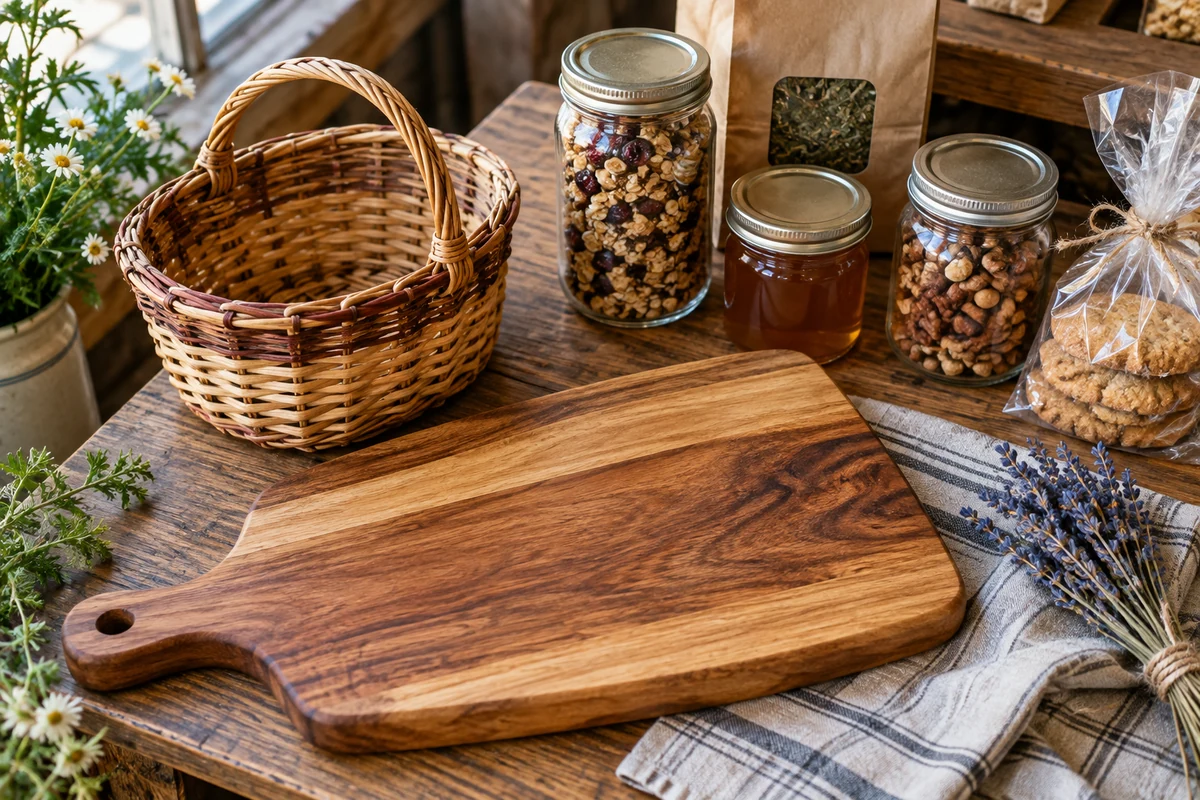
AI-generated editorial illustration; not a photo of a listed business.
One useful gift makes a good starting point for Small Business Saturday country store shopping. Decide who it is for, where it will fit and what the complete purchase should cost before browsing handmade pieces or pantry goods. For November 28, 2026, these eight ideas combine gift inspiration with the questions that help you choose well. Use them to build a short route around a purchase you feel confident bringing home.
8 Small Business Saturday country store shopping ideas
Country stores can bring household goods, foods, and gifts together, but their merchandise and ownership vary. Use these eight ideas to choose deliberately, verify what matters, and leave room to walk away from a purchase that does not fit.
1. Pick One Handmade Anchor Gift
Choose the main gift before buying fillers. A basket might organize incoming mail; a serving board might suit someone who regularly puts out snacks. Either can stand alone. The useful question is not “What else can I add?” but “Would this still make a good gift without anything inside or beside it?”
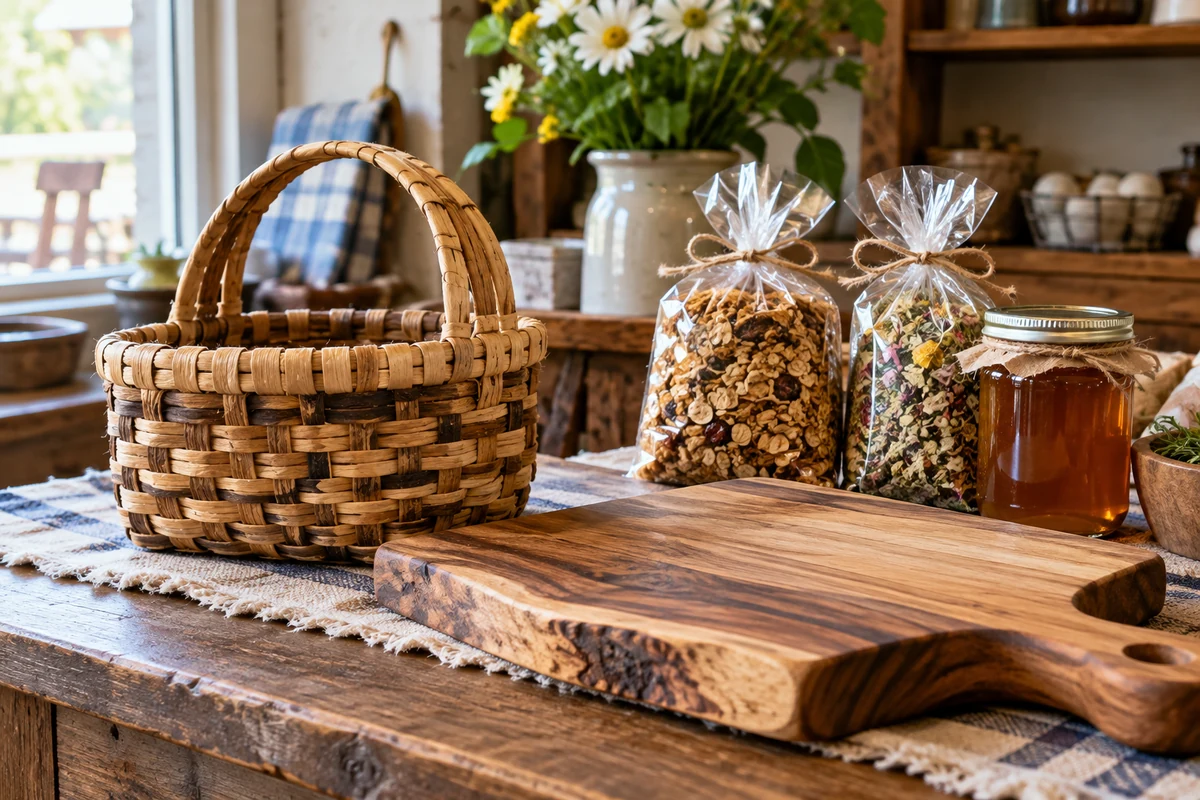
For a basket, examine the handle attachment, base stability, and any rough edges. For a board, check its weight, usable surface, and intended purpose. A decorative piece is not automatically suitable for serving food. If handmade origin is part of the appeal, have the seller confirm it rather than relying on appearance.
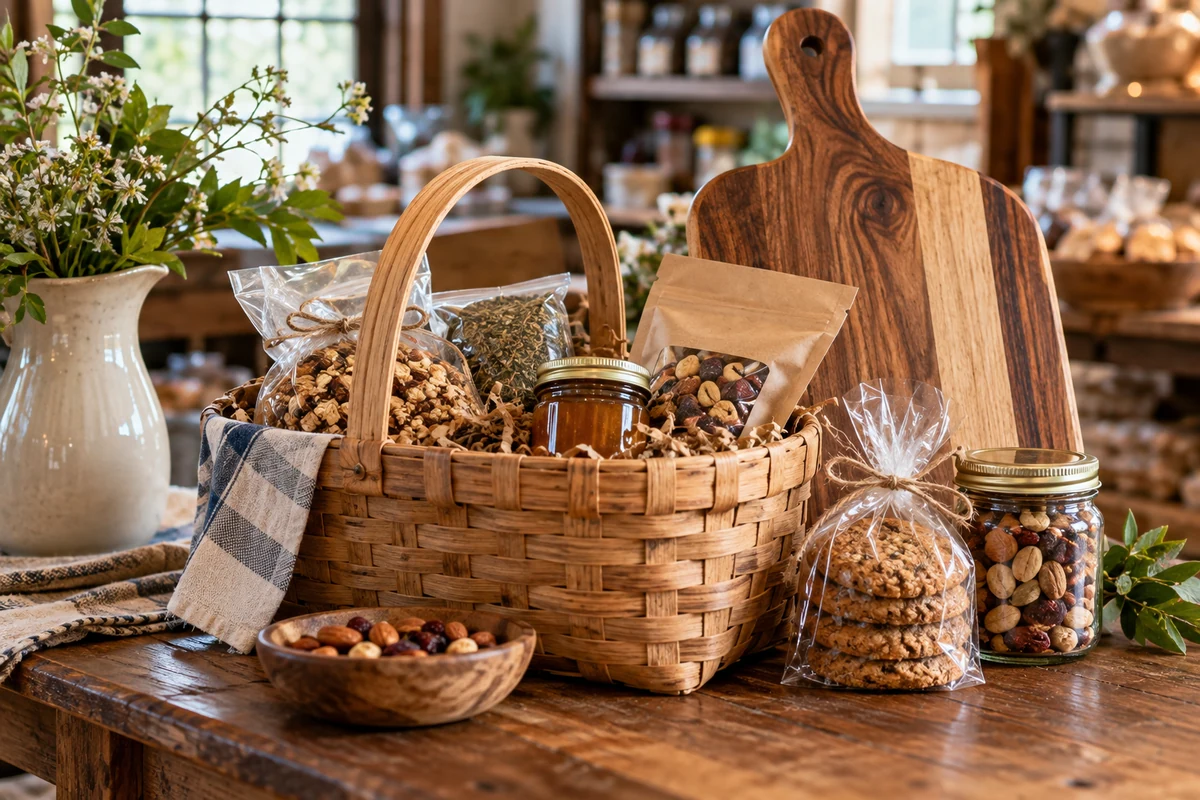
Set aside most of your gift budget for that anchor and treat extras as optional. Our gift basket ideas can help you choose additions with a purpose. Buy the anchor alone if it already meets the recipient’s needs.
2. Ask Who Made the Item
An Amish-owned store, an Amish-made product, and a generic product sold in a country store are different things. A shop may carry goods from its own makers alongside regional products and ordinary wholesale merchandise. Neither a simple label nor a rustic display establishes origin.
Try a neutral question: “Do you know who makes this, and is it made by the store, another workshop, or a supplier?” Follow with “What part is handmade?” when that distinction affects your decision. A board, for example, might involve purchased material and several kinds of machine or hand work; ask rather than assigning a story to it.
Clear, modest information is more useful than a romantic description. If origin cannot be confirmed, judge the item on function, construction, and cost. You can still buy it—just do not present an unverified maker story to the recipient.
3. Bring Measurements for a Useful Purchase
A basket that looks compact on a display table may be too tall for a shelf. Before leaving, measure the actual space: its width, depth, and clearance. For a serving board, consider the cabinet where it will live, not just the table where it will appear. Handles and raised rims can change the fit.
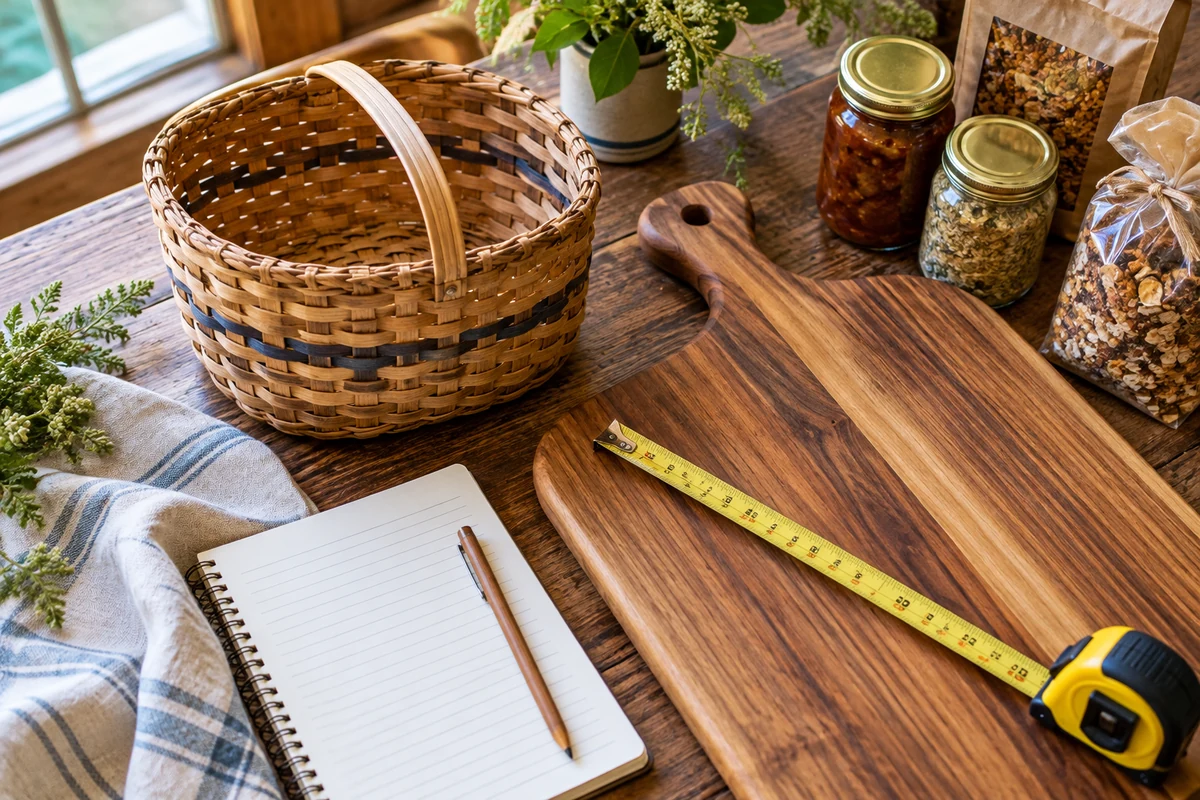
Save the measurements in your phone or write them on a card. Bring a small tape measure and, when helpful, a photo of the space without private details. Ask permission before placing merchandise against other displays to compare sizes.
Allow practical room for lifting a basket out or gripping a board. A technically exact fit can still be awkward in daily use. The country-store packing guide helps organize these small essentials. If dimensions are uncertain, choose something that does not depend on a precise fit.
4. Check Saturday Hours Before Driving
Small Business Saturday falls on November 28 in 2026, but the occasion does not guarantee special hours, discounts, or participation. Thanksgiving is Thursday, November 26, as shown on the federal holiday calendar. Holiday-week schedules deserve a fresh check rather than an assumption based on an older listing.
Use the store’s available contact method to confirm that Saturday’s hours, accepted payment methods, and the broad product category you need. Ask “Do you normally carry small serving boards?” rather than assuming a particular item will be waiting. Keep your questions together so one exchange resolves the practical details.
A useful script is: “I’m planning to visit Saturday, November 28. What are your hours that day, and is there anything I should know about payment or pickup?” If you cannot verify the stop, make it optional rather than the reason for a long drive.
5. Compare the Complete Gift Cost
Compare finished gifts, not just shelf labels. A modest basket plus several pantry items, ribbon, and a gift bag can cost more than a single useful board. Conversely, a small sealed food gift may need nothing beyond a note. Include any applicable tax, wrapping, delivery or shipping expense, and extra travel required solely for that purchase.
Put two options side by side on paper: “board and card” versus “basket, two foods, and wrapping.” For packaged foods, compare net quantities as well as package size. A larger-looking container does not necessarily hold more, and a bulk package is not better value if the recipient will struggle to use it.
Ask whether gift packaging costs extra before agreeing to it. Then choose the complete option that fits both your budget and the recipient’s habits. Supporting a business does not require buying every appealing add-on.
6. Choose a Small Consumable Gift
When household space is limited, a small consumable can be more welcome than another object. Consider a sealed bag of a familiar snack, a labeled spice blend the recipient already uses, or a jar of a spread they enjoy. Select by taste and likely use, not simply by seasonal packaging.
Keep the original ingredient and handling information with the gift. For someone with a food allergy, read the label and ask the producer about any unclear ingredient or cross-contact information; plain packaging is not evidence of safety. If the necessary information is unavailable, choose another gift rather than guessing.
Our small-household bulk-food shopping guide is useful when comparing package sizes. Favor a quantity the recipient can comfortably use according to the label. One well-chosen item can feel more thoughtful than an assortment containing several foods they would never buy.
7. Ask About Care and Returns
Care requirements are part of the gift. Before buying a wood item, ask about its finish, intended use, cleaning directions, and any recommended maintenance. For a basket, ask what it is designed to hold and how the maker recommends cleaning it. Do not substitute general internet advice for product-specific instructions.
Then ask about returns before paying: “If the size is wrong, can the recipient exchange this? What receipt or packaging would they need?” Clarify whether food, marked-down merchandise, personalized goods, or other categories have different policies. Do not assume the policy matches that of a large retailer.
Written care information and a gift receipt, if available, make the handoff easier. When exchanges are unavailable, favor a purchase whose suitability you can judge confidently. A beautiful object that requires unwanted upkeep may be less useful than a simpler alternative.
8. Build a Two-Stop Shopping Route
Give each stop a job. The first might be for a durable anchor gift; the second might supply a small pantry addition. Two stores with distinct purposes are often more manageable than several places carrying similar merchandise. Start with the nearby-store directory, then verify the details that matter directly with each candidate.
Put the stop with the tighter confirmed schedule first, unless driving distance makes that impractical. Leave room for browsing, checkout, and an unhurried trip home. November brings shorter daylight in northern regions, so avoid planning a tightly timed final stop on an unfamiliar road.
The multi-stop route planning guide offers planning principles you can scale down to two destinations. Make the second stop optional if the first completes your shopping. A successful route is one that produces the right purchase, not the largest number of receipts.
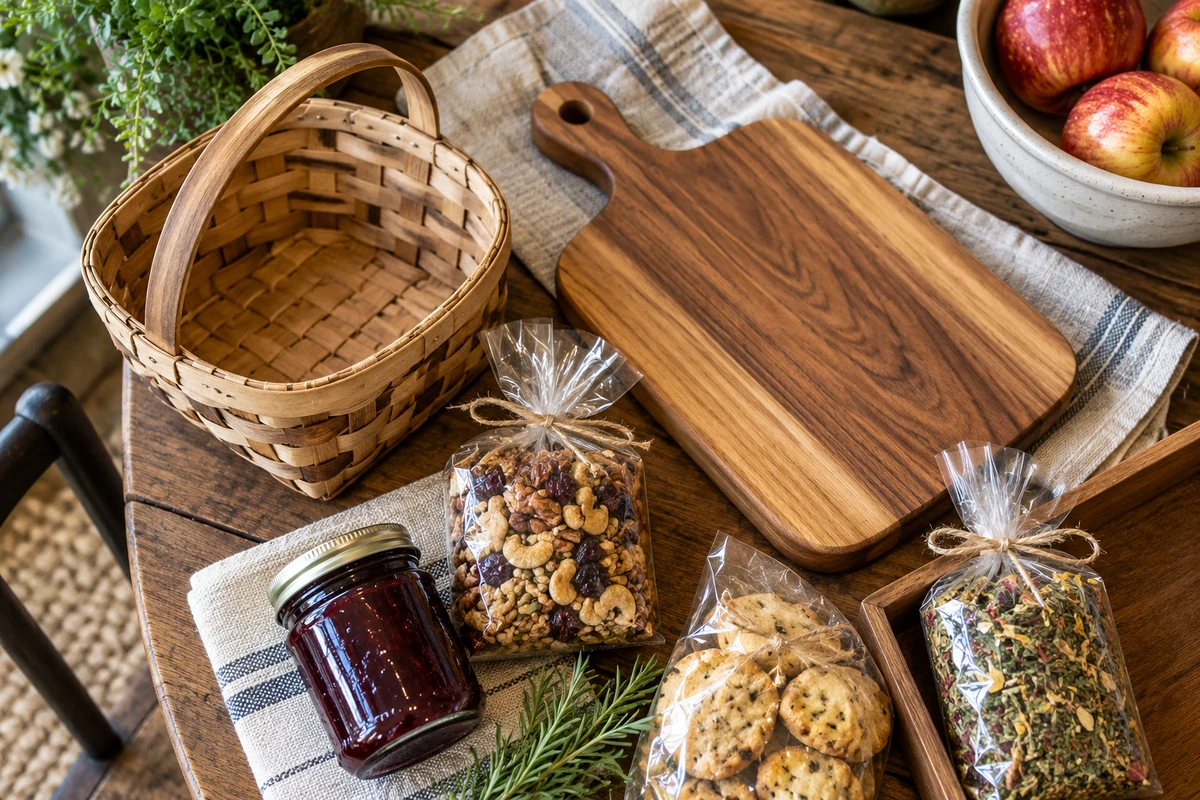
A basket can be the gift itself when it fits a real job. Use the handmade basket shopping guide to check dimensions, handles and care.
Quick comparison: which gift fits your situation?
Use this table to narrow your choice before browsing. It compares practical tradeoffs, not guaranteed stock or value; the actual item and seller’s information should decide the purchase.
| Gift direction | Best fit | Main tradeoff | Check before buying |
|---|---|---|---|
| Small basket | Someone with a specific organizing need | Shape or handles may limit placement | Outside dimensions, stability, intended load |
| Wood serving board | Someone who serves snacks or shared meals | Weight and maintenance may be unwelcome | Intended food use, finish, care, cabinet fit |
| Sealed pantry gift | A recipient whose tastes you know | Ingredients and package size matter | Complete label, quantity, handling directions |
| Anchor plus one consumable | A coordinated gift without many fillers | Packaging can push up the total | Combined cost and whether both parts are useful |
| One item without extras | A firm budget or limited household space | Less elaborate presentation | Whether the item feels complete with a note |
If two choices seem equally good, prefer the one with fewer unanswered questions. Known dimensions, clear care directions, and a realistic use usually matter more than elaborate presentation.
A compact shopping and decision checklist
Copy this into a note and fill in the blanks. It gives you a stopping rule as well as a shopping list, which helps when several displays are tempting.
Recipient and likely use:
Complete-gift spending limit:
First-choice item / acceptable alternative:
Required dimensions or package quantity:
Maker-origin detail to verify:
Store 1 / confirmed Saturday hours / payment:
Store 2 / purpose / confirmed hours:
Before paying: fit, condition, label or care, returns.
Keep with gift: instructions, original label, receipt if available.
Stop shopping when the useful gift is complete.
For a shared household gift, agree on the main purpose before leaving. “A basket for mail beside the door” is easier to shop for than “something nice for the house.” If buying for someone whose preferences you do not know well, reduce the number of assumptions: avoid a precise decorating style, an unusual flavor, or demanding upkeep.
Frequently asked questions
Is everything in a country store Amish-made?
No. Store ownership and product origin are separate questions. A country store may carry a mixture of merchandise. Ask about the specific item, and only describe it as Amish-made when the seller can confirm that origin.
Should I expect Small Business Saturday discounts?
No discount or event participation is guaranteed. Plan around the ordinary value of a useful purchase. If an offer is available, check its terms and compare the complete cost rather than adding unwanted items to qualify.
What if I cannot confirm a store’s hours?
Choose a verified destination as your main stop and keep the uncertain one optional. Do not build a long route around an unconfirmed opening. A directory is a starting point, not a guarantee of holiday-week hours.
Is one small gift enough?
Yes, when it suits the recipient. A familiar pantry item with its label intact or a well-sized household piece can stand alone. Add a brief note explaining why you chose it instead of buying fillers merely to enlarge the package.
Images are AI-generated editorial illustrations, not photographs of particular stores or makers.
Before you browse, write down one recipient, one useful purchase, and your complete-gift limit. Then select your first store and confirm its November 28 hours.