
8 November Amish Country Shopping Plans for Shorter Days
Make November Amish country shopping easier with eight practical plans for shorter days, holiday hours, bakery stops, rainy weather and a manageable haul.
This practical guide follows our source, correction, and uncertainty standards.
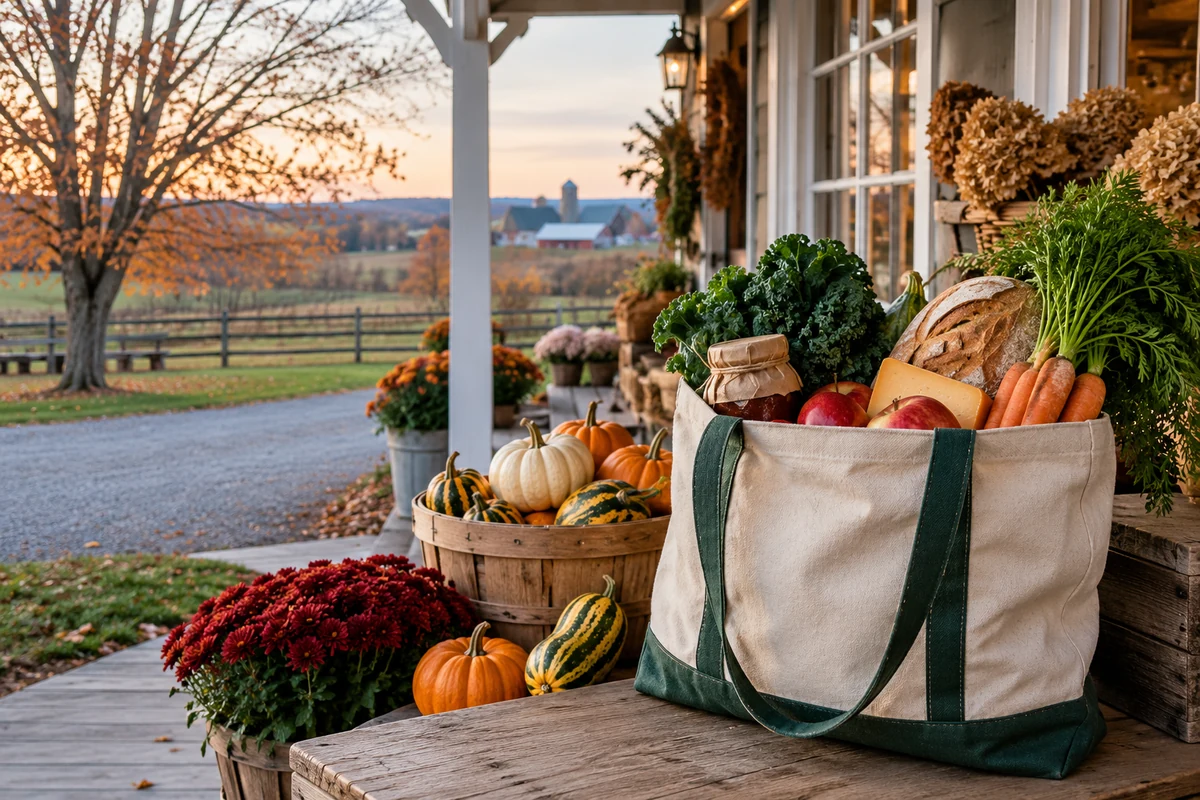
AI-generated editorial illustration; not a photo of a listed business.
A November shopping day can revolve around a warm bakery, one useful pantry stop and a comfortable drive home. Earlier darkness and holiday-week schedules make the order of those stops worth thinking through. These November Amish country shopping plans offer eight ways to shape the outing around your time, weather and main purchase. Pick a workable version, confirm its essential details and keep a backup stop in reserve.
Eight November Amish country shopping plans to make your own
These are eight ways to shape a manageable outing, not eight stops to squeeze into one day. Choose the plan that solves your biggest constraint, then borrow a detail or two from the others.
1. One Anchor Stop Before Lunch
Choose the store that can satisfy your most important purchase first: a bakery for a family gathering, a pantry shop for baking supplies, or a shop carrying quilts you want to examine in person. An anchor stop earns its place because you would still consider the trip worthwhile if you went nowhere else.
Use the store search to identify candidates, then check whether the listing actually matches your shopping list. A broad country-store description does not establish that a shop makes its own baked goods or carries Amish-made textiles.
Ask: “Do you carry the kind of item I’m looking for, and is there a particular department or selection I should ask about?”
Buy the priority item before browsing extras. The tradeoff is less spontaneous exploring, but you protect the purchase that justified the drive. Treat any second stop as optional, not as unfinished business.
2. A November Bakery-and-Pantry Route
Give each stop a separate job. The bakery might cover bread and a dessert; the pantry shop might cover flour, dried fruit and spices already on your household list. This pairing is more useful than visiting two similar stores simply because both look appealing.
Before choosing the order, consider which purchases need special handling and which are fragile. A bakery box needs a flat, protected place, while heavy pantry bags should not become its traveling companions. Ask the bakery for product-specific handling instructions rather than assuming every pie or pastry travels the same way.
The bakery shopping guide can help you narrow the bakery portion before adding pantry purchases.
Set a separate spending limit for each stop. If a large pantry package exceeds what you normally use, compare smaller quantities instead. More variety is not automatically better value, and a full car is not the goal.
3. Shop With an Earlier Return Time
Start with the time you want to be home and work backward through the drive, checkout, shopping and a break. In northern regions, November’s shorter daylight can make a late optional stop less attractive, especially on unfamiliar roads. You do not need an exact sunset calculation to decide that a relaxed return matters more than another aisle.
Keep the farthest essential destination early in the route, then consider stops that bring you closer to home. Avoid creating a loop that sends you farther away for a minor purchase.
Ask your group one concrete question: “Which stop would we drop if the first one takes longer than expected?” Agree before anyone is tired.
The three-stop route guide is useful for arranging priorities, even if you ultimately choose only two. Make your departure cutoff a decision rule, not a hopeful suggestion.
4. A Rainy November Shopping Plan
Rain changes the usefulness of a shopping stop. A store with most merchandise indoors may suit the day better than a destination where your browsing depends on outdoor displays. A picturesque porch tells you little about parking distance, steps or the amount of sheltered shopping space.
For anyone with mobility needs, ask specific questions: “Is there a step-free entrance? How far is parking from the door? Are the aisles easy to navigate?” Do not substitute a general “Is it accessible?” for the details that matter to your group.
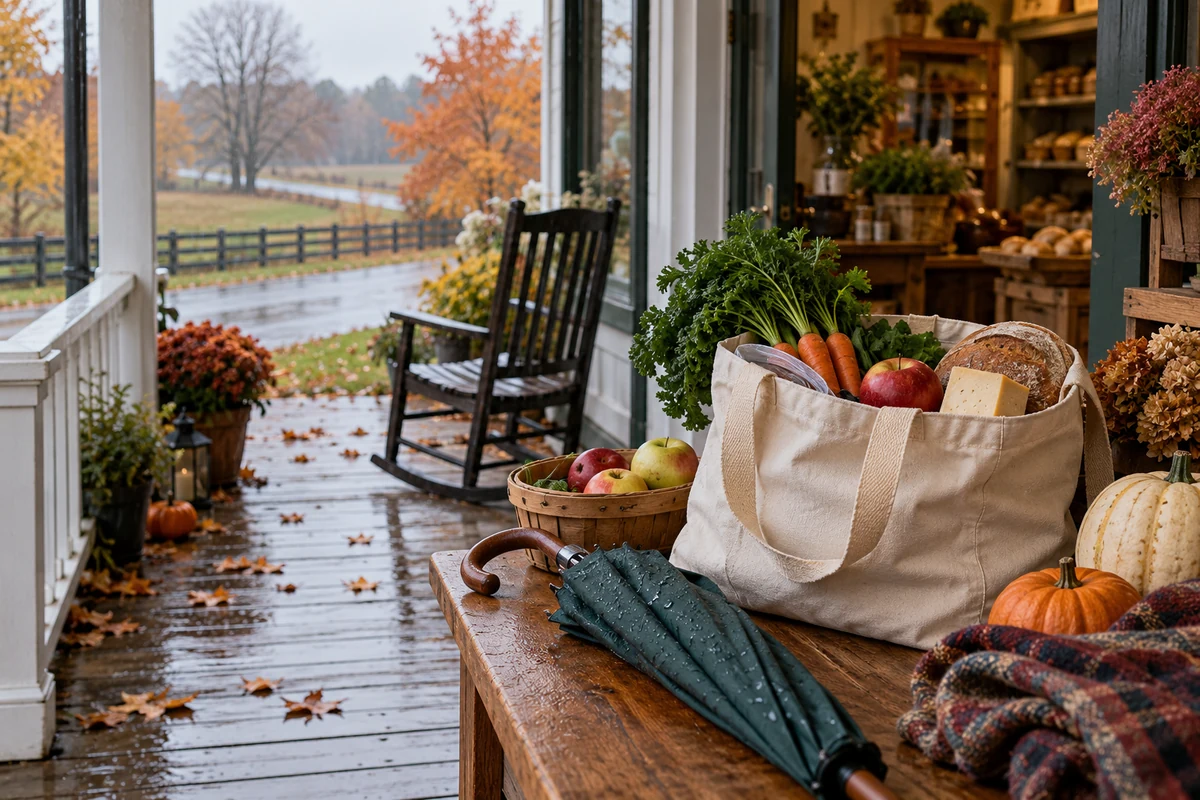
Choose fewer transfers between the car and shops, and keep a waterproof outer bag available for paper-wrapped purchases. Wet weather is also a reason to postpone a bulky textile purchase if you cannot protect it properly.
The actionable swap is simple: replace an exposed browsing stop with a suitable indoor shop, or shorten the outing rather than forcing the original plan.
5. Call About Holiday-Week Hours
Thanksgiving falls on Thursday, November 26, 2026, as confirmed by the federal holiday calendar. Small Business Saturday follows on November 28. Neither date tells you whether a particular store will open, extend its hours or participate in a promotion.
Use the store’s available contact method to confirm the day you intend to visit. Do not assume neighboring shops share a schedule or that a regular listing reflects holiday-week changes.
A compact script helps: “I’m planning to visit on this date. What are your shopping hours that day? Are there any holiday-week changes, and which payment methods do you accept?” If one purchase is essential, ask about that product category too; a conversation is not a stock guarantee.
Write the answers beside your route. If you cannot confirm a distant essential stop, move it out of the anchor position rather than building the whole day around uncertainty.
6. Leave Room for a Warm Indoor Break
A shopping route becomes less pleasant when lunch is an afterthought and everyone is carrying bags while deciding what to do next. Plan one indoor pause with somewhere appropriate to sit, whether that is a separate food stop or another confirmed option along the route.
A country store is not necessarily a café. Ask whether seating, food service and customer restrooms are available instead of assuming that a bakery counter includes all three. Accessibility and dietary requirements may also affect which break location works.
Keep the break close to the route so it does not consume the time saved by limiting your shopping stops. If your purchases require controlled handling, arrange the break before collecting them or follow the producer’s guidance for transport.
Use the pause to review the shopping list. If the essential purchases are complete, going home is a good outcome—not a reason to invent another errand.
7. Pack for Wet Bags and Cold Foods
Pack for the purchases you actually intend to make. A rigid tote supports jars, a separate flat space protects baked goods, and a waterproof bag keeps damp outer layers away from paper packaging. Bring an appropriately prepared cooler if your list includes products that require it; cold November air is not a substitute for following the product’s handling instructions.
The cooler-packing guide can help you plan the transport space before leaving. Ask the seller how a particular item should travel, and keep its label with it.
For packaged foods, check ingredients and allergen information. Plain packaging, a handwritten label or a country-store setting does not establish suitability for someone avoiding an ingredient.
Before checkout, consider the return journey: can everything remain upright, protected and handled as directed? If not, reduce the haul. Passing on one delicate or bulky item is easier than improvising space in a wet parking lot.
8. Choose the Weekend Backup Stop
A useful backup replaces the purpose of a missed stop. If your anchor is a pantry shop, another shop with relevant groceries makes more sense than a gift store on the opposite side of the region. If you are shopping for a quilt, a general market may offer an enjoyable browse but is not necessarily a substitute.
Use nearby store listings to identify one alternative near your planned route. Check its likely product fit and confirm its schedule separately; weekend hours are store-specific, and Sunday opening should never be presumed.
Set a backup trigger in advance: use it only if the anchor is closed, unsuitable or unable to meet your essential shopping need. Otherwise, leave it for another trip.
This keeps a backup from quietly becoming an extra obligation. If neither store works, retain the list and plan a better-supported visit rather than buying unrelated items to justify the drive.
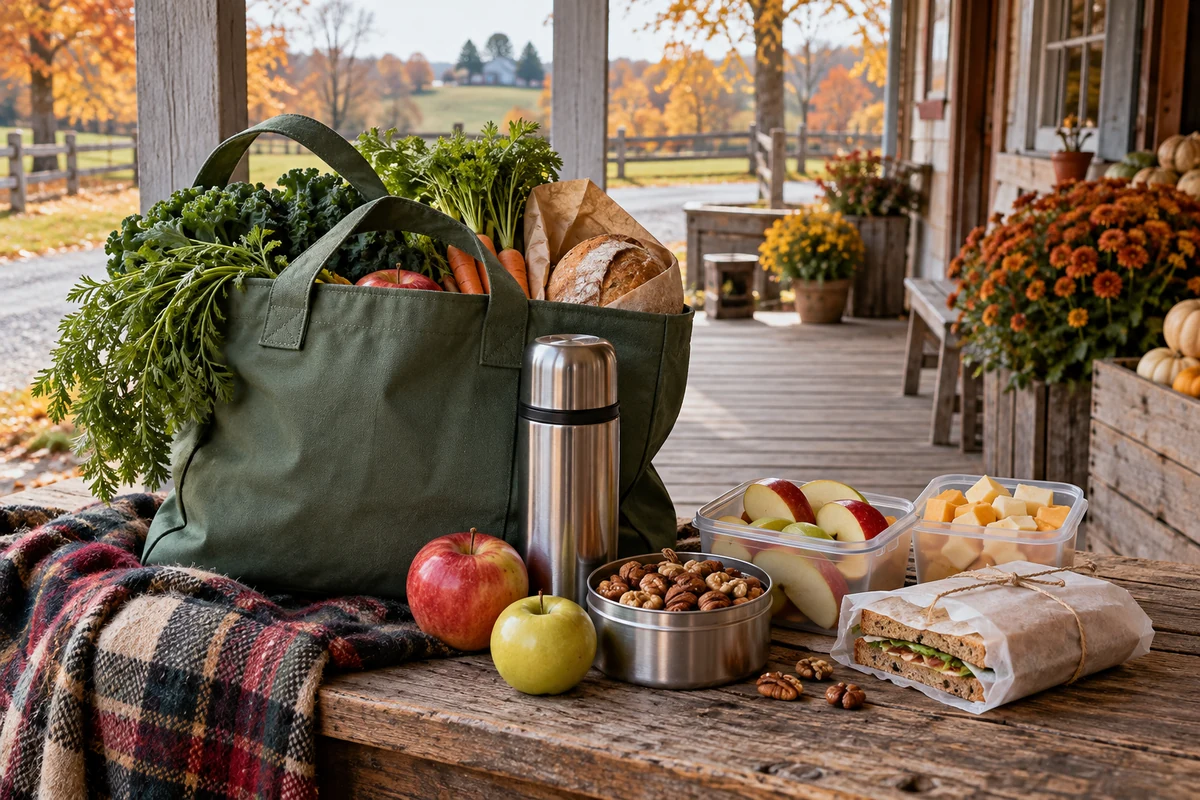
Set the spending limit alongside the route. These Amish country shopping budget ideas help you account for the whole outing.
Quick comparison: which plan fits your weekend?
Use the table to choose your starting plan. You can combine an anchor stop with an earlier return, for example, without adding another destination.
| Your main constraint | Best starting plan | What to settle first | What to give up |
|---|---|---|---|
| One important purchase | Anchor before lunch | Product fit at the main store | Unrelated detours |
| Bread plus household staples | Bakery-and-pantry route | Separate lists and transport needs | Duplicate browsing |
| Limited daylight | Earlier return | Home arrival target | The farthest optional stop |
| Wet conditions | Rainy-day plan | Indoor shopping and entrance details | Exposed browsing |
| Thanksgiving-week uncertainty | Holiday-hours check | Date-specific opening information | Unconfirmed anchor stops |
| A group that needs pauses | Indoor-break plan | Seating and restroom options | A tightly packed schedule |
| Fragile or chilled purchases | Packing plan | Suitable space and handling | Purchases you cannot transport well |
| An uncertain primary stop | Weekend backup | One equivalent alternative | A sprawling fallback route |
Buy for your household, not the setting
Before comparing packages, separate what you need from what merely looks appealing on the shelf. For pantry goods, check the unit price when available, the package size and how much you realistically use. For gifts, consider the recipient’s tastes, carrying space and any ingredient restrictions before choosing the largest assortment.
Origin deserves its own question. Amish-owned describes a business; Amish-made describes who produced an item. Neither phrase automatically applies to every product sold there, and a country store may carry goods from many suppliers. Ask who made the specific item and what information the seller can provide. If its origin remains unclear, evaluate it as an ordinary retail purchase rather than paying extra for an assumed story.
Copyable shopping and decision checklist
Copy this into your phone and fill it in before departure:
- Essential purchases and quantities: ___
- Anchor store and reason for choosing it: ___
- Visit date, confirmed hours and payment methods: ___
- Optional stop to drop first: ___
- Indoor break and any access needs: ___
- Home arrival target and departure cutoff: ___
- Spending limit, including gifts: ___
- Bags, protective space and cooler if needed: ___
- Product-origin or ingredient questions: ___
- Backup store and reason to use it: ___
Frequently asked questions
How many stores should I plan to visit?
Start with one essential store and one optional stop. Add another only if the driving, shopping and break time fit comfortably. A short list of completed purchases is more useful than a route you must rush through.
Can I assume Amish country stores are open on weekends?
No. Confirm the specific store’s schedule for your visit date, particularly Sundays and holiday weekends. Stores in the same area may operate differently, and an event elsewhere does not establish their participation.
Does a country-store label mean an item is Amish-made?
No. The setting, packaging and product style do not prove maker identity. Ask about the specific product; a store can be Amish-owned while also selling goods produced by outside suppliers.
What if I cannot verify holiday-week details?
Choose a different confirmed anchor, keep the uncertain store optional, or postpone that purchase. Do not make a long drive depend on assumed hours or an item you have not established the store carries.
Images are AI-generated editorial illustrations, not photographs of particular stores or makers.
Write down your three most important purchases, choose the store best suited to them, and confirm its hours for your intended November visit before adding a second stop.