
8 Pantry Pairings to Plan for Thanksgiving Leftovers
Shop smarter for Thanksgiving leftovers with eight pantry pairings, a quick comparison table, container tips, and a practical country-store shopping checklist.
This practical guide follows our source, correction, and uncertainty standards.
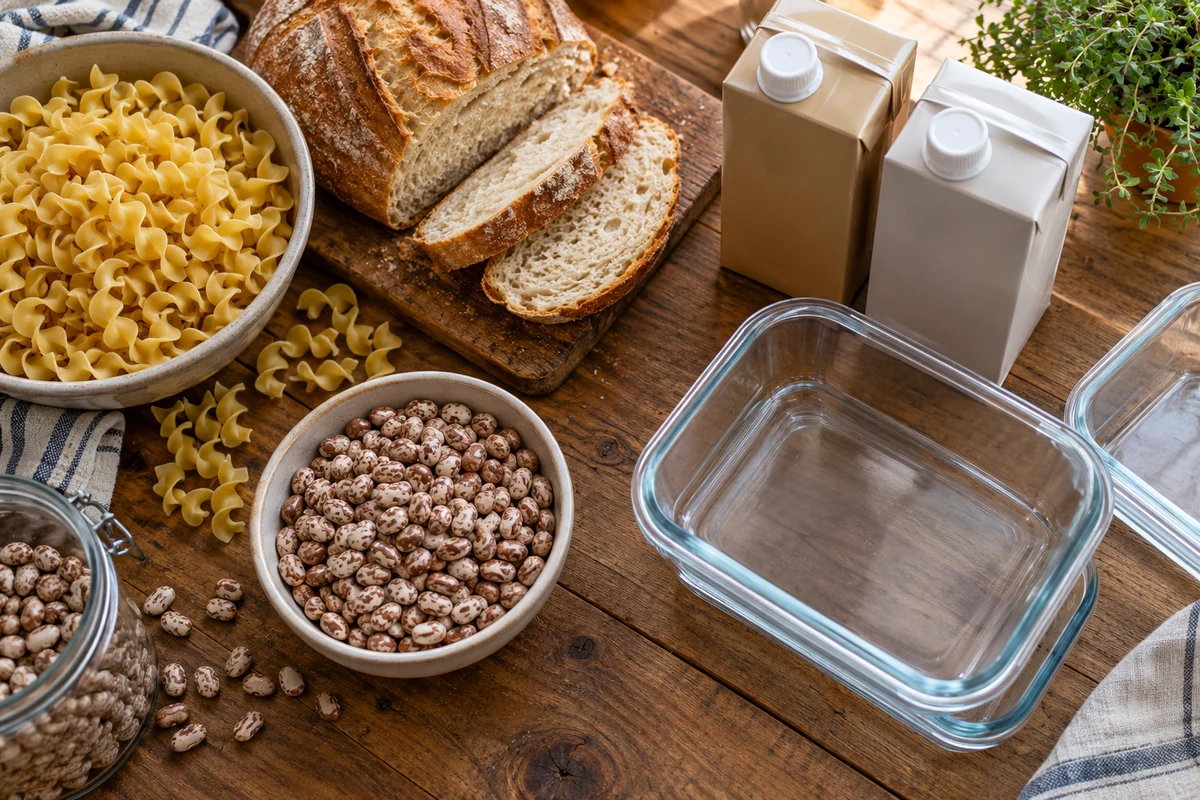
AI-generated editorial illustration; not a photo of a listed business.
Friday lunch is easier to picture when you have bread for sandwiches, noodles for soup, or a familiar pantry supper ready to go. Choose those companions before Thanksgiving, while you can still check what is already in the cupboard. These Thanksgiving leftover pantry ideas cover eight shopping and packing decisions, including a meal that works even if guests take most of the food home. Pick a few useful supplies and follow the storage guidance for the food you actually keep.
Thanksgiving leftover pantry ideas: eight practical purchases
These eight choices cover meals, packing, and a backup plan. They are pairing inspiration, not complete recipes: follow each product’s label and ask the producer for product-specific handling instructions where needed. You do not need everything on this list; two meal staples plus containers that fit your portions may be enough.
1. Noodles for a Leftover Soup Plan
Buy noodles for the soup you would actually welcome after Thanksgiving: perhaps turkey with vegetables in a broth-based bowl. Short shapes are convenient to portion and eat with a spoon; longer noodles offer a different texture but may be less comfortable for a desk lunch. Match the package size to your likely meals rather than choosing the biggest bag automatically.
Check whether you already have suitable broth before adding sealed cartons to the basket. A large noodle purchase is not much help if the rest of the soup plan is missing.
Ask: “Are these noodles made by your business, another producer, or packed here from bulk stock?” Those are different claims. Check ingredients, too, especially if egg or wheat matters to your household.
Decision: Choose one manageable noodle package and only the broth your cupboard lacks. Keep the plan useful even without turkey by selecting ingredients you would enjoy with vegetables alone.
2. Bread for a Planned Sandwich Lunch
Bread works best when you know which lunch it is for. A sliced loaf suits several straightforward turkey sandwiches; rolls let people assemble individual lunches. A dense artisan-style loaf may taste appealing but be less practical if your household prefers soft sandwich bread or needs predictable slices.
Count the people you expect to feed after dinner, not everyone attending Thanksgiving. Visiting relatives may leave that evening, and a large bread purchase can become another leftover to manage. If you intend to freeze part of the purchase, check the bread’s packaging and producer’s guidance before committing.
The Amish bakery shopping guide can help you frame questions about bakery selections and origin. Ask whether a loaf is baked by the shop or supplied by another bakery; the storefront alone does not establish that.
Decision: Pick bread for one named sandwich lunch, with a realistic use for any extra slices or rolls.
3. Beans for a Flexible Pantry Supper
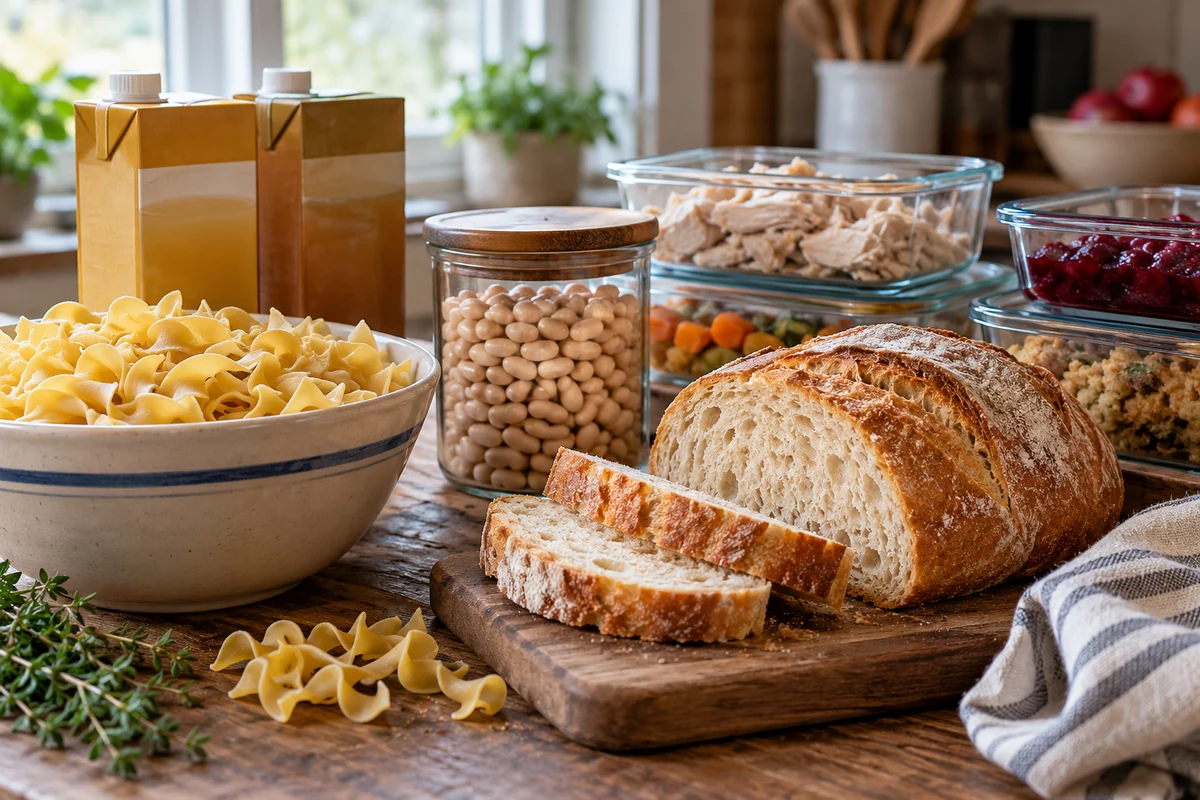
Beans make sense when you want a meal that can accommodate a little leftover meat—or none. Think white beans alongside turkey and vegetables, or a bean-centered supper with bread. Choose a familiar variety rather than buying an unfamiliar bulk bag solely because it looks economical.
The important distinction is effort. Dry beans can suit a household that already plans meals around them. Canned beans may be the more useful purchase for a tired Friday evening. Neither choice is automatically better value once unused quantities and your available time enter the picture.
Check the bulk-food pantry checklist before buying duplicates. At the shelf, compare package quantities and ingredient lists; seasoned beans may pull the meal in a direction you do not want.
Decision: Buy the form you will genuinely use that weekend. If dry beans usually sit untouched in your cupboard, choose a smaller ready-to-use option instead.
4. Rice for a Small Leftover Meal
Rice is a sensible pairing when there is only a modest amount of turkey or vegetables left. It can give a small meal a useful base without requiring you to save an entire platter of food. The shopping question is whether plain rice or a seasoned mix fits what you already have.
Plain rice leaves more room for the flavors of the holiday dishes. A mix offers a more defined result, but its ingredients and seasoning may overlap awkwardly with gravy or a strongly flavored vegetable side. Read the package before treating the two as interchangeable.
For a smaller household, weigh a compact package against a large bulk purchase. The small-household bulk-food shopping guide is useful when a generous bag exceeds your normal buying habits.
Decision: Select rice you would also eat in an ordinary week. Adding rice does not extend the safe storage life of the leftovers paired with it.
5. Crackers for a Simple Lunch Plate
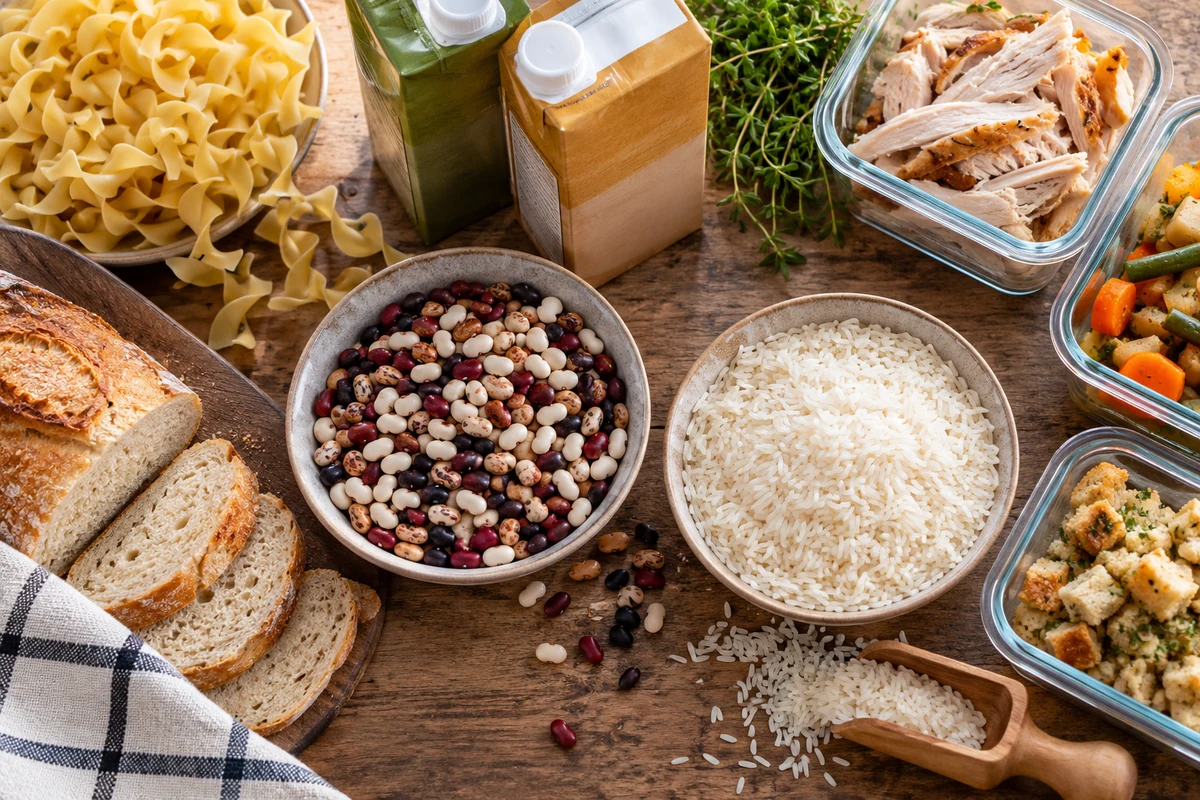
Not every post-holiday meal needs to become a new dish. Crackers can anchor a small lunch plate with suitable leftover turkey, a familiar spread, and fruit or vegetables already on hand. This option is especially useful when household members eat at different times and want different portions.
Choose crackers by function. Sturdy, plain crackers work differently from delicate wafers or heavily seasoned varieties. A large assortment may be attractive for entertaining, but one familiar package can be more practical for everyday lunches. Consider whether an opened package will get used after the weekend.
For repacked crackers, look for clear ingredient and allergen information. Plain bags and handwritten labels do not establish allergen safety. Ask for the product information if it is not readily available.
Decision: Buy one versatile style your household already likes. Treat the lunch plate as a small planned meal, not a reason to keep questionable food longer.
6. Choose the Containers Before Dinner
The most useful purchase may be a container rather than another pantry staple. Check lids before shopping: a cupboard full of mismatched tubs is not the same as having usable containers. Shallow containers in lunch-sized portions can be more practical than one deep vessel holding everything together.
Think through two jobs: keeping portions for your household and sending food with guests. Containers intended to leave the house should be ones you are comfortable not getting back. Avoid buying a large matching set if a few replacement pieces solve the problem.
Ask: “Is this container intended for food, and is it suitable for the freezer or reheating method I plan to use?” Follow the manufacturer’s directions rather than judging by appearance. A decorative jar or reused package is not automatically suitable for every task.
Decision: Make space in the refrigerator and match containers with lids before dinner. Buy only what your actual packing plan requires.
7. Label What You Save for Later
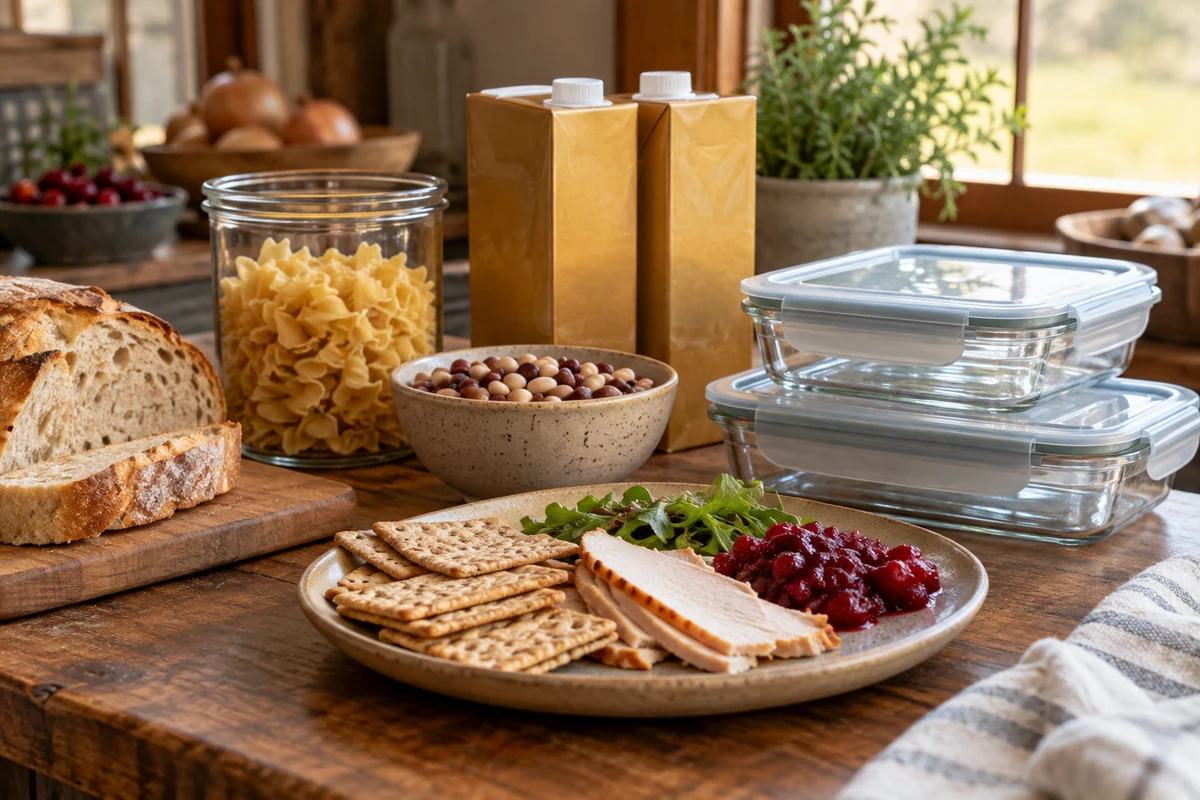
A clear label makes a container easier to use and less likely to be forgotten. Put a suitable marker and food-storage labels beside your packing supplies before the holiday. The useful information is simple: what is inside, when it was prepared, and when it was frozen, if applicable.
Avoid vague labels such as “dinner” when several containers look alike. “Turkey—prepared Nov. 26” is more useful, with a freezing date added if needed. If packing food for someone else, pass along relevant ingredient and handling information rather than assuming they know what went into each dish.
Choose labels suited to the container and intended storage conditions. An elaborate label maker is optional; legible, durable information is the goal.
Decision: Label each container as you pack it. Do not give older leftovers a fresh storage timeline simply because you combine them with new noodles, beans, rice, or broth.
8. Plan a Friday Meal Without Leftovers
A backup meal removes the pressure to save food you do not want or cannot confidently use. Guests may take home more than expected, your household may want a different flavor, or there may simply be very little left. None of those outcomes makes your pantry shopping a failure.
Choose a familiar meal built around purchases that remain useful afterward: packaged soup and crackers, a bean-based meal with bread, or noodles and an unopened sauce you normally buy. Follow the packages’ preparation and handling instructions. The goal is a dependable alternative, not an ambitious second holiday dinner.
Make this your overlap test: can at least one planned purchase serve both the leftover meal and the backup? Crackers, beans, or noodles often can, depending on your household’s preferences.
Decision: Write down one complete Friday meal that needs no Thanksgiving food. Buy only its missing ingredients, rather than a separate emergency cart.
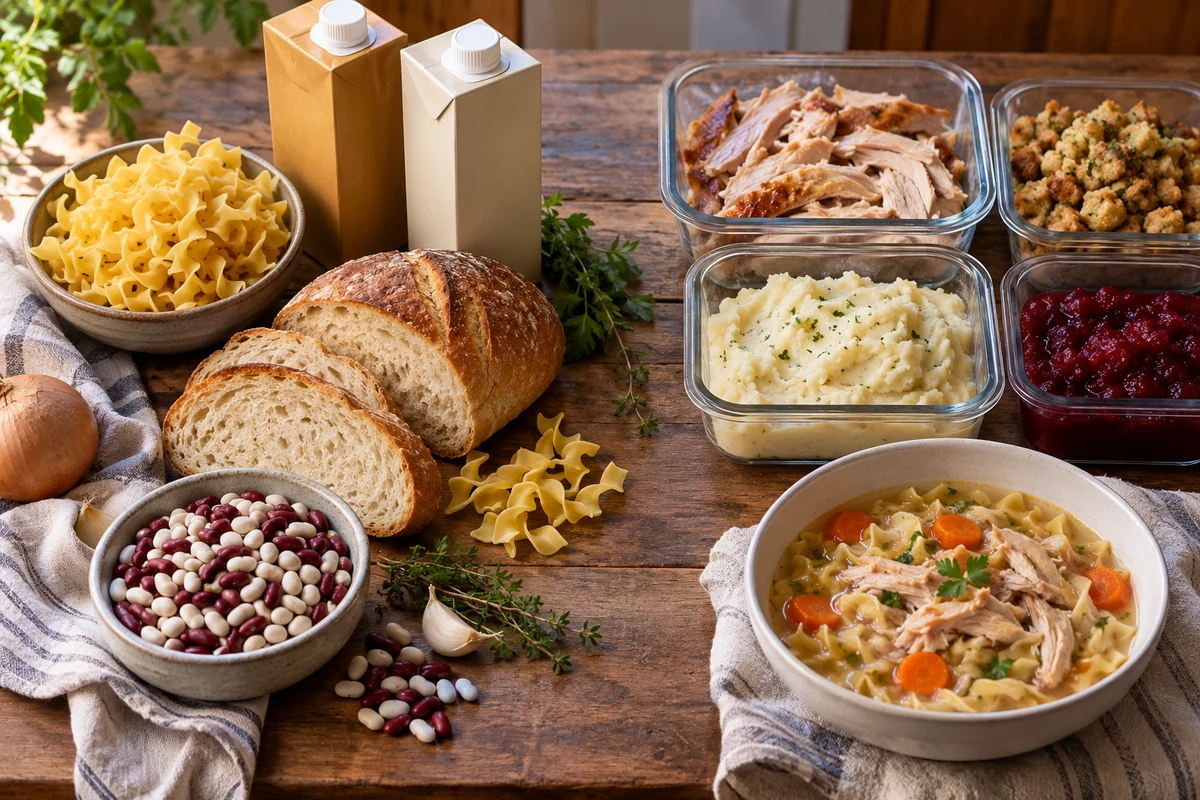
Choosing a noodle package for that soup plan? Compare shapes, ingredients and package sizes in the country store noodle guide.
Quick comparison: which purchases earn their space?
Choose by the meal and effort you want, not by how impressive the pantry shelf will look.
| Purchase | Best fit | Main tradeoff | Before buying |
|---|---|---|---|
| Noodles and broth | A planned soup meal | Requires complementary ingredients | Check broth supply and noodle ingredients |
| Bread or rolls | One sandwich lunch | Extra bread also needs a use | Count the people staying after Thanksgiving |
| Beans | A flexible supper with or without meat | Dry and canned forms require different effort | Choose the form you routinely use |
| Rice | A meal using modest leftovers | Seasoned mixes may clash with existing flavors | Compare plain rice with the mix label |
| Crackers | Small, separate lunch plates | Large assortments can outlast your interest | Pick one familiar, versatile style |
| Containers and labels | Portioning and identifying saved food | More pieces can add clutter | Match existing lids and check intended uses |
Plan the store stop—and the leftover timeline
Use the store search to find actual shopping options, then verify the details that matter for your basket. A useful single inquiry is: “Do you carry packaged noodles, beans, broth, or bread, and where can I check your Thanksgiving-week hours?” Product ranges and holiday schedules vary. Amish ownership, Amish manufacture, and a generic product sold in a country store are separate facts; ask about origin only where it affects your choice.
Thanksgiving falls on Thursday, November 26, 2026. Do not assume shops will be open afterward or participating in Small Business Saturday on November 28. Northern regions have shorter November daylight, so a compact route may be easier than several distant stops. The three-stop country-shopping route guide can help you narrow the trip rather than expanding it.
For the food itself, FoodSafety.gov’s Thanksgiving leftover guidance says to refrigerate promptly within two hours, or one hour above 90°F, and use refrigerated leftovers within three to four days; freeze them if keeping longer. New pantry ingredients do not restart that timeline. Decide what you will realistically eat and freeze suitable portions rather than planning a full week of refrigerated turkey meals.
Copyable shopping and decision checklist
- Name one leftover meal and one meal needing no leftovers.
- Count the people eating after Thanksgiving.
- Check existing noodles, broth, beans, rice, bread, and crackers.
- Choose package sizes with an ordinary-week use for extras.
- Read ingredients and clarify any missing allergen information.
- Verify maker claims if Amish-made origin matters to the purchase.
- Match container lids; check freezer and reheating suitability.
- Set out labels and a marker; make refrigerator space.
- Confirm the chosen shop’s holiday schedule before leaving.
Frequently asked questions
Do I need all five food pairings?
No. Choose the staples for one or two meals your household wants. Buying noodles, bread, beans, rice, and crackers without specific uses can create more surplus instead of solving it.
Are country-store bulk foods necessarily Amish-made?
No. A store may sell its own products, goods from other makers, and commercially produced staples. Ask who made or packed the item; a plain package does not establish origin.
Can soup or rice make older leftovers last longer?
No. Combining leftovers with fresh ingredients does not extend their storage life. Keep the original preparation timeline visible on your labels and follow the leftover guidance above.
What if almost no Thanksgiving food remains?
Use the Friday backup meal and keep unopened staples according to their labels. This is why familiar pantry products are usually more useful than specialty purchases that depend on a large amount of leftover turkey.
Images are AI-generated editorial illustrations, not photographs of particular stores or makers.
Before choosing a store, open your cupboard, match three useful containers with their lids, and write down the missing ingredients for one leftover meal and one backup meal.