
Solid Wood Dining Table Shopping: 11 Decisions to Make Before Visiting
Prepare for solid wood dining table shopping with eleven decisions about room fit, chairs, leaves, materials, finish, full pricing, and delivery access.
This practical guide follows our source, correction, and uncertainty standards.
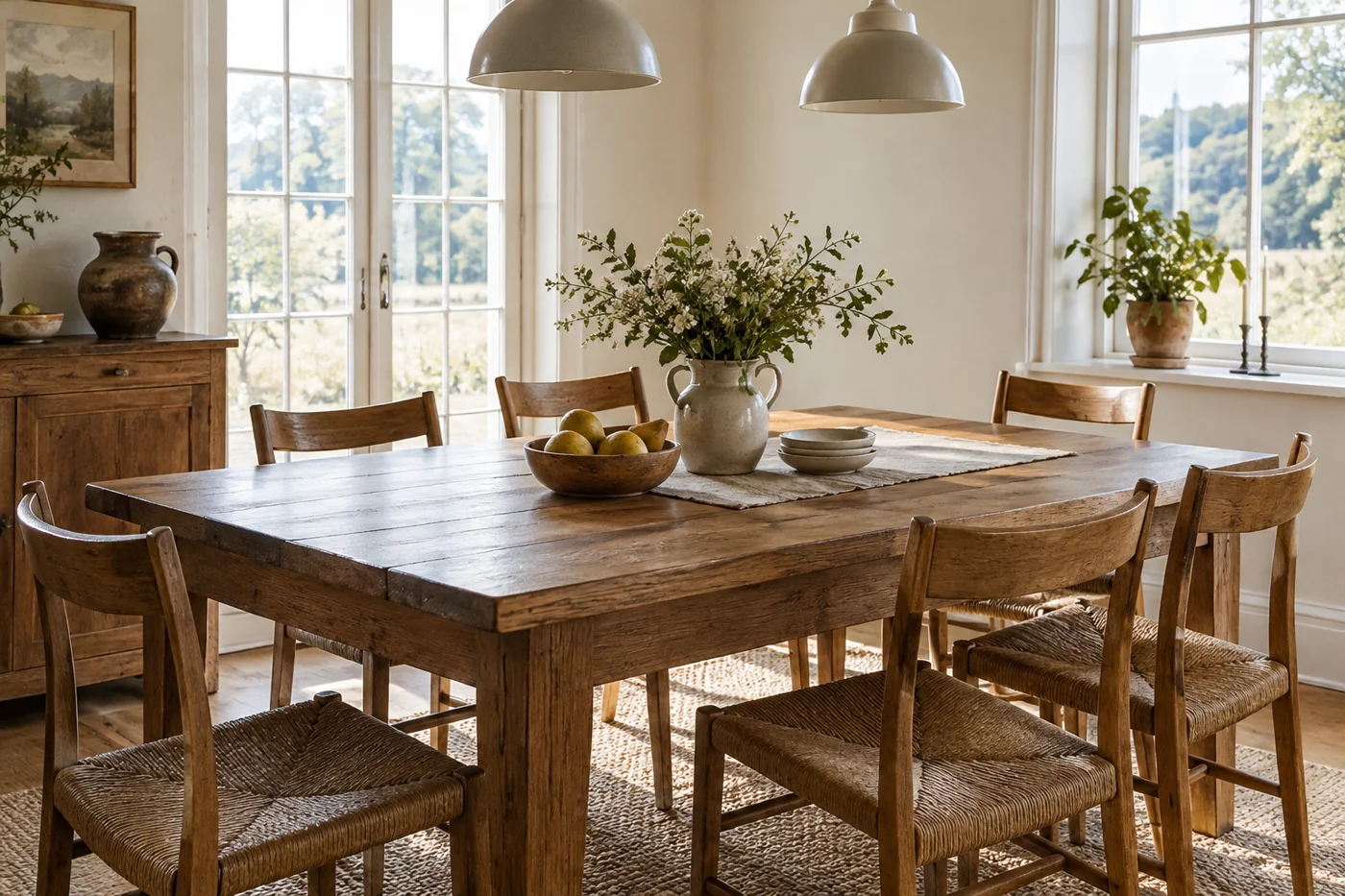
AI-generated editorial illustration; not a photo of a listed business.
A dining table has to fit the room while people are using it, not just while the chairs are pushed in. Size, seating, finish, delivery, and everyday care all deserve attention before a showroom visit. These eleven decisions help you compare solid wood dining tables with a clear list instead of choosing only from a photograph. Use the seller’s actual specifications and terms for the piece you are considering.
Solid Wood Dining Table Shopping Begins with the Room
Measure the room, openings, existing furniture, and relevant delivery access. Sketch where the table would go and how people move through the space. Bring those details to the seller and ask whether the proposed setup suits your needs.
This guide provides shopping questions rather than structural, accessibility, or installation advice. Do not assume a particular table or clearance works for every home. If accessibility, building access, or another specialized requirement matters, seek appropriate guidance and confirm the details with the relevant parties.
| Decision | Bring from home | Ask the seller |
|---|---|---|
| Room fit | Measurements and a layout sketch | Actual dimensions and leaf positions |
| Seating | Household and guest needs | Leg placement and compatible chairs |
| Material | Intended use | Wood, construction, and components |
| Delivery | Doorway and access information | Service scope and responsibility |
1. Everyday Seating Before Occasional Guests
Write down who normally uses the table and how it is used: meals, homework, projects, or another activity. Choose everyday comfort first, then plan for occasional guests. A table that fills the room only for two gatherings a year may be awkward the rest of the time.
Ask about actual seating arrangements with the chairs you intend to use. A seat count in a description does not resolve leg placement, chair width, or your household’s needs.
2. The Shape That Fits the Layout
Compare rectangular, round, or other shapes according to room flow and use. Look at doors, nearby cabinets, and the routes people take through the space. A preferred shape can still be unsuitable in a particular layout.
Ask to see dimensions and, where available, compatible seating examples. Avoid making a decision solely from a showroom where surrounding space is much larger than your dining area.
3. Actual Top Dimensions
Request width, length, height, and any other relevant dimensions for the model. Measure a footprint at home using a removable layout marker or another suitable method. Consider the occupied space with chairs in use, not just the top.
Check whether dimensions apply to the displayed piece or a different size option. Write down the specification you are actually comparing.
4. Extension Leaves and Their Storage
If you need an extending table, ask how it operates, where leaves are stored, and what the expanded dimensions are. Check whether the household can manage the process comfortably. Ask what is included in the quoted price.
Do not assume all extension systems work the same way. Consider the space and effort involved before choosing capacity you will rarely use.
5. Chair Fit and Leg Placement
Compare chair height, width, arms where applicable, and the table’s leg or base arrangement. If you already own chairs, bring their dimensions and relevant photographs. Ask whether the combination is suitable rather than assuming a standard dining chair will fit.
Test seating as the showroom permits. A visually matching chair is not automatically comfortable for the people who will use it.
6. What Solid Wood Means for This Piece
Ask which components are solid wood and whether other materials or construction methods are used. A broad product label should be clarified with the specific item’s information. Ask about the maker and origin if those are important to your purchase.
Do not infer Amish manufacture from a store’s location or a farmhouse style. Get the seller’s explanation and retain documentation where available.
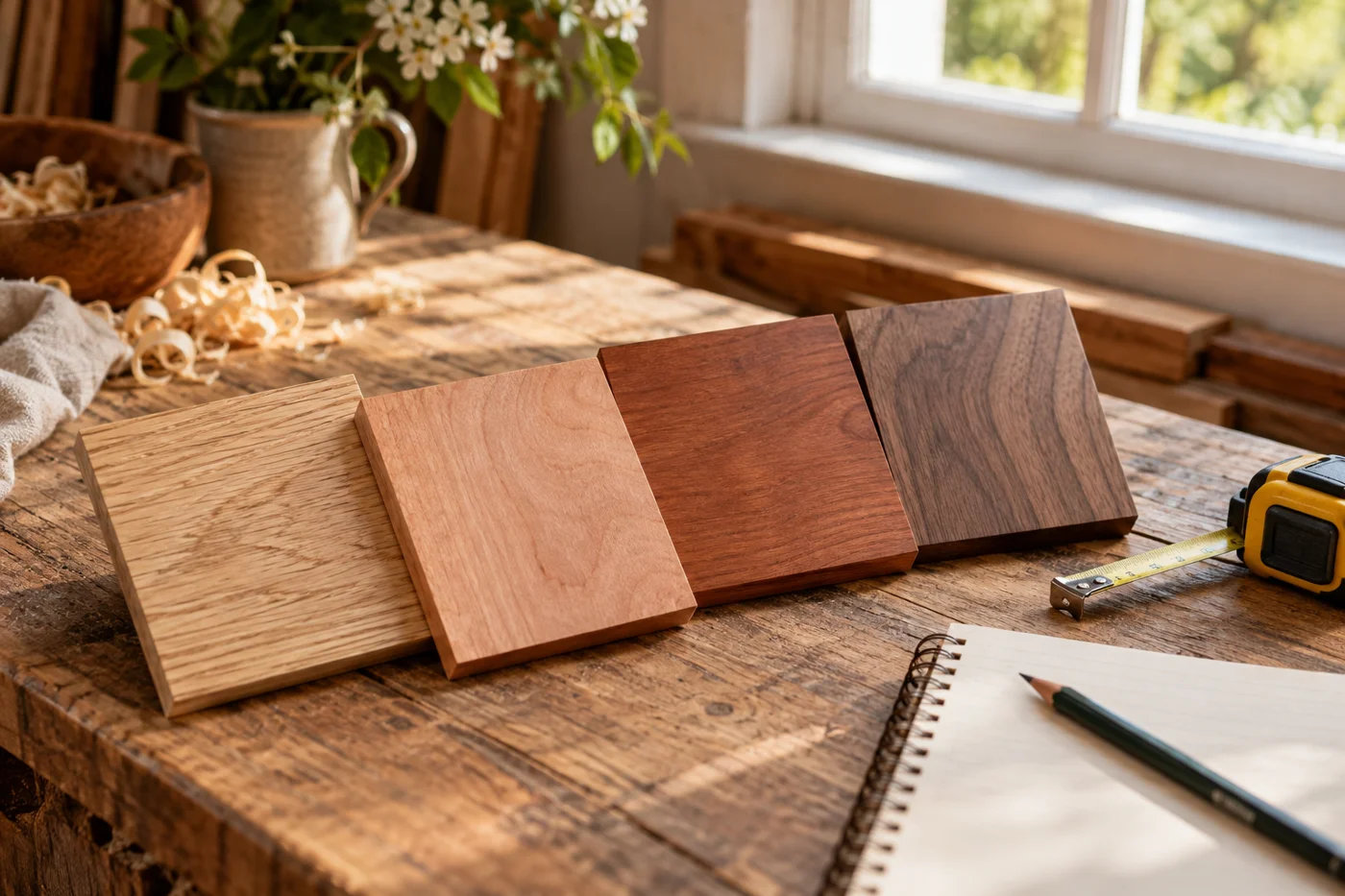
AI-generated editorial illustration; not a photo of a listed business.
7. Wood and Appearance Options
Compare actual samples where the seller provides them. Ask how the sample relates to the finished piece and what natural variation to expect. A screen photograph may not reproduce color or grain accurately.
Choose according to the room, intended use, and information supplied rather than ranking woods from appearance alone. This article does not establish performance guarantees for particular species.
8. Finish and Daily Care
Ask about the finish and obtain the maker’s care guidance. Clarify cleaning, protection, and any other routine requirements before purchasing. Do not assume your current furniture care products suit a new finish.
Think about the way the household uses the table. A finish requiring care you do not want to provide may be a poor fit even when its color is attractive.
9. The Complete Price and Order Scope
Ask what the quote includes: table, leaves, chairs if applicable, finish options, delivery, assembly, and any additional services. Compare equivalent scopes rather than treating two headline prices as directly comparable.
For a custom order, confirm specifications, payment arrangements, anticipated timing, changes, and cancellation or return terms. Keep the agreement available for review. Do not assume every maker follows the same process.
10. Delivery and Home Access
Explain the relevant route into the home, including doors, stairs, turns, and other access issues. Ask what the delivery team handles and what you must prepare. Confirm the dimensions of components and any assembly arrangements.
If access is uncertain, resolve it before purchase rather than relying on an optimistic guess. A large table that fits the room may still need a different delivery or assembly plan.
11. Support After Purchase
Ask about warranty or service terms, how to report an issue, and what documentation to keep. Clarify who handles questions if the showroom sells another maker’s work. Retain the order details and care instructions.
Support policies vary by business. Do not infer that a custom, handmade, or Amish-made label guarantees a particular warranty or repair arrangement.
A Worked Comparison for a Multipurpose Dining Room
Suppose your room is also used for homework and you occasionally host guests. You measure the available space, existing chairs, and delivery route. Two tables appeal to you: a larger fixed table and a smaller extending option.
Compare the everyday footprint, the seating arrangement, and the space needed when extended. Ask about leaf operation and storage. Check chair fit with the actual base, then compare complete quotes and care requirements. The smaller option may fit daily life better, but that conclusion depends on your actual room and the seller’s specifications.
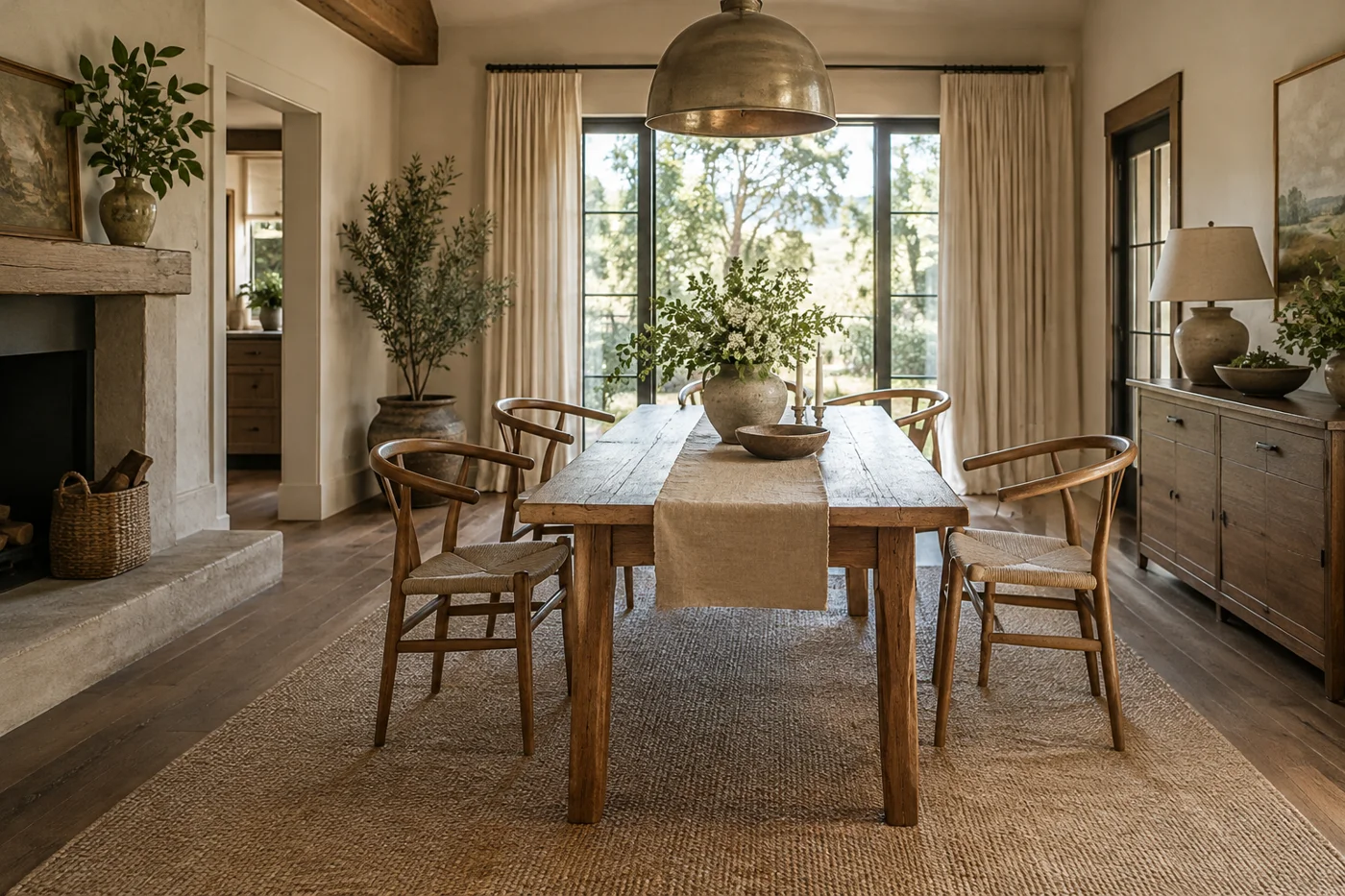
AI-generated editorial illustration; not a photo of a listed business.
The example is a decision process, not a universal clearance recommendation. Use the measurements and needs of your household to make the comparison meaningful.
Prepare a Showroom Question Sheet
Keep one page for each table with its exact model, dimensions, materials, finish, seating notes, quoted scope, delivery details, and terms. Ask permission before photographing products or samples. Record unresolved questions and answer them before ordering.
The furniture store visit checklist covers broader preparation. If the trip includes other stores, the rainy-day route guide can help make a confirmed showroom visit the anchor rather than rush a major decision.
Before You Leave Home
- Measure the room, relevant openings, and existing chairs.
- Decide everyday seating and occasional guest needs.
- Note preferred shapes and acceptable alternatives.
- Ask about appointments and displayed models.
- Prepare material, finish, and care questions.
- Plan to compare complete prices and terms.
- Leave time to take notes without pressure to order.
Frequently Asked Questions
Should I buy a table before choosing chairs?
Plan them together, or bring dimensions of the chairs you intend to keep. Height, width, arms, and base placement can affect fit.
Is a larger table always better for hosting?
It may create an awkward daily layout. Compare everyday use and suitable extension options with actual room dimensions.
Does solid wood mean every component is solid wood?
Ask the seller to explain the construction of the specific piece. Do not rely on a broad label to answer component-level questions.
Can I assume delivery includes assembly?
No. Confirm the service scope, access requirements, and responsibilities before purchasing.
Browse furniture stores and use store search to find relevant candidates, then contact the business about appointments, available models, and your comparison questions.