
Buying Handmade Quilts: 12 Details to Compare Before You Choose
Compare handmade quilts using twelve practical checks for dimensions, materials, construction, maker information, care, condition, and purchase terms.
This practical guide follows our source, correction, and uncertainty standards.
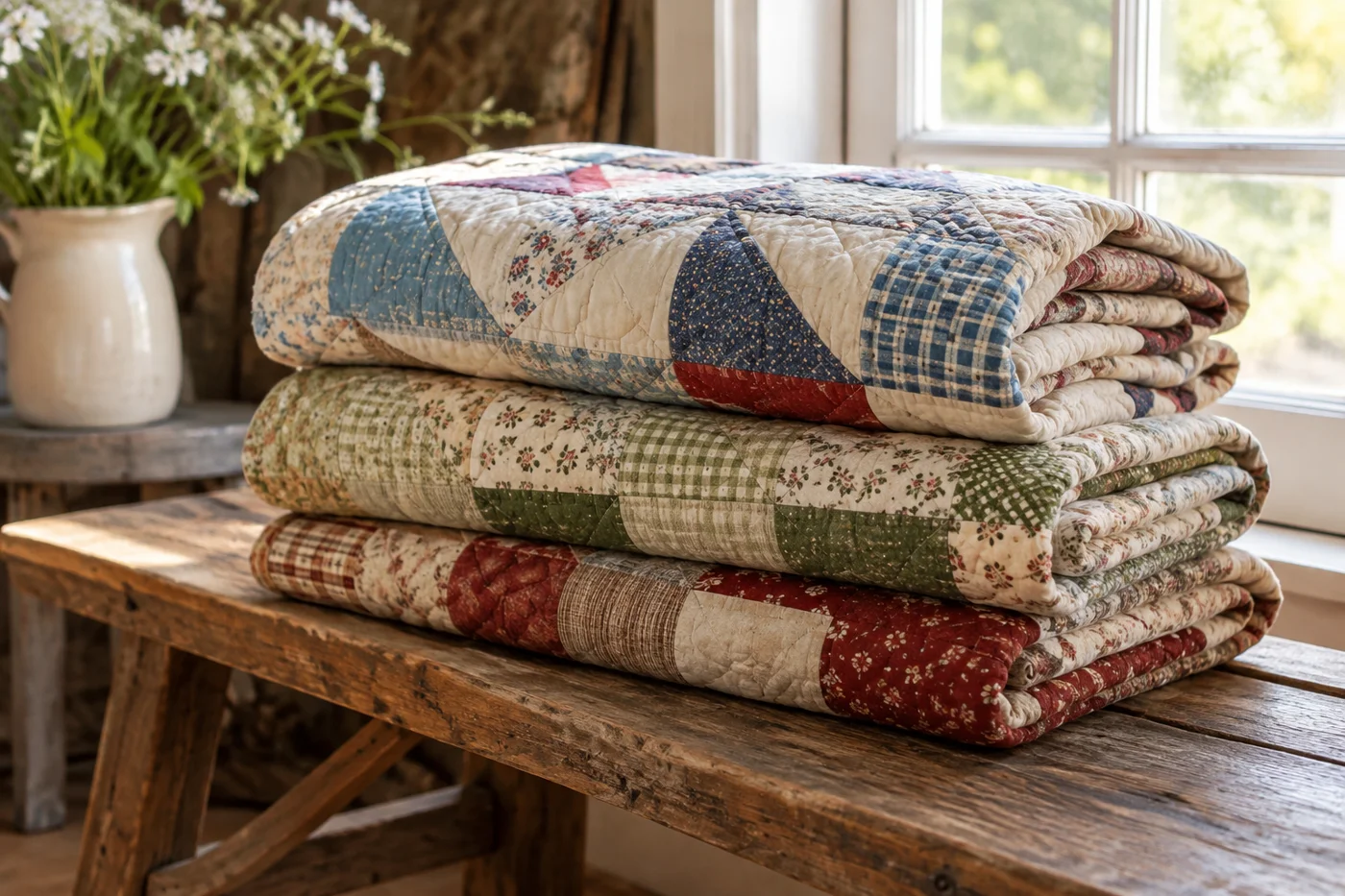
AI-generated editorial illustration; not a photo of a listed business.
A quilt is easier to choose when you know where it will go and how it will be used. A bed covering, a display piece, and a gift can call for different sizes, materials, and care expectations. These twelve details help you compare handmade quilts in person without relying on a pattern name, a price tag, or a rustic display. Ask the seller about the actual piece, and record the answers that matter before deciding.
Buying Handmade Quilts with a Clear Use and Comparison List
Start at home with measurements, room colors, and a realistic care routine. Decide whether the quilt will be used frequently, displayed, or given to someone else. If it is a gift, check the recipient’s dimensions and preferences rather than assuming a common size label is enough.
Handmade, hand-quilted, and Amish-made describe different claims. Ask which claim applies and what it means for the particular product. Do not infer origin from a design or the seller’s location. This is a buying checklist, not an appraisal, authentication service, or guarantee of value.
| Intended use | Prioritize | Ask about |
|---|---|---|
| Everyday bed | Actual size and suitable care | Fibers, care guidance, construction |
| Occasional guest room | Fit and appearance | Dimensions and storage |
| Display | Handling and presentation | Suitable display method |
| Gift | Recipient’s needs | Exchange terms and documentation |
1. Actual Finished Dimensions
Ask for width and length, not just a size name. Measure the bed or display area at home and decide the amount of drape you want. A label such as queen can still leave questions about how the quilt fits your particular mattress and setup.
Write the measurements down so you can compare pieces consistently. If the seller permits it, measure the actual item rather than relying only on memory.
2. Intended Daily Use
Explain whether the quilt will be used every day, occasionally, or as a display. Ask whether the construction and materials suit that purpose. A visually appealing piece is not automatically the right choice for your intended use.
Think about the household’s routine and willingness to follow care instructions. Do not choose a demanding care arrangement as a surprise gift for someone who wants easy maintenance.
3. Maker and Place of Production
Ask who made the quilt and where it was produced. Keep any documentation or maker details supplied. A shop in Amish country can carry work from several sources.
If Amish origin is important, ask for the seller’s basis for that claim. A style, color palette, or community association is not enough to establish the identity of the maker.
4. What Was Done by Hand
Ask whether piecing, quilting, finishing, or other parts were done by hand or machine. Different parts of a quilt can involve different methods. Have the seller explain the wording used for this piece.
Choose according to what you value rather than assuming one label guarantees all construction steps. Clear terminology is more useful than a broad impression of handwork.
5. Fabric Information
Ask about the fibers and any material information the maker provides. Do not identify fabric confidently by touch alone. Fiber information can affect your care decision and whether the piece fits the recipient’s expectations.
If precise materials matter, ask for written information where available. Uncertainty is a reason to pause and investigate, not fill the gap with an assumption.
6. Batting or Inner Layer
Ask what the inner layer is and what that means for the quilt’s intended use and care. Weight, feel, and construction can differ. Handle the item only as the seller permits.
Do not make warmth or performance promises from appearance. Explain your intended use and ask whether the seller has relevant maker guidance.
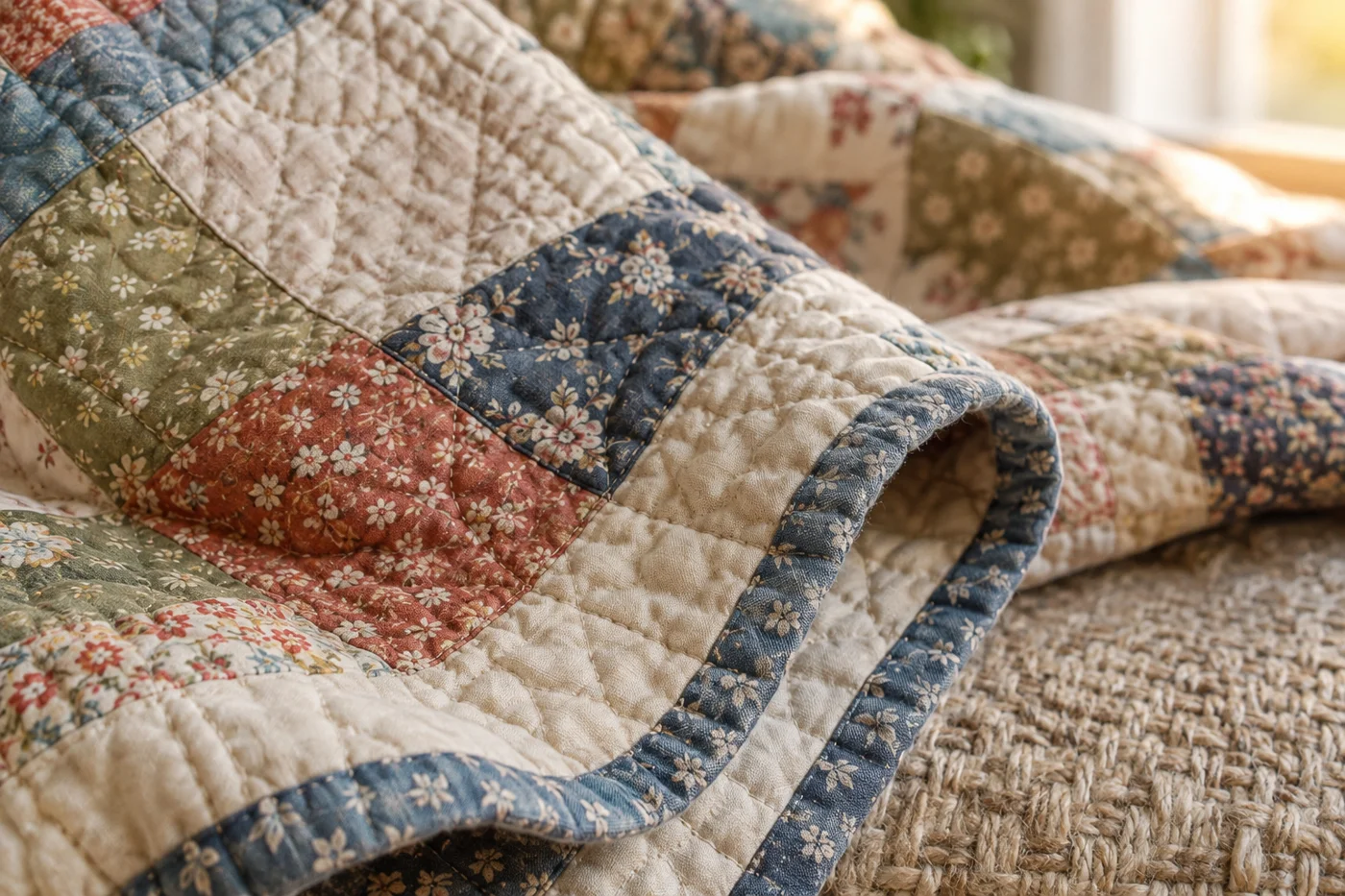
AI-generated editorial illustration; not a photo of a listed business.
7. Stitching and Surface Details
Look at the piece in suitable light, asking permission before unfolding or examining it closely. Note the stitching, pattern alignment, and any details the seller explains. Compare the actual workmanship rather than treating a distant photograph as a quality assessment.
If you notice a feature you do not understand, ask rather than labeling it a defect. Construction choices and condition questions deserve specific answers.
8. Edges and Binding
Examine how the edges are finished, with the seller’s guidance. Look for the details that matter to your use and ask about anything loose, worn, or uneven. A decorative display piece and a daily-use covering can present different considerations.
Ask how future repair or maker support is handled if relevant. Do not assume the shop offers repair services simply because it sells quilts.
9. Color in Your Room
Bring a suitable room reference or fabric sample if you have one, and compare colors in person. Screen photographs can differ from the actual product. Ask about any relevant care information affecting color retention.
Choose a palette you or the recipient can live with beyond a seasonal display. A strong accent may be appealing, but it should fit the room rather than only the shop setting.
10. Written Care Guidance
Request maker or seller care instructions for the actual quilt. Do not assume it can be washed like another blanket or that every handmade quilt needs the same method. Follow the supplied guidance and seek qualified advice when necessary.
If no clear guidance is available and you need easy everyday use, consider whether another piece is more suitable. This article does not replace professional textile care advice.
11. Condition and Disclosure
Ask whether the quilt is new, used, vintage, a display sample, or another category. Look at the actual condition and ask about any repairs, marks, or other disclosed issues. Keep the description with the purchase.
A vintage or antique claim may require expertise beyond an ordinary shopping comparison. Do not treat age, rarity, or resale value as established without appropriate evidence.
12. Price, Terms, and Custom Details
Ask what is included, how payment works, and what return or exchange terms apply. If ordering a custom piece, confirm dimensions, materials, design, timing, delivery, and how changes are handled. Get the agreed details in a form you can retain.
Do not assume bargaining, returns, or custom work follow one community-wide rule. The business’s actual terms govern your decision.
A Worked Comparison for a Guest Bed
Suppose you want a quilt for a guest bed and have measured the desired finished coverage. Two pieces appeal to you. One has clear dimensions, maker information, and care instructions; the other has a preferred color but unresolved size and material questions.
Record both sets of answers. Ask about the unresolved details before deciding. If the second piece cannot be confirmed to fit your needs, its color alone may not justify the purchase. You can leave the shop with useful measurements and return after comparing them at home.
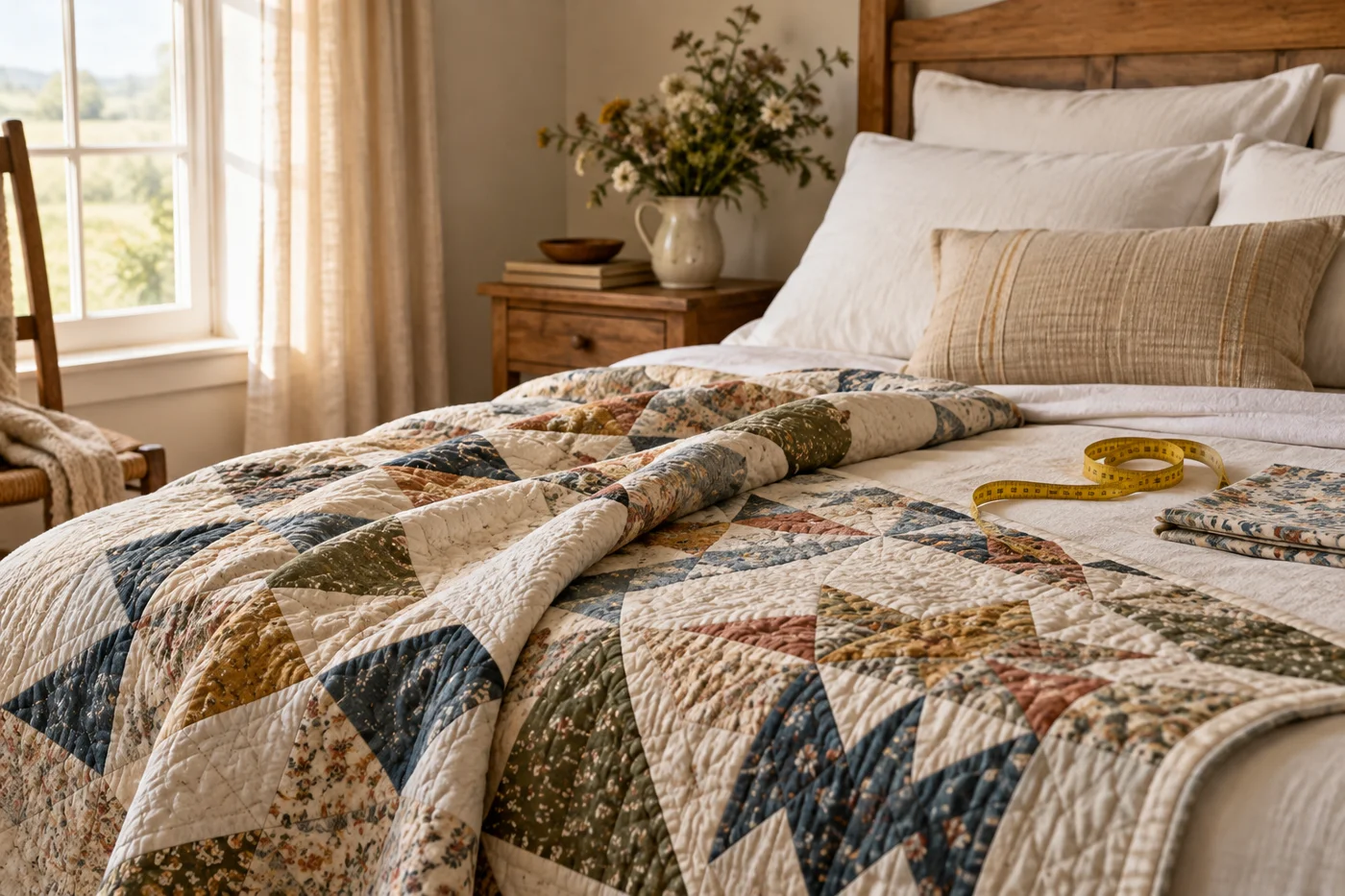
AI-generated editorial illustration; not a photo of a listed business.
This approach focuses on suitability rather than declaring one method or price point universally better. Your comparison should reflect the actual use and evidence available for each piece.
Carry the Quilt Home Carefully
Ask about suitable packing and follow care guidance. Keep the textile away from food, moisture, and purchases that could stain or snag it. A separate protective container is more useful than sharing a bag with jars or produce.
If the quilt is a gift, include the maker information and instructions. Avoid removing labels or documentation for a cleaner-looking presentation. Those details help the recipient use and care for the gift.
Frequently Asked Questions
Does handmade mean hand-quilted?
Not necessarily. Ask which parts of the construction were done by hand and how the seller uses the term for this piece.
Can I identify an Amish quilt from the pattern?
Do not rely on appearance to establish the maker. Ask about origin and supporting information.
Should I buy by bed-size name?
Use actual dimensions and your desired coverage. Size labels alone may not give the fit you want.
Are handmade quilts machine washable?
Follow the care guidance for the actual piece. Materials, construction, age, and condition can affect the appropriate method.
Use store search to find quilt-related candidates and contact them about current stock. For a regional outing, the Shipshewana shopping plan shows how to make this purchase the anchor rather than rush it between food stops.