
18 Bulk Food Baking Pantry Staples and How to Choose Useful Amounts
Build a useful baking pantry with eighteen bulk food staples. Choose amounts by recipe, compare packages, and organize ingredients for the bakes you make.
This practical guide follows our source, correction, and uncertainty standards.
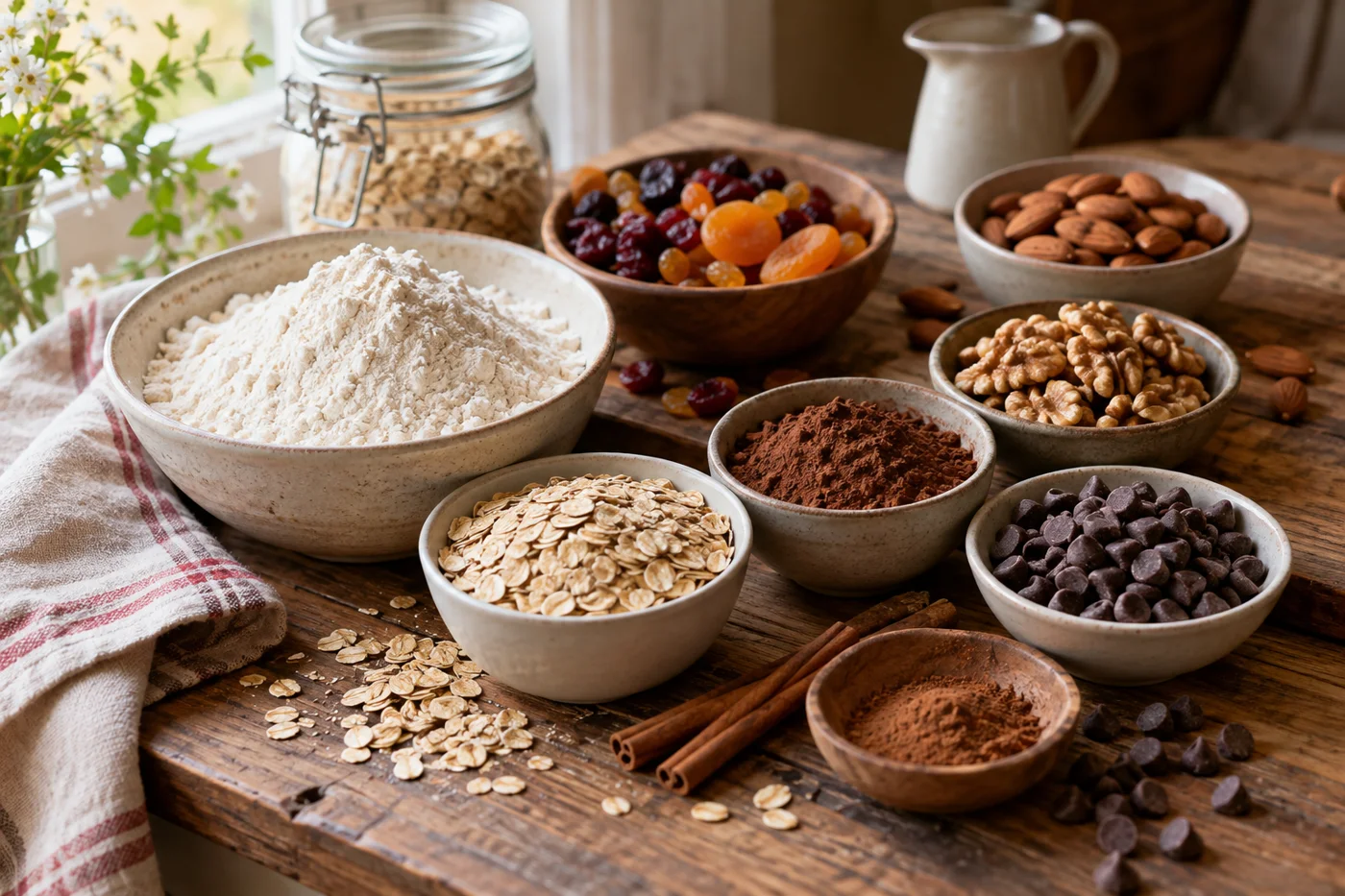
AI-generated editorial illustration; not a photo of a listed business.
A useful baking pantry is a set of ingredients for the things you make repeatedly. It does not have to contain every flour, spice, topping, and extract a country store carries. These eighteen bulk food baking pantry staples help you build a shopping list around real projects and useful amounts. Begin with two or three recipes you already use, then choose the supplies that support them.
Bulk Food Baking Pantry Staples for Your Usual Recipes
Write the ingredient lists for your regular bakes and mark what is already in the cupboard. Separate essentials from optional additions. A familiar cookie, breakfast bread, and simple cake may share ingredients, which can make a focused list more useful than several unrelated kits.
Read the package type, weight, date, storage instructions, and ingredient information. Country stores may sell prepacked goods, large packages, or other formats; do not assume you can buy a custom scoop or bring your own jars. For small households, use the amount-planning method in bulk food shopping for two.
| Ingredient group | Buy for | Amount decision |
|---|---|---|
| Base ingredients | Regular recipes | Count planned batches |
| Spices and flavors | Known favorites | Refill what you use |
| Inclusions | A specific bake | Trial amount for new flavors |
| Finishing supplies | Presentation or transport | Fit the project and pan |
1. A Familiar All-Purpose Flour
Choose the flour your recipe specifies, with a package size you can store and use. A large bag is not automatically better for an occasional baker. Check how much remains at home before adding another package.
Keep the product identity available after opening. If you compare brands or types, change one variable at a time in your own baking rather than assuming every flour performs identically.
2. Specialty Flour for a Real Project
Buy a bread, whole-grain, or other specialty flour only when a planned recipe calls for it. Start with a manageable package if it is new to you. Product names do not make different flours interchangeable.
An appealing shelf label can prompt an interesting project, but a recipe and equipment check should come before the larger purchase.
3. Granulated Sugar
Count the batches you expect to make and subtract existing stock. If you also use sugar elsewhere in the kitchen, include that routine honestly. Do not buy extra only because a larger bag looks more economical.
Store and identify it according to its packaging guidance. Plain labels are more useful than an unlabeled decorative jar.
4. Brown Sugar
Choose the type your recipes name and a package that fits your use. Keep storage instructions available, especially once opened. If you rarely bake recipes requiring it, a modest package may be enough.
Do not treat different sweeteners as effortless substitutions. Follow a dependable recipe when changing ingredients.
5. Confectioners’ Sugar
Buy for actual icing, dusting, or other planned use. A small amount may support several occasional projects. Check whether the recipe calls for additional ingredients before treating it as a complete decorating supply.
Protect the package from tears during a multi-stop shopping trip. Fine ingredients can create a mess if packed against sharp tools.
6. Baking Powder
Read the product information and date. Choose an amount that suits your baking frequency rather than stocking several packages. Keep it identified, and use the quantities your recipe gives.
Do not confuse it with baking soda. The similar names do not mean they can replace each other directly.
7. Baking Soda
Choose a clearly labeled food product for the recipes requiring it. Check what is already open so you avoid unnecessary duplicates. A compact package is often easy to accommodate in a focused pantry.
Keep food ingredients separate from supplies used for cleaning or other household purposes.
8. Yeast for Your Bread Method
Choose a yeast type compatible with the recipe and equipment you use. Read package directions, date, and storage guidance. Different formats may require different steps.
If bread baking is only an occasional ambition, start with enough for a specific project rather than a large refill you may not use.
9. Plain Oats
Buy the type your baking or breakfast recipe specifies. Oats can have more than one use in a household, but count those uses realistically. A package that suits both regular breakfast and a known cookie recipe may be worthwhile.
Retain cooking directions rather than relying on memory when switching types.
10. Cocoa for the Intended Recipe
Check which cocoa the recipe requires. Products can differ, and the darkest-looking option is not automatically the appropriate choice. A trial package is sensible when trying a new bake.
Keep the package label with the stored ingredient so you can repeat a result later.
AI-generated editorial illustration; not a photo of a listed business.
11. Chocolate Chips or Baking Pieces
Choose a type and flavor your household enjoys and your recipe supports. One versatile package may be more useful than several novelty varieties. Check ingredients and storage guidance.
Plan how you will protect the purchase from damaging heat during the drive, especially when the trip includes additional stops.
12. Cinnamon
Refill a modest amount if cinnamon appears frequently in your baking. Look at the quantity already open before choosing a bag. Buy for use, not simply for a pleasing pantry display.
A clear label and securely closed container help you find it without opening several similar jars.
13. One Additional Baking Spice
Choose ginger, nutmeg, or another spice based on a specific regular recipe. Avoid buying a full set when only one ingredient is missing. If a blend is appropriate, read its ingredients and check whether your recipe expects a blend or individual spices.
New flavors can be enjoyable, but a small package limits the storage commitment while you try them.
14. Vanilla or Another Named Flavoring
Match the product to the recipe and your preference. Read the label rather than assuming every bottle is the same type. Choose a manageable amount and follow its storage guidance.
Do not buy several extracts solely to complete a collection; a known project is a better reason.
15. Dried Fruit
Choose the fruit and cut the recipe specifies when those details matter. Check added ingredients and household preferences. One fruit that supports several familiar bakes is often easier to use than an assortment.
Keep it separate from other ingredients until preparing the recipe so its identity and handling information remain clear.
16. Nuts or Seeds
Confirm allergies and food preferences before purchasing. Read labels and ask about retailer information for store-packed products. Follow package storage guidance and buy an amount you can use.
Do not describe a replacement as safe for a dietary requirement without checking the specific product and relevant handling information.
17. A Reliable Baking Mix
A mix can be a useful shortcut for a project your household enjoys. Read required extra ingredients and pan size before purchasing. A large package may require more planning than a small ready-to-follow box.
Treat the mix as a particular project rather than an automatic pantry staple. If it will not be used, choose an ingredient you actually need.
18. Practical Finishing Supplies
Parchment, baking cups, or appropriate packaging can make a project easier to complete and share. Choose items that fit your pan or baked goods. A familiar useful supply is often better than another decorative topping.
Keep sharp cutters or tools away from food packages in your shopping bags.
Plan Amounts by Batch
Suppose a familiar recipe uses two cups of flour per batch and you plan three batches. Your plan calls for six cups, minus suitable flour already at home. Compare that need with actual package sizes; use the product’s weight and your recipe’s measurements carefully rather than assuming all ingredients share the same volume-to-weight conversion.
A new specialty ingredient deserves a different approach: buy enough for the trial recipe and decide whether you want to repeat it before restocking. This keeps the pantry from becoming a record of projects you meant to try.
Organize for Baking, Not Just Appearance
Group the base ingredients, small flavorings, and occasional inclusions in separate accessible areas. Keep directions, dates, and ingredient information available. Containers should suit the foods and fit your shelves, with room to remove one without unloading the others.
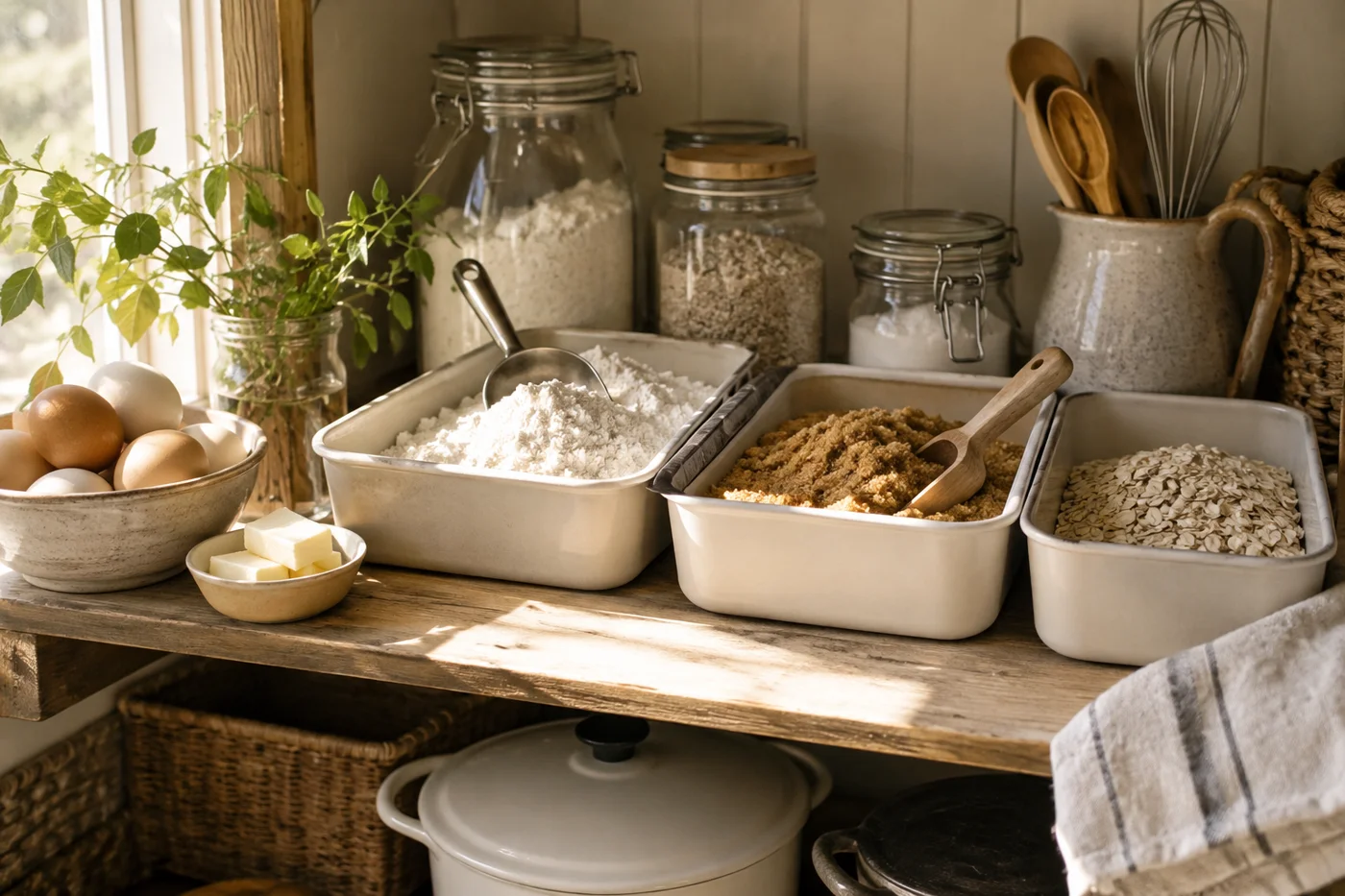
AI-generated editorial illustration; not a photo of a listed business.
Use a short inventory list on your phone or inside the cupboard. Mark an ingredient as low when you notice it during baking, then check the actual amount before the next trip. This is easier than rebuilding the list from memory in a store aisle.
Frequently Asked Questions
Which baking ingredients should I buy first?
Start with ingredients shared by two or three recipes you make regularly. Add specialty products when a specific project justifies them.
Are large bags always cheaper?
They may have a lower unit price, but unused ingredients, storage needs, and the total purchase cost affect practical value. Compare actual packages.
Can I put everything in matching jars?
Use suitable food-storage containers if you choose, while retaining identification, dates, and instructions. Matching appearance is optional.
Can this list become a gift?
Choose a smaller project-focused selection and confirm the recipient’s equipment and preferences. Our holiday baking baskets give ten more specific combinations.
Use bulk food store listings to choose a stop, then ask about your main ingredients and available package sizes before making a special trip.