
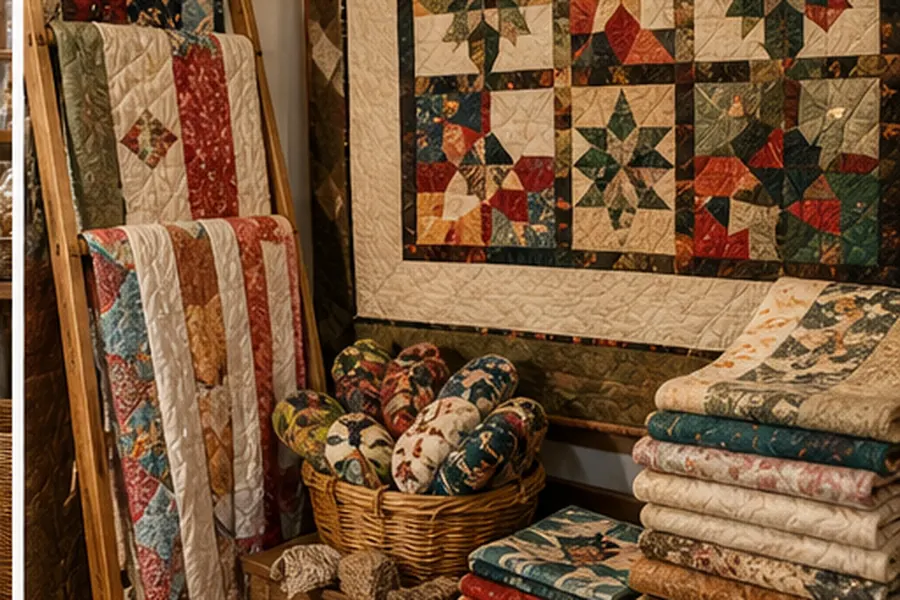
A specialty-store visit starts with knowing what you want to find: fabric for a project, a finished quilt, a handmade gift, or an antique. This guide explains what to ask about materials, makers, sizes, and custom orders so you can choose useful stops and confirm inventory before traveling.
Common specialty-store categories
Quilts and fabric
Look for finished quilts, fabric by the yard, notions, patterns, and custom quilting leads.
Crafts and gifts
Wooden toys, baskets, candles, soaps, decor, small furniture, and seasonal handmade goods.
Antiques and vintage goods
Inventory changes quickly, so call first if you are searching for a specific antique category.
Boots, shoes, and practical goods
Some rural specialty stores stock work boots, footwear, clothing, hardware, or household basics.
Questions to ask before visiting
- Do you currently stock the item, size, pattern, fabric, or antique category I am looking for?
- Which goods are locally made, and which are stocked from outside suppliers?
- Do you take custom orders for quilts, furniture, wooden goods, or gift items?
- What payment methods do you accept, and are you closed on Sundays or seasonal dates?
Match the stop to the purchase
“Specialty store” is a broad directory category. A fabric shop, quilt gallery, boot store, antique dealer, gift shop, and woodworking showroom solve different problems, so the most useful research starts with a concrete item, size, material, or budget.
| Purchase | Ask before the drive | Inspect in person |
|---|---|---|
| Finished quilt | Available dimensions, price range, maker information, and whether shipping is offered | Stitch consistency, binding, backing, batting, fabric condition, and care instructions |
| Fabric and notions | Fiber content, yardage, bolt availability, precuts, thread, patterns, and return policy | Color in natural light, weave, print alignment, shrinkage guidance, and lot consistency |
| Wooden gift or toy | Material, finish, age recommendation, customization, and lead time | Edges, joints, moving parts, finish coverage, and care or safety information |
| Antique or vintage item | Category, dimensions, condition, provenance, repairs, and pickup or shipping | Damage, replacement parts, odors, pests, finish changes, and written condition details |
| Boots or practical goods | Sizes, brands, widths, materials, exchanges, and seasonal stock | Fit with the socks you use, construction, sole, stitching, and warranty information |
Ask about the item, not the store’s image
A rural location, Pennsylvania Dutch branding, or “Amish” in a business name does not prove who made an item. Many stores mix locally made goods, work from regional craftspeople, nationally distributed merchandise, and imported products. If origin matters, ask a question that can be answered for the specific piece.
- Who made this item, and where was it made?
- Is the maker an employee, an independent craftsperson, or an outside supplier?
- Which materials are solid wood, natural fiber, handmade, or locally sourced—and which are not?
- Can the store provide a maker label, receipt description, care card, or written material specification?
A careful answer can still be useful even when the product is not local. The goal is accurate buying information, not forcing every item into a heritage claim.
Custom orders
For a quilt, furniture piece, sign, basket, or other made-to-order product, get the specification in writing before paying a deposit.
- Finished dimensions and acceptable variation
- Materials, colors, pattern, finish, and hardware
- Deposit, balance, taxes, and delivery or shipping
- Estimated completion window and delay communication
- Change, cancellation, return, and repair terms
Antiques and one-of-a-kind goods
Inventory can disappear between a phone call and arrival. Ask whether a store will hold an item, what “as is” means, and which flaws are already documented.
- Request current dimensions and photographs when available.
- Ask about repairs, replaced components, refinishing, and known damage.
- Confirm whether the piece can be disassembled or loaded safely.
- Measure the vehicle, doors, stairs, and final placement area.
Payment, returns, and transport
Specialty purchases are often more expensive and harder to return than groceries. Confirm payment before arrival, especially for a deposit or one-of-a-kind item. If the shop accepts cards, ask whether a fee or minimum applies; if payment information is not published, bring a practical backup instead of assuming cash only.
Pack for the product. Use clean blankets and straps for furniture, rigid support for framed or delicate items, dry containers for fabric, and enough covered vehicle space to keep purchases away from weather. Photograph condition with permission before loading a valuable or fragile item.
A better specialty-store route
- Choose the priority item. Write down the required size, material, color, quantity, and maximum budget.
- Call the priority store. Confirm the item category, schedule, payment, and whether the trip needs an appointment.
- Add one complementary stop. Pair a fabric shop with a quilt store, a woodworking shop with a furniture showroom, or a gift stop with a nearby market.
- Keep a backup. A second listing protects the route if the first store is closed or the item sold.
- Recheck the drive. Rural mailing cities can cover wide areas, so compare actual directions rather than assuming two town labels are close.
Best next steps
Start with specialty-store listings, then add nearby bakeries, farm markets, or country stores to make the route practical. This is more useful than creating separate thin pages for every single specialty modifier.