
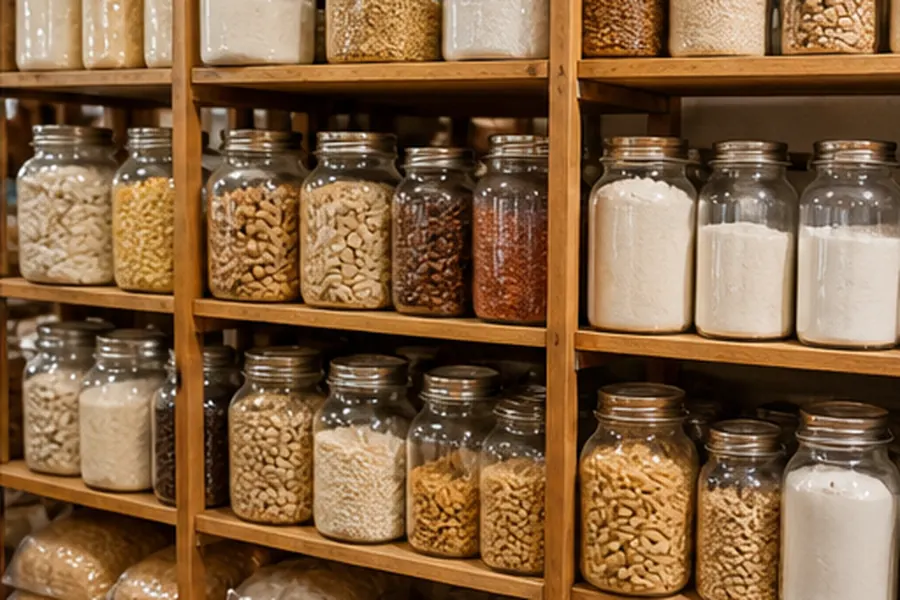
What “bulk foods” means at the store
Do not assume a bulk-food shop has self-service bins or requires a 25-pound purchase. For example, Byler’s describes its bulk department as foods purchased in large quantities and repacked into household sizes. It lists items such as flour, whole grains, pasta, spices, and baking ingredients.
Use that as one example, then check your destination. Ask whether the item is prepacked, available by weight, or sold only in a full bag. Confirm personal-container rules before bringing jars. A bulk-food label also does not tell you whether a product is locally grown, organic, or made by an Amish producer; ask about the particular item.
Compare the same product by weight
Divide the package price by its net weight. Compare like with like: the same kind of flour, ingredient mix, and quality. Convert ounces to pounds when labels use different units; there are 16 ounces in a pound.
| Package | Price | Price per pound |
|---|---|---|
| 5 pounds | $8 | $1.60 |
| 25 pounds | $35 | $1.40 |
Five small bags would cost $40, so the large bag saves $5 if you use all 25 pounds. If five pounds go unused, the $35 purchase costs $1.75 for each pound you actually use. A special trip costing $8 would also exceed that $5 saving. The useful comparison includes waste, travel, and any new storage containers.
Build a short list before buying more
Check what is already in your pantry and choose ingredients for meals you regularly cook. Start with a small package of an unfamiliar brand. Larger quantities make more sense after you know the product works for your recipes.
Flour and grains
The exact grain, flour type, package weight, and preparation instructions.
Spices and seasoning blends
Price per ounce, ingredient list, and a quantity you will actually use.
Pasta, beans, and soup mixes
Package size, cooking instructions, and any additional ingredients needed.
Nuts, dried fruit, and baking ingredients
Ingredient and allergen information, package condition, and storage directions.
Write your usual unit price beside each item. Leave room on the list for the store’s package size and price so you can compare without relying on a “bulk” or “bargain” sign.
Read the label and plan storage
Check ingredients, preparation instructions, net weight, and storage directions before paying. Keep the original label when transferring food to another container, including any lot information and dates. Follow the product’s directions rather than assuming every dry ingredient keeps for the same length of time.
For food allergies, the FDA advises reading the entire ingredient list; an allergen may be identified there even when a separate “Contains” statement is absent. Ask staff for missing product information. If you cannot establish whether a product fits your dietary requirements, choose one with information you can verify.
If your grocery stop also includes refrigerated food, plan the journey home before shopping. FoodSafety.gov recommends a cooler with ice or freezer packs that keeps perishables at 40°F (4°C) or below, checked with a thermometer. Keep raw meat separately wrapped from foods ready to eat.
Find a store and confirm the trip
- Browse bulk food stores or start with stores near you.
- Read the listing’s verification notes and follow its business website or phone link.
- Confirm the exact ingredient, package size, price, opening day, and accepted payment methods.
- Ask whether large bags need advance ordering and whether the store can help load them.
- Check driving times between stops and make room for the return trip with your purchases.
If a listing has no recent hours or no way to confirm stock, choose a nearby alternative before making a long drive. Our first-time visitor guide has a short call-ahead checklist.
Bulk food shopping questions
Does bulk food mean buying a large sack or filling my own container?
Check with the store. Bulk food can be sold in smaller packages repacked by the retailer, in larger bags, or through another store-specific arrangement. Ask about package sizes and personal containers before visiting.
Are Amish bulk food stores always cheaper?
Compare the same ingredient and grade by price per pound or ounce. Include the cost of the trip and buy only what you can use. A lower unit price does not guarantee a lower total grocery bill.
Are foods sold in an Amish store necessarily made locally?
A store name or bulk-food label does not establish where an ingredient was grown or made. Check the manufacturer and origin information, and ask which products come from local producers.
What should I buy on my first bulk-food trip?
Start with a small package of an ingredient you already use, such as flour, oats, or a familiar spice. Check the label, compare the unit price, and confirm you have suitable storage before buying more.