
Amish Farm Market Season Calendar: What to Buy and When
Plan Amish farm market visits by season, from spring greenhouse starts to summer produce, fall harvest goods, and winter pantry shopping.
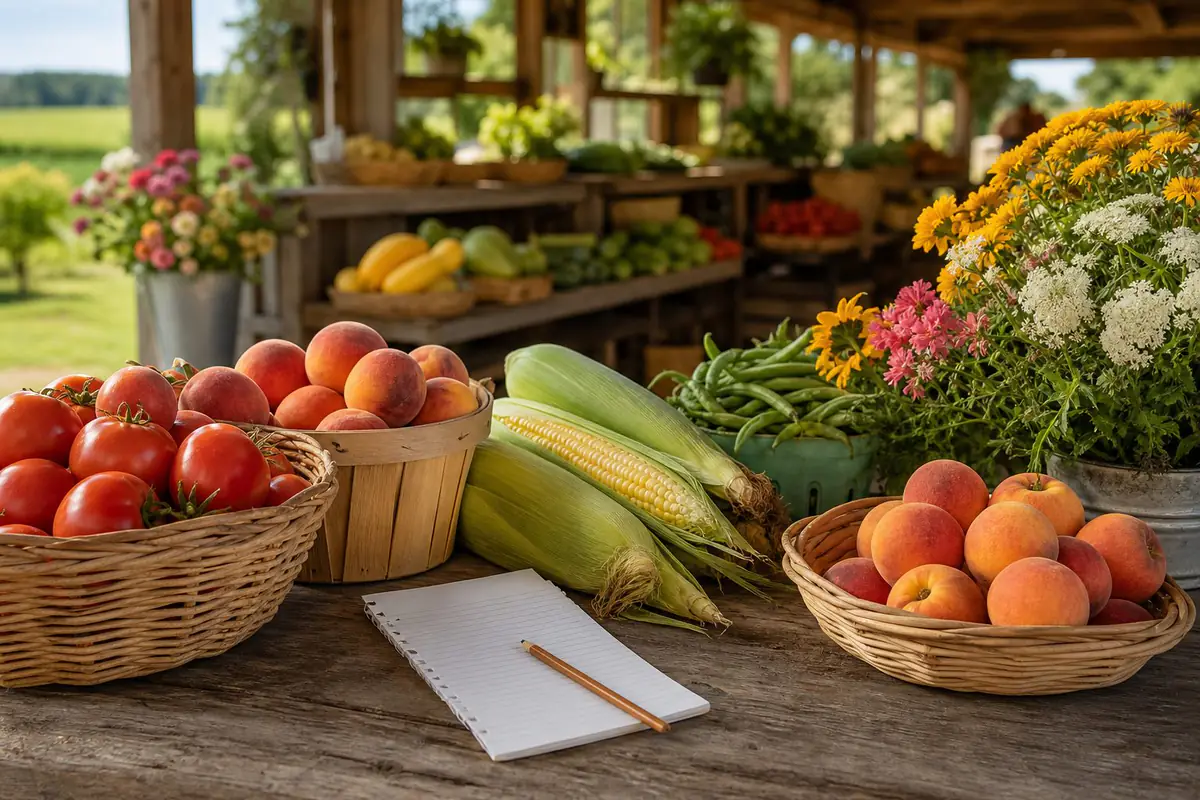
Farm markets are easier to plan when you know what kind of trip the season supports. A July stop is usually about produce and quick cooler space. An October stop may be more about apples, pumpkins, baked goods, preserves, and a slower route through several small towns.
Use this calendar as a practical starting point, then confirm the exact store hours before you drive. Many rural markets keep seasonal schedules, and inventory can change with weather, harvest timing, and how busy the week has been.
Amish farm market season calendar
The best first step is to find nearby farm markets, then build the rest of the route around them. A farm market can be the anchor stop, while a bakery, bulk food store, or general market fills in the rest of the day.
If you are still choosing a destination, browse stores by state or use near me once you know the area you will be driving through.
Spring: greenhouse plants, early greens, and route testing
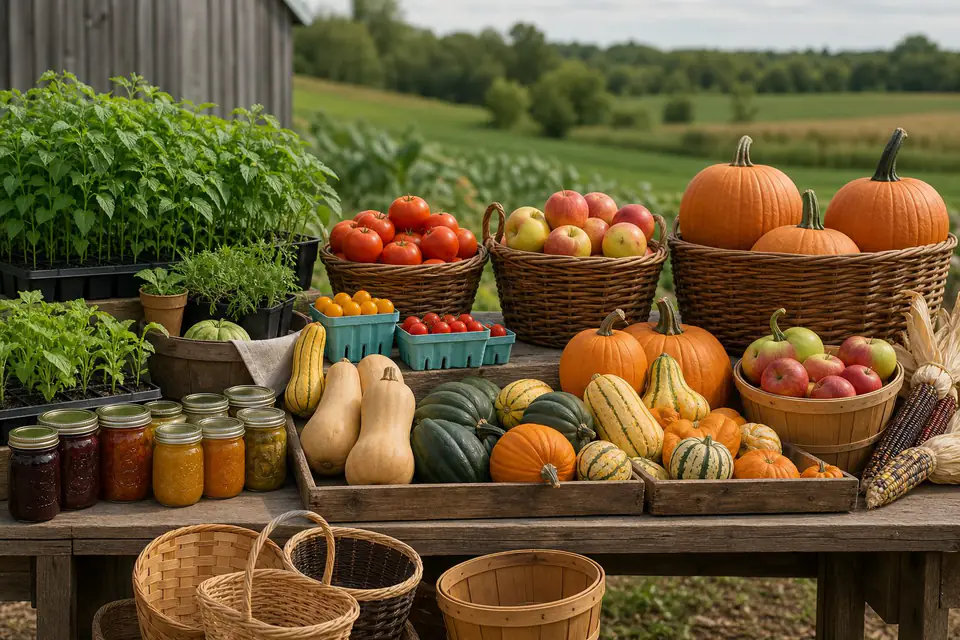
Spring is a good time to look for greenhouse goods, bedding plants, hanging baskets, early greens, asparagus where available, starter herbs, and pantry items that survived the slower winter season.
This is also the right season to test a new route before peak summer traffic. Smaller roads, limited hours, and spread-out stops are easier to learn when you are not also trying to keep a trunk full of berries cool.
Bring:
- A box or tray for plants
- A towel or liner for the vehicle floor
- Cash in smaller bills
- A short backup list in case one stand is not open yet
Spring greenhouse trips pair well with specialty stores, quilt shops, fabric stops, or a bakery visit.
Summer: produce, berries, sweet corn, and cooler planning
Summer is the most obvious farm market season because the trip can pay off quickly: tomatoes, cucumbers, melons, peaches, berries, sweet corn, beans, squash, flowers, eggs, honey, and roadside produce stands.
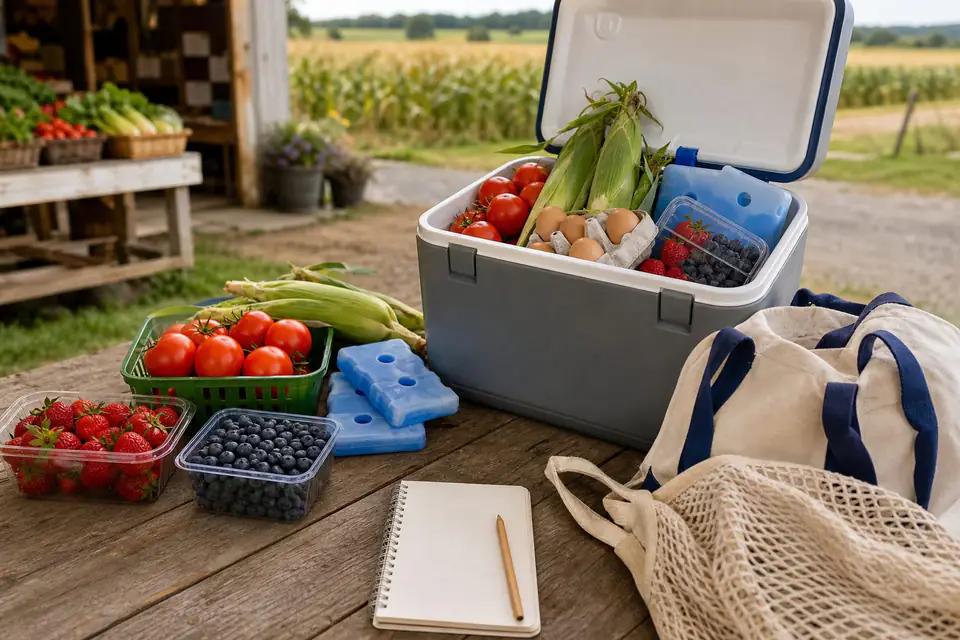
The main mistake is treating a summer farm market trip like a normal grocery stop. If you are driving more than 30 minutes after checkout, bring a cooler. If the route includes several stops, make the most perishable purchase near the end unless you have enough cooler space.
Good summer route order:
- Furniture, specialty, or general store first
- Bulk foods or pantry stop second
- Farm market and bakery near the end
Use search to compare nearby stop types before you leave.
Fall: apples, pumpkins, squash, preserves, and baked goods
Fall is the best season for a slower shopping loop. Farm markets often have storage crops, apples, pumpkins, squash, mums, cider, preserves, baking supplies, and holiday-friendly pantry goods.
This is also when markets can be busy on Saturdays. If you want first choice on pies, breads, apples, or popular seasonal goods, go earlier in the day and keep your route realistic. Three good stops are usually better than six rushed ones.
Fall pairs naturally with:
- Bakeries
- Bulk foods stores
- General markets
- State-focused shopping pages such as Pennsylvania, Ohio, and Indiana
Winter: pantry shelves, gifts, and call-ahead trips
Winter farm market shopping is more limited, but it can still be useful. Look for preserves, baking ingredients, canned goods, honey, cheese, eggs where available, handmade gifts, and holiday foods.
Winter is the season when call-ahead planning matters most. Weather, shorter daylight, rural roads, holidays, and family events can all affect a small store’s schedule. Do not build a long route around one uncertain stop.
If you need a winter route, start with general markets and bulk foods stores, then add farm markets only after confirming they are open.
What to bring on a farm market route
A simple kit makes the trip smoother:
- Cash and a few small bills
- Cooler and ice packs
- Reusable bags or boxes
- Towel for plants, pumpkins, or dusty produce
- Paper list of must-buy items
- Phone charger
- Backup stops from the directory
If your route includes bakeries, add a flat box or basket so pies, rolls, and bread do not get crushed.
How to build the route in Amish Store Locator
Start with the main reason for the trip. If it is produce, open the farm market type page. If you are traveling in a specific region, start with states. If you are already on the road, use near me.
Then add one or two practical backup stops:
- A bakery for breakfast goods or take-home pies
- A bulk foods store for pantry staples
- A general market for mixed groceries and gifts
- A specialty store for quilts, crafts, fabric, or local goods
Before leaving, check each listing for phone, website, payment notes, and store type. Rural stores can be worth the drive, but the best trips are built with a little flexibility.
FAQ
What is the best season for Amish farm markets?
Summer and fall usually offer the widest farm market selection. Spring is better for greenhouse goods and early produce, while winter is better for pantry items, preserves, and call-ahead shopping.
Should I bring cash to Amish farm markets?
Yes. Many rural stores and farm stands still prefer or require cash, and small bills make checkout easier.
How many farm market stops should I plan in one day?
For most visitors, one anchor farm market plus one or two nearby stops is enough. Add more only if the stores are close together and you have cooler space.
Where should I start looking for farm markets?
Use the farm market directory, search page, or near me tool, depending on whether you are planning ahead or already traveling.